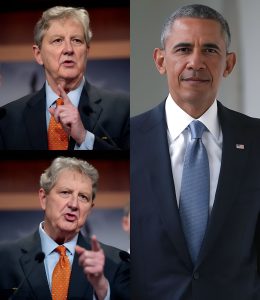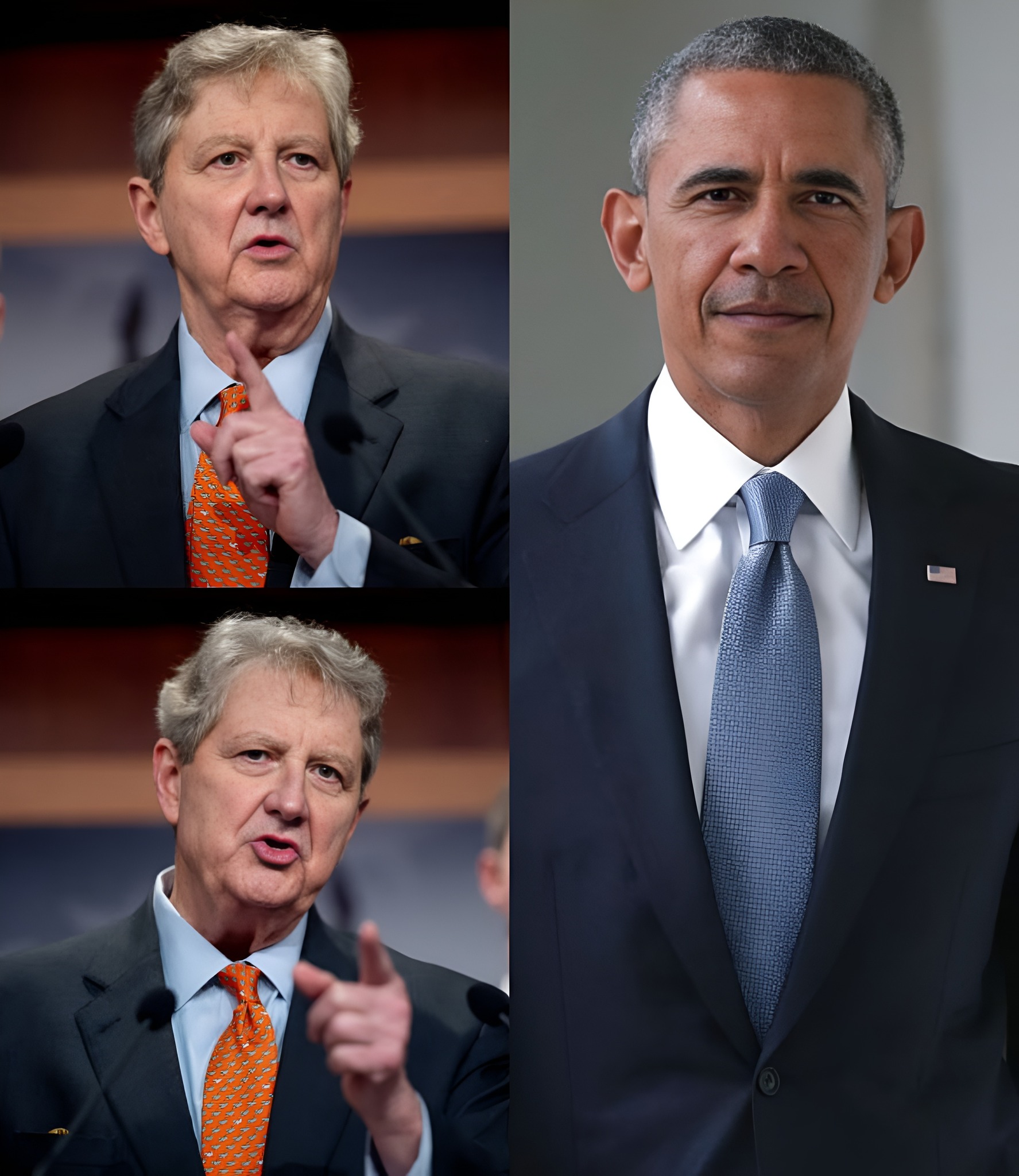
Headlines like this are designed to detonate before the facts even enter the room.
“O.B.A.M.A GOES NUTS After Sen. Kennedy REVEALS Foundation Fr@ud!” reads less like a news report and more like a trailer voiceover. Words are stylized to dodge moderation filters. Emotions are amplified. The stage is set for outrage. But when a claim suggests that a former president reacted furiously to bombshell allegations of fraud inside his foundation, the responsible first step is simple: slow down and examine what is actually known.
The former president in question, Barack Obama, leads the Obama Foundation, a nonprofit focused on leadership development, civic engagement, and global initiatives. Like many large foundations connected to public figures, it files public financial disclosures, including IRS Form 990 documents, which outline revenue, expenses, executive compensation, and programmatic spending.
The senator often associated with sharp, headline-grabbing remarks is John Kennedy. Known for his pointed sound bites and prosecutorial questioning style, he has frequently criticized political opponents in committee hearings and media appearances.
But viral narratives that describe a “bombshell” revelation followed by a dramatic meltdown usually leave out critical context:
- What specific financial irregularities were alleged?
- Were those allegations supported by documented evidence?
- Has any official investigation substantiated claims of fraud?
- Was there actually a documented “furious reaction,” or is that characterization editorialized?
Large nonprofit organizations routinely undergo audits, compliance reviews, and public scrutiny. Discrepancies in filings can occur for mundane reasons—timing of revenue recognition, administrative cost allocations, reporting corrections, or evolving accounting standards. Alleging “fraud,” however, implies intentional deception, which is a serious legal claim requiring evidence and, typically, investigative findings.
As of publicly available information through recent years, there has been no confirmed criminal conviction or formal finding of fraud against the Obama Foundation by federal authorities. That does not mean scrutiny is inappropriate; it simply means that claims should be distinguished from proven wrongdoing.
The second part of the viral narrative centers on an alleged emotional outburst. Public figures are often described in exaggerated terms—“goes nuts,” “explodes,” “loses it”—even when video footage shows little more than firm disagreement or pointed rebuttal. In an age of clipped social media videos, a raised eyebrow or a clipped response can be framed as fury.
Political theater also plays a role. Congressional hearings and public statements are frequently crafted for maximum media impact. A senator might frame concerns in dramatic language to generate attention. Supporters amplify it. Opponents push back. Cable news panels dissect it. Social media transforms it into a trending hashtag.
What is often lost is nuance.
The Obama Foundation’s stated mission includes programs like the Obama Presidential Center in Chicago, leadership training initiatives, and global civic engagement forums. The construction of the Presidential Center has faced scrutiny over cost projections and development impacts, which is common for large public-private projects. Criticism of fundraising sources or spending priorities has surfaced at various times, as happens with many high-profile nonprofits. Debate about transparency and governance is legitimate.
However, there is a significant difference between policy or management criticism and proven financial fraud.
When evaluating claims of misconduct involving foundations tied to political figures, it is useful to compare across the spectrum. Foundations linked to politicians from both parties have faced audits, media investigations, and regulatory inquiries. Some have resulted in penalties or restructuring; others have been resolved without findings of wrongdoing. Oversight mechanisms exist precisely because nonprofit governance is complex.
The framing of a “furious reaction caught on camera” also deserves scrutiny. In the modern media ecosystem, reaction videos are currency. A stern defense of one’s organization can be portrayed as rage. A dismissive comment can be labeled meltdown. Without watching full, unedited footage and considering the context, it is difficult to assess whether the description matches reality.
Moreover, public officials and former presidents often respond to allegations through formal statements, legal counsel, or spokespersons rather than spontaneous emotional displays. If an allegation is made in a Senate hearing, the accused party might issue a written rebuttal or provide documentation clarifying financial records. That is far more common than dramatic on-camera confrontations.
Why, then, do such narratives gain traction?
Because outrage spreads faster than audits.
Stories that promise scandal, fury, and exposure activate emotional responses. They confirm prior beliefs. They encourage sharing before verification. In highly polarized environments, supporters and critics alike may accept claims that align with their existing views.
Responsible engagement requires asking: Who made the allegation? What evidence was presented? Has an independent body verified it? Has the foundation responded with documentation? Have reputable investigative outlets corroborated the claims?
If legitimate concerns about financial management arise, the appropriate channels include regulatory review by the IRS, state attorneys general (who oversee charities), and independent auditors. These processes can be slow and technical—far less exciting than viral headlines—but they are how accountability is established in practice.
It is also worth remembering that foundations operate within strict legal frameworks. They must disclose major donors (with some exceptions), outline program expenditures, and adhere to nonprofit governance standards. Failures to comply can result in penalties, fines, or loss of tax-exempt status. Allegations alone do not equal findings.
Political rivalry further complicates perception. A senator criticizing a former president’s foundation may frame concerns in the strongest possible terms. The foundation may respond defensively. Supporters on both sides amplify selective clips. In such an environment, clarity can be hard to find.
Ultimately, claims of “foundation fraud” and dramatic emotional reactions should be treated as allegations unless supported by verifiable evidence from credible investigative authorities. The stakes are significant—accusations of financial misconduct can damage reputations and undermine public trust in charitable institutions more broadly.
Healthy democracy depends on scrutiny, transparency, and accountability. It also depends on restraint in labeling and accuracy in reporting.
Before accepting a narrative that someone “went nuts” after a “bombshell” revelation, it is worth stepping back. Watch the full exchange. Review official documents. Consult multiple reputable sources. Distinguish between rhetorical flourish and confirmed fact.
In politics, drama is often louder than documentation. But documentation is what ultimately matters.