BREAKING: Drone Strike Hits U.S.-Owned Gas Vessel in Egypt as Iran War Spreads Beyond the Battlefield
A dramatic new development in the widening Middle East conflict has raised fears that the war between the United States and Iran could be spreading far beyond the Persian Gulf.
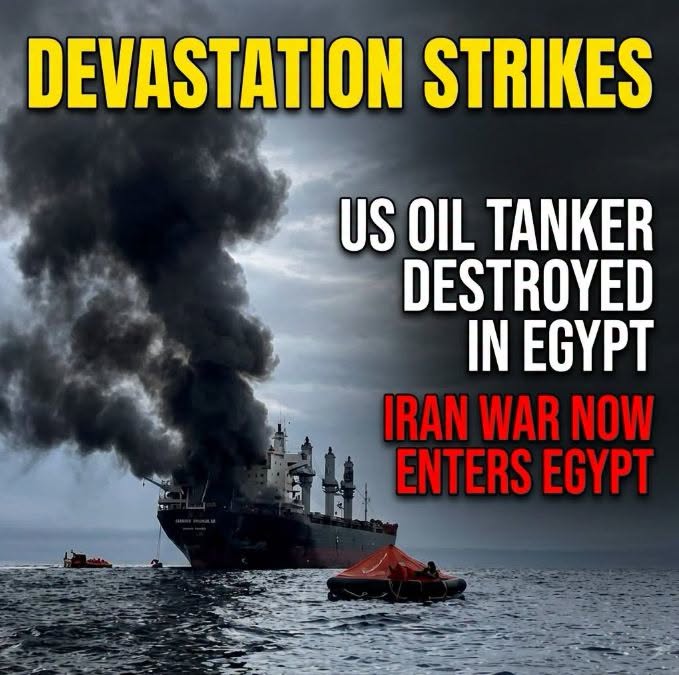
A drone strike struck Egypt’s Mediterranean port of Damietta, damaging two gas vessels and triggering a fire aboard one of them, according to reports. One of the vessels was the U.S.-owned Energos Winter, a floating gas-storage ship. Egyptian authorities reported no casualties, but the incident immediately attracted international attention because it occurred on Egyptian territory, thousands of miles from the principal battlefront.
The incident represents a major concern for regional security. Egypt has attempted to remain a significant diplomatic and commercial player during the conflict, while its ports and waterways are crucial to international energy transportation. A strike at Damietta therefore carries implications that go far beyond the damage suffered by a single vessel.
What Happened at Damietta?
According to reports, a drone struck the area around Damietta port, causing a fire involving two gas vessels. The U.S.-owned Energos Winter was among the vessels affected. Egyptian officials confirmed that the fire was caused by a drone, while investigations continued into who launched it.
There were no immediate reports of deaths or serious injuries.
That fact is significant. A major explosion involving a gas-storage vessel in a busy Mediterranean port could potentially have produced a much larger disaster. The absence of casualties will therefore come as some relief to Egyptian authorities, shipping companies and residents in the area.
But the absence of casualties does not mean the incident is strategically insignificant.
Damietta is an important energy and maritime center. Any attack there raises questions about whether commercial shipping routes previously considered relatively safe can remain insulated from the expanding conflict.
Iran Accused, but Responsibility Not Confirmed
The most important point surrounding the incident is that no organization has publicly claimed responsibility for the drone strike.
Iran has denied involvement and has warned that the attack could potentially have been a false-flag operation intended to blame Tehran. That denial means the precise circumstances remain unresolved.
Nevertheless, the strike immediately became part of the broader debate surrounding Iran’s expanding confrontation with the United States and its allies.
The conflict has already affected shipping and energy infrastructure across the Middle East. Iranian attacks and threats have disrupted traffic around the Strait of Hormuz, while other attacks have targeted commercial vessels and energy facilities throughout the region.
The Damietta incident therefore raises a difficult question: Is the battlefield beginning to expand into areas that previously appeared relatively distant from the conflict?
Why Egypt Matters
Egypt occupies an unusually important position in the regional security picture.
The country controls the Suez Canal, one of the world’s most important maritime passages. Ships traveling between Asia and Europe frequently use the canal to avoid the much longer route around Africa.
Egypt is also a major regional diplomatic power and has repeatedly played a role in negotiations surrounding conflicts in the Middle East.
That makes any attack on Egyptian territory especially sensitive.
If attacks against shipping or energy infrastructure begin occurring more frequently in Egypt, shipping companies could become increasingly reluctant to operate in the region. Insurance costs could rise, vessels could be rerouted, and energy markets could react to the possibility of further disruptions.
The economic consequences could spread far beyond Egypt.
The Energy Security Problem
The most immediate concern involves energy.
The Middle East supplies a substantial portion of the world’s oil and natural gas, and the war has already placed enormous pressure on global energy transportation.
Earlier reporting has highlighted how attacks and threats around the Strait of Hormuz have disrupted the movement of oil and liquefied natural gas. The strait is one of the world’s most important energy chokepoints, meaning that even temporary disruption can affect international prices and supply chains.
The Damietta attack adds another layer to that problem.
Energy companies have spent years developing alternative routes and storage facilities to reduce dependence on vulnerable maritime chokepoints. If those alternative facilities themselves become targets, the options available to international markets become narrower.
That is why a single drone attack can have consequences far beyond the physical damage at one port.
A New Warning for Commercial Shipping
Commercial shipping operators are now facing a difficult calculation.
A vessel may be hundreds of miles away from the main fighting yet still face risks from drones, missiles or other forms of attack.
Modern conflicts increasingly blur the line between military and commercial targets. Ports, tankers, storage facilities, pipelines and cargo ships can become strategically important even when they are not directly involved in military operations.
For shipping companies, the problem is not simply whether an attack occurs. It is whether enough uncertainty exists to make operating in a particular area financially and physically dangerous.
The Damietta strike could therefore prompt companies to review security arrangements, insurance coverage and routing decisions.
Could the Conflict Expand Further?
That is the question now hanging over the region.
The United States and Iran have already been engaged in an increasingly dangerous confrontation, while Iran-aligned groups have carried out attacks in other parts of the Middle East.
Recent reporting has described attacks and threats affecting Saudi Arabia, Iraq, Kuwait and major maritime routes.
The danger is that every new attack creates another opportunity for escalation.
If Iran is eventually proven responsible for the Damietta incident, pressure on Washington and its allies to respond could increase dramatically.
If Iran is not responsible, the attack still demonstrates how difficult it has become to control the spread of violence across the region.
Either way, Egypt now finds itself confronting a security challenge that it would prefer to keep outside its borders.
What Happens Next?
Egyptian authorities will likely focus first on determining exactly what happened, where the drone originated and who was responsible.
Investigators will also need to determine whether the vessel itself was deliberately targeted or whether it was caught in a broader attack against port infrastructure.
Those distinctions matter.
A deliberate attack against a U.S.-owned vessel would carry very different political implications from an accidental or misdirected strike.
Washington will also be watching closely.
Because the damaged vessel was U.S.-owned, the incident has a direct American connection even though it occurred in Egypt. That could make the episode politically significant in Washington, particularly as the United States continues its confrontation with Tehran.
For President Donald Trump and his administration, the challenge will be determining how to respond without allowing another incident to trigger an even wider regional war.
The Bigger Picture
The Damietta attack is a reminder that modern wars rarely remain confined to one battlefield.
What began as a confrontation centered around Iran and the Persian Gulf has already affected shipping routes, energy markets and countries throughout the Middle East.
Now Egypt has experienced a drone attack against commercial energy vessels at one of its major ports.
That does not automatically mean that Egypt has entered the war. It also does not establish that Iran ordered the attack.
But it does demonstrate how quickly the consequences of the conflict can travel.
For ordinary people around the world, the effects may eventually appear in less dramatic ways: higher fuel prices, more expensive transportation, increased insurance costs and disruptions to global supply chains.
For governments, however, the stakes are much higher.
Every additional attack creates the possibility of retaliation. Every retaliation creates the possibility of another response. And with increasingly sophisticated drones and long-range weapons operating across the region, the distance between a battlefield and a commercial port is no longer the protection it once was.
The Damietta incident may therefore become an important turning point—not because it has been proven to represent a direct Iranian attack on Egypt, but because it demonstrates that the conflict’s economic and security consequences are reaching places that had previously appeared outside the immediate combat zone.
For now, investigators are still searching for definitive answers.
Who launched the drone?
Why was the port targeted?
Was the U.S.-owned vessel deliberately selected?
And most importantly, will this incident remain an isolated event—or become the beginning of a new phase in the widening regional conflict?
Those questions remain unanswered.
What is already clear is that the Middle East war is becoming increasingly difficult to contain, and the attack at Damietta has placed another warning sign on an already dangerous map.