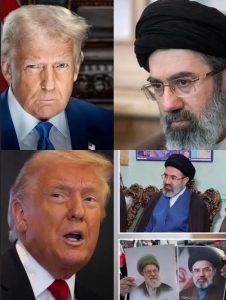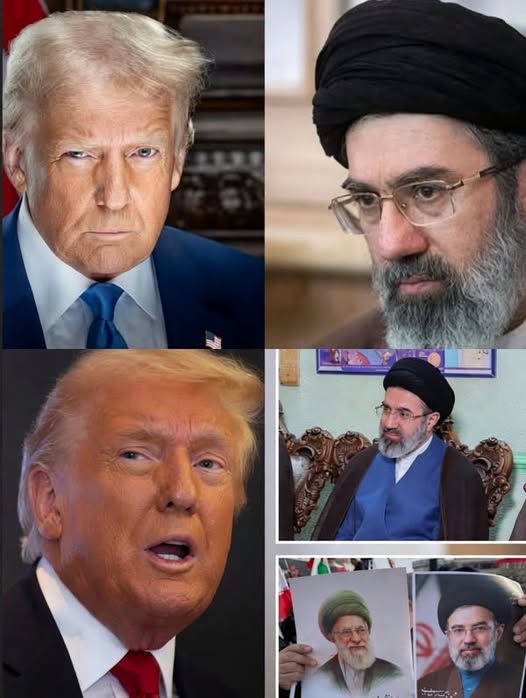
HERE WE GO: Iran Just Responded — Tensions Rise as the World Watches3
The world woke up to another dramatic turn in the escalating confrontation involving Iran, the United States, and countries across the Middle East.
For days, international attention has focused on warnings of possible new military action, threats of retaliation, and growing concerns that an already dangerous conflict could expand even further.
But the latest development is more complicated than the dramatic headlines circulating online.
Rather than a confirmed new Iranian attack today, the major development is a rapidly changing diplomatic and military situation in which Washington says a planned strike has been paused while discussions continue.
U.S. President Donald Trump said Saturday that the United States had decided not to proceed with a planned attack on Iran after what he described as progress toward an agreement involving Iran and other countries in the region.
That announcement immediately changed the atmosphere.
For days, the possibility of another major strike had created fears that the conflict could enter an even more dangerous phase. Any new attack could potentially trigger retaliation, threaten military personnel, disrupt energy supplies, and increase pressure on governments throughout the region.
Now, instead of an immediate escalation, the world is watching to see whether diplomacy can prevent another round of fighting.
The situation remains extremely fragile.
Iranian officials have not simply accepted Washington’s description of events. Iranian statements have challenged the idea that Tehran requested the pause in the way Washington suggested, and some Iranian officials have characterized Trump’s announcement as part of psychological pressure rather than proof that a lasting agreement has been reached.
That disagreement is important.
A pause is not the same thing as peace.
A discussion is not the same thing as a signed agreement.
And a statement from one government does not automatically mean the other side accepts the same interpretation.
This is why international observers are watching every statement coming from Tehran and Washington.
The central question is now whether the latest diplomatic opening can become something more permanent.
According to reporting, Trump has said that the outlines or parameters of a potential deal have been reached and that he expects negotiations to move rapidly.
But major disagreements remain.
Among the most sensitive issues are Iran’s military capabilities, regional security, the future of the Strait of Hormuz, and the presence of American forces in the region.
The Strait of Hormuz is particularly important because it is one of the world’s most strategically significant waterways. Any prolonged disruption there could have consequences far beyond the Middle East.
Energy markets would be watching closely.
Shipping companies would be watching.
Governments would be watching.
And millions of ordinary people would feel the consequences if energy prices and transportation costs increased dramatically.
That is why the current situation matters even to people thousands of miles away from the conflict.
The stakes are not limited to Iran, Israel, or the United States.
Countries across the Gulf are also concerned about becoming directly involved.
Recent reporting has highlighted warnings, military preparations, and concerns among regional governments about the possibility of wider attacks.
For families living in the region, these developments are not abstract geopolitical arguments.
They are personal.
People want to know whether their cities will remain safe.
Parents worry about their children.
Workers wonder whether businesses will remain open.
Travelers wonder whether airports and airspace will be affected.
And families with relatives serving in military forces worry about whether their loved ones will be sent into increasingly dangerous situations.
That human dimension is often lost in dramatic social-media headlines.
When a headline says, “HERE WE GO,” it can make it sound as though another major attack has already happened.
But responsible reporting requires separating confirmed events from rumors, predictions, and online speculation.
At this moment, the confirmed major development is the announced pause in a planned U.S. attack and the possibility of negotiations—not a verified new Iranian attack today.
That distinction matters.
The situation can change quickly, however.
The conflict has already demonstrated how rapidly events can move from threats to military action and back toward diplomacy.
A single statement from Tehran or Washington could change the situation again.
A failed negotiation could produce new military threats.
A successful negotiation could create an opportunity for de-escalation.
That uncertainty is exactly why governments around the world are paying close attention.
The international community now faces a difficult challenge: encouraging diplomacy while preparing for the possibility that negotiations fail.
Neither side wants to appear weak.
Both sides have political pressures at home.
Both have security concerns.
And both understand that decisions made now could shape the region for years.
For Iran, any agreement must be viewed against the backdrop of sovereignty, national security, military capability, and economic pressure.
For the United States, leaders must consider American troops, regional allies, deterrence, and the broader strategic consequences of Iranian actions.
For neighboring countries, the priority is often simpler: prevent the conflict from spreading onto their territory.
And for ordinary people everywhere, the hope is even simpler.
They want the fighting to stop.
They want families to be safe.
They want soldiers to return home.
They want their children to grow up without hearing air-raid sirens or fearing the next headline.
That is why the coming days could be extremely important.
The latest pause may become the beginning of serious negotiations—or it may simply be a temporary break before another escalation.
Nobody can say with certainty yet.
What is clear is that the world is watching.
The language coming from Washington and Tehran will be analyzed carefully.
Military movements will be monitored.
Diplomatic channels will remain under intense pressure.
And every new statement could potentially change expectations.
For now, the biggest story is not simply that Iran “responded.”
It is that the confrontation has reached another critical crossroads.
The path toward escalation remains possible.
But so does the path toward diplomacy.
The next few days may reveal which one the region takes.
Until then, dramatic claims about new attacks should be treated carefully. Confirmed information matters, especially when lives and international security are at stake.
The world has seen enough destruction to understand the cost of another major escalation.
What happens next may depend not only on missiles, military power, or threats—but on whether leaders on all sides can find enough room for diplomacy.
The headlines may continue to say, “Here we go.”
But perhaps the most important question now is whether the next chapter will be another escalation—or the beginning of a way out.