Horrifying Moment Plane and Helicopter Collide in Deadly Midair Crash
A quiet evening at Carlisle Regional Airport in Pennsylvania turned into a terrifying scene when a small airplane collided in midair with a Pennsylvania State Police helicopter.
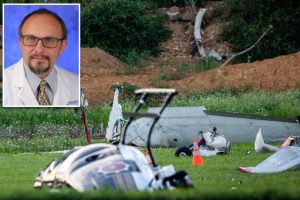
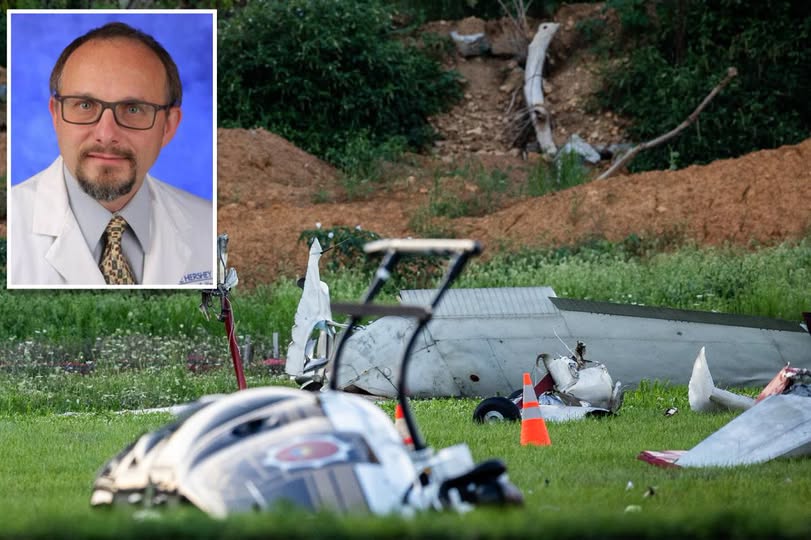
The crash happened Wednesday evening, August 19, 2026, and newly released surveillance footage has now provided investigators and the public with a clearer look at the moments leading up to the devastating collision. One person was killed and two state police troopers were injured.
The footage is difficult to watch because the collision happens incredibly quickly. What appears to be an ordinary aviation operation suddenly becomes a catastrophic accident, leaving almost no time for those involved to react.
A Routine Training Flight Turns Tragic
According to authorities, the helicopter was conducting a training exercise at Carlisle Regional Airport.
The aircraft was a Bell 407 operated by the Pennsylvania State Police. It had two troopers aboard, including Corporal Bryce Corman and Trooper Jason Mills.
At approximately 6:50 p.m., the helicopter was conducting what investigators described as a “hover taxi,” operating only several feet above the ground near the runway.
At roughly the same time, a Cessna 150 was operating in the airport area.
The small aircraft was carrying only one person: 57-year-old Dr. Paul Sokoloski of Hershey, Pennsylvania.
Sokoloski was an emergency medicine physician associated with Penn State Health and was also a certified flight instructor, according to investigators and his employer.
Nobody watching the evening’s activities could have known that the two aircraft were moments away from colliding.
The Terrifying Moment
Surveillance video released after the crash shows the Cessna approaching the helicopter.
Investigators say the helicopter had begun moving away from the runway during its hover taxi when the small plane approached.
According to preliminary information provided by the National Transportation Safety Board, the Cessna suddenly increased its pitch and changed direction. The aircraft then turned and leveled before striking the rear portion of the helicopter.
The collision was violent.
The impact damaged both aircraft, sending them crashing to the ground.
Video footage captures only a brief sequence, but it is enough to demonstrate how quickly the situation deteriorated.
One moment, the aircraft were operating separately.
The next, they were involved in a devastating collision.
One Life Lost
The pilot of the Cessna, Dr. Paul Sokoloski, died in the crash.
His death has left colleagues, friends, and family members mourning a physician described by Penn State Health as a valued member of its emergency medicine team.
For those who knew him professionally, the crash was more than an aviation story.
It was the sudden loss of a colleague.
For his loved ones, it was the loss of a family member.
The circumstances make the tragedy particularly difficult because Sokoloski was not merely a passenger. He was an experienced aviation professional who held certification as a flight instructor.
Investigators are now trying to understand exactly what happened during those final moments.
Two Troopers Injured
The two people aboard the police helicopter survived.
Both were injured and were expected to recover, according to Pennsylvania officials.
The helicopter occupants were identified as Corporal Bryce Corman and Trooper Jason Mills.
Authorities said the two troopers were initially trapped in the helicopter wreckage but were able to escape.
Their survival is one of the few positive elements in an otherwise devastating event.
Pennsylvania Gov. Josh Shapiro expressed relief that the consequences were not even worse, emphasizing that the situation could have resulted in additional fatalities.
Investigators Face Difficult Questions
The biggest question now is simple:
Why did the collision happen?
The National Transportation Safety Board is leading the investigation, with the Federal Aviation Administration also involved.
Investigators are expected to examine aircraft wreckage, flight paths, radio communications, pilot actions, weather conditions, airport procedures, and other evidence.
At this stage, officials have not announced a final cause.
That distinction is important.
Early information can explain what investigators have observed, but it does not necessarily establish why the accident occurred.
The NTSB will need to reconstruct the final moments carefully before reaching conclusions.
An Airport Without a Control Tower
One detail receiving particular attention is the airport’s operating environment.
Carlisle Regional Airport is an uncontrolled airport, meaning it does not have an operating air traffic control tower providing separation instructions to aircraft.
Instead, pilots coordinate their movements using a shared radio frequency so that aircraft operating in the area can hear one another.
That does not mean an uncontrolled airport is inherently unsafe.
Thousands of aircraft operate from airports without control towers.
However, such environments require pilots to maintain strong situational awareness, communicate effectively, and remain alert to other aircraft.
Investigators will examine whether communications or visibility played any role in this particular collision.
Why the Video Matters
The newly released video could become an important piece of evidence.
Unlike eyewitness accounts, surveillance footage provides investigators with a visual record of the aircraft’s movements.
It can help establish relative positions, timing, direction, and the sequence of events.
Officials can compare the footage with radio communications and other data to determine what each aircraft was doing immediately before the collision.
The video does not necessarily answer every question.
It shows what happened visually, but investigators still need to determine why the Cessna changed its flight path and whether other factors contributed.
A Reminder of Aviation’s Risks
Air travel is statistically very safe, but aviation accidents can be devastating when they occur.
Midair collisions are particularly frightening because aircraft can move quickly and leave little time for pilots to react.
Situational awareness is therefore one of the most important elements of aviation safety.
Pilots must constantly monitor their surroundings, communicate with other aircraft, follow established procedures, and understand their position relative to runways and other traffic.
Even experienced pilots can encounter unexpected situations.
That’s why aviation investigations are so important.
The goal isn’t simply to determine who was responsible.
Investigators also want to understand what happened so that future accidents can potentially be prevented.
The Human Side of the Investigation
As investigators examine technical details, families are dealing with something much more personal.
One family is mourning a loved one who left home expecting an ordinary evening.
Two families are waiting for injured troopers to recover.
Colleagues are grieving a doctor who was remembered as an important member of the medical community.
Behind the aircraft numbers and investigation reports are real people whose lives have been permanently changed.
That is why responsible reporting should avoid turning tragedy into entertainment.
The video may be shocking, but the people involved deserve to be remembered as human beings rather than simply as characters in a dramatic news story.
What Happens Next?
The investigation will likely continue for some time.
Federal investigators will collect evidence, analyze aircraft components, examine communications, and reconstruct the flight paths.
They may also interview witnesses and review surveillance footage from different locations.
Eventually, investigators will issue findings explaining what they believe caused the collision and whether safety recommendations are necessary.
Until then, speculation should be treated carefully.
Aviation accidents are complicated, and the first explanation is not always the correct one.
Final Thoughts
The footage from Carlisle Regional Airport is disturbing because it shows just how quickly an ordinary aviation operation can become a deadly emergency.
A small Cessna 150 collided with a Pennsylvania State Police Bell 407 helicopter during evening operations.
Dr. Paul Sokoloski, 57, was killed.
Two Pennsylvania state troopers aboard the helicopter were injured but survived.
The National Transportation Safety Board is now working to determine exactly why the aircraft collided.
For now, one fact remains painfully clear: a routine evening at a Pennsylvania airport ended with a life lost and several families forever changed.
The newly released video may help investigators understand the sequence of events, but the ultimate purpose of the investigation will be bigger than explaining one terrible moment.
It will be about learning from the accident.
It will be about identifying what went wrong.
And, most importantly, it will be about finding ways to prevent another family from receiving the devastating news that a loved one never made it home.