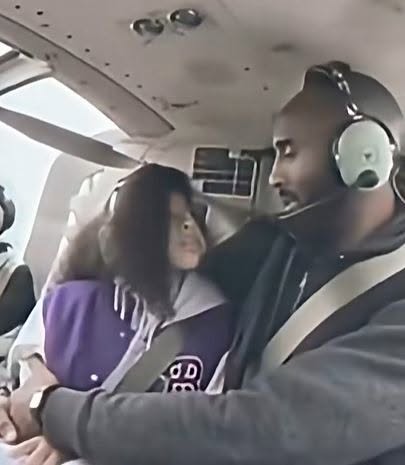
Kobe Bryant’s Final Moments: Remembering a Legend Beyond the Tragedy
On January 26, 2020, the world experienced a moment that seemed impossible to comprehend. Kobe Bryant, one of basketball’s greatest players and most recognizable athletes, died in a helicopter crash in Calabasas, California. He was 41 years old. His daughter Gianna, along with seven other people, also lost their lives.
The news traveled around the world with extraordinary speed. Fans who had grown up watching Bryant dominate basketball courts struggled to believe what they were hearing. For millions of people, Kobe was more than a superstar. He represented determination, discipline, ambition, and an unwillingness to accept anything less than his best.
Because so much misinformation and speculation has circulated about his final moments, it is important to remember that many details should be treated carefully. What can be remembered with certainty is the profound impact Kobe had during his lifetime and the heartbreaking circumstances surrounding his death.
Kobe Bryant’s story began in Philadelphia, Pennsylvania, where he was born on August 23, 1978. Basketball was part of his life from an early age. His father, Joe Bryant, was a professional basketball player, and Kobe developed a deep connection with the sport while growing up.
His family later lived in Italy for several years, where Kobe continued developing his basketball skills. He became fluent in Italian and experienced a different culture while playing basketball at a high level. When he returned to the United States, his ambitions were already enormous.
Bryant entered the NBA directly from high school in 1996. The Los Angeles Lakers selected him in the draft, beginning a career that would eventually become legendary.
At first, he was a young player learning how demanding professional basketball could be. But Kobe possessed something that separated him from many others: an extraordinary work ethic.
He became famous for arriving early, staying late, practicing difficult shots repeatedly, and demanding constant improvement from himself. His mentality eventually became associated with the phrase “Mamba Mentality,” a philosophy centered on focus, resilience, preparation, and continuous growth.
During his 20-year NBA career, Kobe accomplished nearly everything a basketball player could dream of accomplishing.
He won five NBA championships with the Lakers. He was selected to 18 All-Star teams, earned numerous All-NBA honors, and became one of the most feared scorers in league history. In 2008, he was named NBA Most Valuable Player.
One of his most unforgettable performances came on January 22, 2006, when he scored 81 points against the Toronto Raptors. It remains one of the greatest individual scoring performances in NBA history.
Yet statistics alone cannot explain Kobe Bryant’s influence.
For many fans, his greatest lesson was not how to score a basketball. It was how to approach difficult goals.
Kobe frequently spoke about preparation. He believed that talent could only take a person so far. Success required discipline, sacrifice, and the willingness to continue working when nobody was watching.
That message became particularly meaningful after his retirement.
Bryant played his final NBA game on April 13, 2016. In a remarkable farewell performance, he scored 60 points against the Utah Jazz. Afterward, he thanked Lakers fans and famously expressed his love for the game and the city that had supported him throughout his career.
Many athletes struggle to find purpose after retirement. Kobe chose a different path.
He became involved in storytelling, filmmaking, business, writing, and youth sports. His creative work earned him an Academy Award for the animated short film “Dear Basketball” in 2018.
Perhaps most importantly, Kobe devoted significant attention to his family and to supporting young athletes.
His relationship with his daughter Gianna became especially meaningful to fans. Gianna shared her father’s passion for basketball and had aspirations of playing at the highest levels. Kobe often attended her games and spoke proudly about her talent and intelligence on the court.
On January 26, 2020, Kobe and Gianna were traveling by helicopter to a youth basketball tournament at the Mamba Sports Academy. The helicopter crashed in the hills near Calabasas.
There were no survivors.
The tragedy stunned the world.
Athletes, entertainers, coaches, politicians, and ordinary fans shared memories of Kobe and expressed their grief. Basketball arenas held tributes. Players wore his number. Murals appeared in cities around the world. Fans gathered to leave flowers, jerseys, basketballs, and handwritten messages.
The grief was especially powerful because Kobe had seemed larger than life. He had spent decades performing in enormous arenas in front of millions of people. His achievements had made him appear almost indestructible.
But his death reminded people that even the most famous and accomplished individuals are vulnerable to the same uncertainty of life as everyone else.
In the years since the tragedy, Kobe’s legacy has continued to evolve.
His basketball accomplishments remain permanently recorded in NBA history. But his influence extends far beyond the sport.
Young athletes continue to study his footwork, shooting technique, competitiveness, and preparation. Coaches continue to reference his dedication. Entrepreneurs and artists have embraced his message about developing multiple passions and refusing to stop learning.
The phrase “Mamba Mentality” has become shorthand for approaching challenges with determination.
But remembering Kobe only as a relentless competitor would be incomplete.
He was also a father, husband, son, teammate, mentor, storyteller, and creative thinker. His later years demonstrated that his identity was much bigger than basketball.
His final day is therefore not something that should be reduced to sensational headlines or unverified stories. The most meaningful way to remember Kobe Bryant is to look at the life he built and the values he left behind.
His death was tragic and sudden, but his life was extraordinarily full.
He inspired people to practice when they were tired, to continue after failure, to take responsibility for improvement, and to pursue excellence without waiting for someone else to give them permission.
For those who watched him play, Kobe will always be remembered for the impossible shots, the fierce competitiveness, the championship celebrations, and the moments when he seemed to refuse to let his team lose.
For those who knew him personally, he was much more than a basketball player.
And for the generations who never had the opportunity to watch him play live, his story remains a lesson in perseverance.
Kobe Bryant’s final moments were heartbreaking, but they should not define his entire story.
His story is the story of a young boy who dreamed of greatness, a teenager who entered the NBA, a champion who endured pressure, an athlete who reinvented himself, a father who supported his daughters, and a man who continued searching for meaningful work after leaving basketball.
The tragedy ended his life far too soon.
But it did not end his influence.
Every time someone chooses discipline over excuses, continues practicing after failure, pursues a difficult dream, or encourages a young person to believe in their potential, a small part of Kobe’s philosophy lives on.
Kobe Bryant once built his reputation on what happened inside basketball arenas. Today, his greatest legacy exists outside them—in the lives of people who continue to be inspired by the way he approached his work, his family, and his ambitions.
He left the basketball court in 2016, but his story never truly left the game.
And although January 26, 2020, remains one of the saddest days in sports history, Kobe Bryant’s life deserves to be remembered not only for how it ended, but for everything he accomplished before that final chapter.
The numbers, championships, trophies, and records will remain in history.
But perhaps the most enduring part of his legacy is simpler:
Work hard. Keep learning. Face challenges. Love the people who matter. And never stop trying to become better than you were yesterday.
That is the legacy of Kobe Bryant.