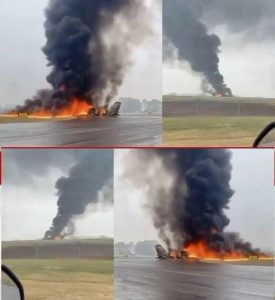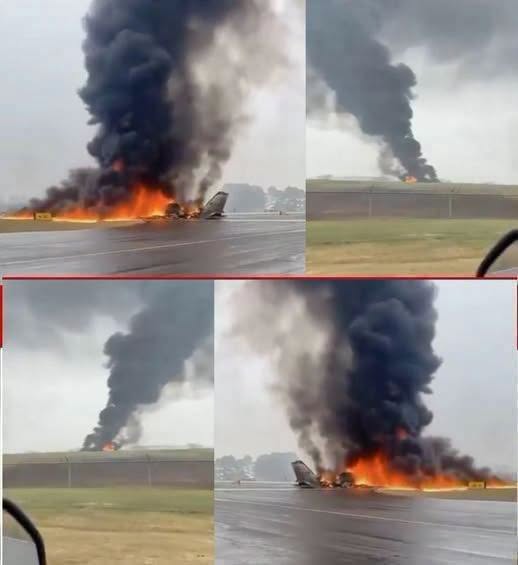
Iran Attacked Right Now? Viral Plane-Crash Claim Sparks Panic as Tensions Escalate
A dramatic headline claiming that Iran has been attacked and a passenger plane carrying more than 244 people has crashed has spread rapidly online, leaving readers frightened and searching for answers.
But amid the rush of alarming posts, one important question must be asked:
What has actually been confirmed?
Current reporting confirms that tensions between the United States and Iran have sharply escalated again. The renewed confrontation follows U.S. strikes on Iranian rocket launchers near the Strait of Hormuz and subsequent Iranian missile attacks aimed at U.S. positions in Jordan. The developments have raised fears that the wider conflict could intensify.
However, the specific claim about a passenger aircraft carrying more than 244 people crashing has not been confirmed by the reliable reports reviewed.
That distinction matters.
In a rapidly developing military crisis, social-media posts can spread much faster than official information. A dramatic photograph, an old video, or an unrelated aircraft accident can suddenly be presented as breaking news.
And once thousands of people begin sharing it, the claim can appear credible simply because it is everywhere.
Why the Number 244 Is Familiar
The number in the viral headline may be contributing to the confusion.
In June 2025, Air India Flight AI171 crashed shortly after taking off from Ahmedabad while carrying passengers and crew bound for London. Reports identified 244 people aboard, and the disaster became one of the world’s most devastating aviation tragedies in recent years.
That tragedy is real—but it is not a new crash in Iran.
The reuse of an old number in a new headline is one reason readers should be particularly careful with sensational breaking-news posts.
A photograph or headline can look recent while actually referring to an event from months or years earlier.
The Situation Between Iran and the United States
While the plane-crash claim remains unverified, the underlying military situation is genuinely serious.
Recent fighting has centered partly around the strategically important Strait of Hormuz, one of the world’s most significant energy corridors.
The United States has carried out strikes against Iranian rocket-launching positions near Larak Island, saying the targets posed a threat to shipping and maritime security. Iran responded with missile attacks directed at U.S. facilities in Jordan, with Jordanian defenses intercepting the missiles, according to current reports.
Iran has also been accused of attempting drone attacks in the region.
The United Arab Emirates said it intercepted an Iranian drone over its territorial waters, adding another layer of concern to an already dangerous situation.
These developments have created anxiety throughout the region.
Governments are watching military movements closely.
Airlines are monitoring security conditions.
Shipping companies are concerned about the safety of vessels traveling through the Gulf.
And ordinary civilians are wondering what might happen next.
The Danger of False Breaking News
During a conflict, misinformation can become almost as frightening as the events themselves.
A post claiming that a passenger aircraft has crashed can cause immediate panic.
Families may begin contacting relatives.
Travelers may fear that their flights are in danger.
People thousands of miles away may believe a major catastrophe has occurred before authorities have confirmed anything.
This is why responsible reporting requires patience.
A genuine large-scale aviation disaster involving more than 244 people would normally generate multiple independent reports from aviation authorities, emergency agencies, airlines, and major news organizations.
If those confirmations are absent, the responsible approach is to describe the claim as unverified, rather than declaring it a fact.
What We Know—and What We Don’t
At the moment, the confirmed picture is already dramatic enough.
The United States and Iran have resumed direct military exchanges after a period of relative calm.
U.S. forces have conducted strikes near the Strait of Hormuz.
Iran has retaliated with missile attacks against U.S. positions in Jordan.
Regional governments are reporting additional military incidents.
And diplomatic efforts remain under intense pressure.
But there is no reliable confirmation in the sources reviewed that a commercial passenger plane carrying more than 244 people has just crashed in connection with today’s fighting.
That means readers should be extremely cautious before sharing the headline.
Why Verification Matters
The internet rewards dramatic headlines.
“Plane crashes” attracts attention.
“Hundreds feared dead” attracts even more.
Add “Iran attacked right now,” and the story becomes almost impossible for many people to ignore.
But emotional impact is not the same thing as accuracy.
A responsible reader should ask several basic questions:
Who first reported the crash?
Is the airline identified?
Is there a flight number?
Where exactly did the aircraft supposedly crash?
Have aviation authorities confirmed it?
Have major news organizations independently reported it?
Are the photographs actually from the incident?
If those questions cannot be answered, the story should be treated with caution.
A Crisis Still Worth Watching
Even without the unverified aircraft claim, the current situation deserves serious attention.
The renewed fighting could have consequences far beyond the immediate battlefield.
The Strait of Hormuz is critically important to global energy markets. Any prolonged disruption could affect oil prices, shipping costs, airline expenses, and economies around the world.
Current reports already indicate that the renewed hostilities are affecting energy markets and maritime traffic.
That means people far from the Middle East could eventually feel the effects of the conflict through higher prices and disruptions to international trade.
At the same time, military escalation creates another danger: miscalculation.
When aircraft, missiles, drones, warships, and military forces operate in a crowded region, even a single mistake can have devastating consequences.
That is why governments and international organizations are watching every development carefully.
The Most Important Message
The headline may be frightening.
The conflict itself is real.
The military exchanges are real.
The danger is real.
But that does not mean every dramatic claim circulating online is true.
The specific allegation that a passenger plane with more than 244 people onboard has just crashed has not been verified by the reliable current sources reviewed.
Until authorities or multiple credible news organizations confirm such an event, it should not be presented as established fact.
In moments of crisis, the truth can sometimes feel slower than the rumor.
But waiting for confirmation is not weakness.
It is responsible journalism.
As events involving Iran, the United States, and the wider Middle East continue to develop, the world will be watching closely.
The next hours could bring new military actions, diplomatic announcements, or additional information about the incidents already reported.
For now, the clearest conclusion is simple:
The conflict has escalated—but the viral claim about a passenger plane carrying more than 244 people crashing has not been confirmed.
And when lives may be involved, accuracy matters more than a shocking headline.