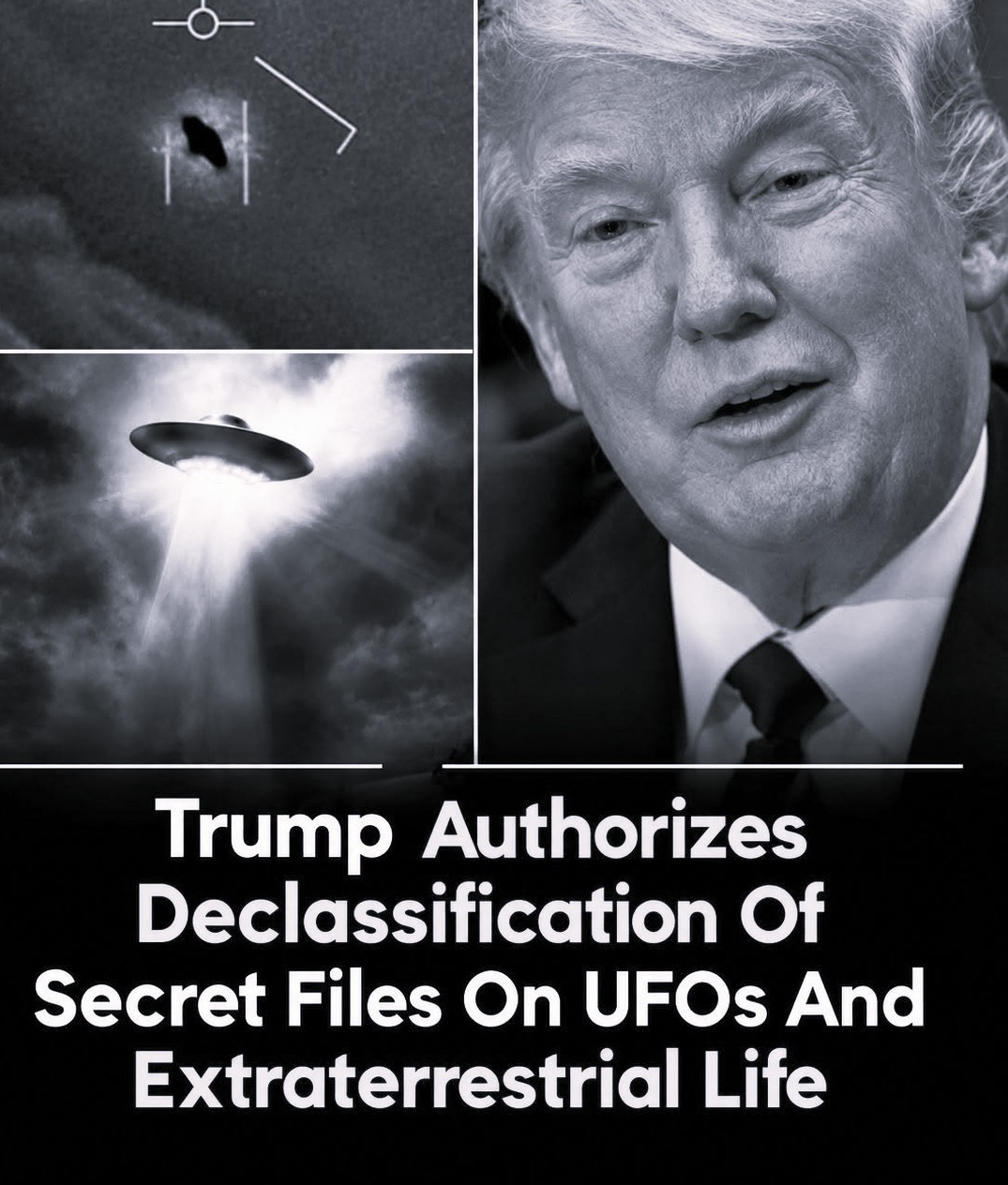
Trump and the UFO Files: Could Secret Extraterrestrial Records Finally Be Revealed?
For decades, UFO stories have occupied an unusual space between national security, science fiction, military secrecy, and public fascination. Reports of unexplained objects in the sky have generated congressional hearings, military investigations, documentaries, books, and countless theories about what the government might know.
Now, the subject has entered a new phase.
In 2026, the Trump administration has taken concrete steps toward releasing government records concerning unidentified anomalous phenomena, commonly known as UAPs or UFOs. The administration’s effort has already produced multiple releases of records, creating a new question: Could some of the most closely guarded UFO information eventually become public?
The answer is more complicated than the most dramatic headlines suggest.
A Presidential Push for Transparency
President Donald Trump has publicly supported releasing government information concerning UFOs and extraterrestrial life. In remarks in April 2026, he said his administration would direct agencies to identify and release government files involving alien and extraterrestrial life, UAPs, UFOs, and related matters.
That announcement immediately attracted enormous attention.
For believers, it raised hopes that decades-old mysteries might finally be resolved. For skeptics, it represented something different: an opportunity to examine government records without automatically assuming that unexplained objects are evidence of extraterrestrial visitors.
Those two perspectives are important because “unidentified” does not automatically mean “alien.”
An object can remain unidentified because investigators lack enough information, because the available imagery is poor, because witnesses disagree, or because the event was never investigated thoroughly.
The Government Has Already Released Files
This is no longer simply a promise of future disclosure.
The Department of War’s PURSUE program—the Presidential Unsealing and Reporting System for UAP Encounters—says the administration is conducting a government-wide effort to locate, review, declassify, and release UAP-related records.
According to the department, the undertaking involves tens of millions of records, including material that exists only on paper and records spanning many decades. The department has been releasing material in multiple tranches.
Five releases had been posted by August 7, 2026.
The released material includes documents, photographs, videos, historical records, and reports involving unexplained aerial observations. The official archive emphasizes that many of the cases remain unresolved rather than declaring that they are extraterrestrial.
That distinction is critical.
What Might Be Hidden in the Remaining Records?
This is where speculation begins.
Government agencies maintain enormous archives containing military reports, intelligence assessments, aviation records, photographs, radar information, witness interviews, and historical correspondence.
Some of these records may concern objects that were eventually identified as aircraft, balloons, drones, atmospheric phenomena, satellites, or other conventional explanations.
Others may remain unresolved.
There could also be records that cannot be released in full because they contain sensitive information about intelligence capabilities, military technology, surveillance systems, or national-security operations.
The National Archives explains that UAP records can be released without redaction, released with portions withheld, or temporarily restricted entirely depending on applicable access rules.
That means “declassification” doesn’t necessarily mean every page becomes completely public.
The National Archives Is Building a Permanent Collection
Perhaps one of the most important developments is happening at the National Archives.
The National Archives and Records Administration has established Record Group 615, dedicated to UAP records. The collection was created under provisions of the 2024 National Defense Authorization Act requiring federal agencies to identify, organize, and transfer relevant records.
Agencies contributing material include organizations such as the Department of Defense, FBI, Department of State, National Security Agency, Department of the Air Force, Federal Aviation Administration, and Office of the Director of National Intelligence.
The collection is being expanded on a rolling basis.
That matters because even if a dramatic “alien revelation” never appears, researchers now have a growing official archive from which they can study decades of UAP reports.
Does This Prove Aliens Exist?
No.
That is perhaps the most important point.
The release of UFO records does not establish that extraterrestrial spacecraft have visited Earth.
It establishes something much more limited: the U.S. government possesses records concerning unexplained aerial phenomena and is making some of those records publicly available.
There is a huge difference between those statements.
A photograph of an unidentified object is evidence that someone photographed something they couldn’t identify. It is not automatically evidence of extraterrestrial technology.
Likewise, a military pilot reporting something unusual is significant and deserves investigation, but the report alone cannot establish the object’s origin.
Scientists require evidence that can withstand independent examination.
Why Are People So Interested?
Part of the fascination comes from the history of secrecy.
For generations, governments have classified information involving aircraft, weapons programs, intelligence operations, and military surveillance.
That secrecy has naturally encouraged speculation.
During the Cold War, for example, highly classified aircraft programs sometimes produced sightings that observers interpreted as UFOs. Some mysterious objects were actually associated with technologies the public wasn’t supposed to know existed.
This history creates a fascinating possibility: some UFO mysteries may ultimately turn out to be examples of secret human technology rather than extraterrestrial spacecraft.
But that possibility doesn’t explain every report.
And that’s precisely why the records matter.
Could a Major Revelation Still Happen?
It is possible that future releases could contain information that significantly changes public understanding of particular UAP incidents.
A previously unknown military report, clearer imagery, additional sensor data, or historical correspondence could potentially help investigators solve cases that have remained mysterious for years.
However, there is currently no verified public evidence showing that the government is preparing to reveal confirmed extraterrestrial spacecraft, alien bodies, or definitive proof of non-human visitors.
That distinction should remain at the center of the discussion.
The current releases are substantial, but data release is not the same thing as alien confirmation.
The Most Interesting Possibility May Be Less Dramatic
Ironically, the most important outcome may not be a sensational photograph of a flying saucer.
It could be something much more mundane: better documentation.
Imagine researchers finally gaining access to decades of records that were previously scattered across different agencies. Investigators could compare witness reports with radar data, satellite information, weather records, flight paths, and historical intelligence assessments.
Patterns might emerge.
Some cases could be solved.
Others could become even more mysterious.
And a small number might remain genuinely unexplained.
That would be scientifically valuable regardless of the ultimate answer.
A New Era for the UFO Question
For decades, the UFO debate often depended on fragments: a blurry photograph here, a witness statement there, an unexplained military encounter somewhere else.
Now, the government is creating a much larger documentary record.
The Department of War says it intends to continue releasing material as it is reviewed and declassified. Meanwhile, the National Archives says its UAP collection will continue expanding as agencies transfer records.
That means the story isn’t finished.
More records could appear.
More historical cases could be examined.
And perhaps some mysteries that have survived for generations will finally receive ordinary explanations.
But there is another possibility—the one that keeps people looking toward the sky.
What if, buried somewhere in decades of government records, there really is something that cannot be explained by aircraft, balloons, drones, satellites, weather, or human technology?
At this point, the public doesn’t have verified evidence that such a revelation exists.
What we do have is something arguably more useful: an expanding paper trail.
And sometimes, the truth isn’t found in one spectacular photograph.
It’s found by opening thousands of documents, comparing the evidence, questioning old assumptions, and following the facts wherever they lead.
For UFO enthusiasts, skeptics, historians, scientists, and curious members of the public, that may be the most intriguing development of all.
The files are opening.
The questions remain.
And the biggest mystery is no longer simply “Are UFOs real?”
It may now be:
“What exactly has the government recorded—and what will the next release reveal?”