BREAKING NEWS: The U.S. Is Already at War — What Happens Next?
Editor’s note: The headline “U.S. begins its war” can be misleading because the United States is already involved in an ongoing military conflict with Iran, rather than suddenly beginning a brand-new war today. As of September 8, 2026, fighting and military confrontation remain active, while diplomatic efforts continue.
For months, the world has watched tensions between the United States and Iran move far beyond ordinary diplomatic confrontation. What began as escalating pressure has developed into a major military conflict involving missiles, naval forces, aircraft, drones, economic sanctions, and attacks across the Middle East.
Now, new developments are once again raising fears that the conflict could become even more dangerous.
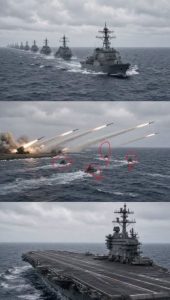
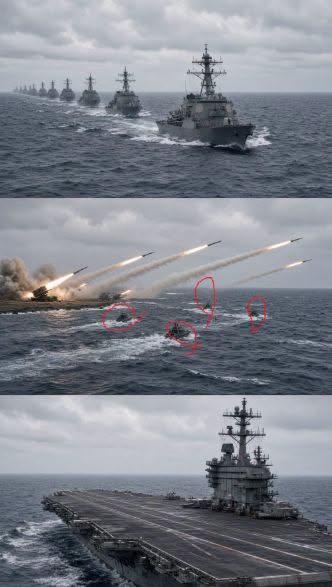
The United States and Iran remain locked in a confrontation involving the Persian Gulf and the strategically important Strait of Hormuz. Recent fighting has included Iranian attacks involving missiles and U.S. military strikes against Iranian-linked maritime targets.
For ordinary people watching the headlines, one question dominates:
How far could this go?
A Conflict That Has Already Changed the Region
The current crisis did not appear overnight.
The conflict has developed over months, involving the United States, Iran, Israel, and other regional actors. According to reporting tracking the war, the first major U.S.-Israeli strikes against Iran began on February 28, 2026, targeting Iranian military and nuclear-related sites. Iran subsequently launched attacks against U.S. assets and infrastructure across the region.
Since then, the confrontation has affected countries far beyond Iran itself.
The Persian Gulf has become a particularly important flashpoint because of the enormous quantity of global energy that moves through the region.
Any prolonged disruption could have consequences far beyond the battlefield.
The Strait of Hormuz Becomes a Central Battlefield
The Strait of Hormuz is one of the world’s most important energy chokepoints.
For that reason, military activity around the waterway immediately attracts international attention.
Iran has threatened restrictions around the strait, while Washington has attempted to maintain pressure on Tehran. Recent fighting has included attacks involving Iranian vessels and U.S. naval forces.
The danger is obvious.
A confrontation involving military ships can escalate extremely quickly.
One missile strike, one mistaken identification, or one attack resulting in significant casualties could trigger retaliation—and retaliation could lead to another round of strikes.
That is how limited military confrontations can become much larger wars.
Oil Prices Are Feeling the Shock
The conflict is also affecting Americans far from the battlefield.
Oil prices have climbed sharply as investors worry about supply disruptions. On September 8, Brent crude approached $100 per barrel, while U.S. stock markets experienced significant declines.
Higher oil prices can eventually affect transportation, manufacturing, food distribution, and household budgets.
When gasoline becomes more expensive, consumers feel it almost immediately.
That means the consequences of the war are not limited to soldiers or military bases.
They can reach millions of families through higher prices.
Iran Warns of Retaliation
Iranian officials have repeatedly threatened retaliation for U.S. military actions.
CBS reported that Iran’s parliament speaker threatened a stronger response following U.S. strikes on Iranian oil tankers. The confrontation has therefore entered a dangerous cycle in which military actions are followed by threats of retaliation.
This creates one of the greatest risks of the conflict: escalation without either side necessarily intending to begin an even larger war.
A government may launch an attack believing it is sending a warning.
The opposing government may interpret the same attack as an act requiring a stronger response.
Then the cycle repeats.
Saudi Arabia Is Also Being Pulled Into the Crisis
The latest developments demonstrate how quickly the conflict can spread geographically.
On September 8, Iran-backed Houthi forces launched missile and drone attacks against several southern Saudi Arabian cities, according to Reuters. The attacks reportedly injured more than 70 people and damaged important energy infrastructure. Saudi Arabia responded with strikes against Houthi positions in Yemen.
The significance goes beyond Saudi Arabia.
Every new country drawn into the fighting creates another potential front.
And every additional front makes diplomacy more difficult.
What About the Rest of the World?
The international community is watching closely.
European and Asian governments are particularly concerned about energy supplies, shipping routes, inflation, and the possibility that the conflict could spread.
At the same time, another major war continues in Ukraine.
On September 8, Russian forces launched a major attack on Kyiv involving ballistic missiles and drones, killing civilians and damaging residential and public infrastructure. The attack occurred shortly after U.S. envoys left the region following diplomatic meetings intended to revive peace efforts.
That means Washington is dealing with multiple international crises simultaneously.
The pressure on U.S. military resources, diplomats, allies, and policymakers is enormous.
Is a Larger War Inevitable?
Not necessarily.
Military escalation can sometimes be followed by negotiations.
In fact, diplomacy remains active.
U.S. envoys Steve Witkoff and Jared Kushner have recently held discussions with Ukrainian and Russian leaders, while the broader international community continues searching for ways to reduce conflicts rather than expand them.
The same principle applies to the Middle East.
Even while military forces confront one another, governments can communicate through diplomatic channels.
The existence of fighting does not mean negotiations have ended.
What Could Happen Next?
There are several possible paths.
The first is continued limited conflict.
The United States and Iran could continue exchanging attacks without moving toward a full-scale ground invasion.
The second possibility is a negotiated settlement.
If both sides decide that the economic and military costs have become too high, negotiations could eventually produce another ceasefire or agreement.
The third possibility is major escalation.
An attack causing large numbers of casualties, damage to critical infrastructure, or the destruction of a major military asset could trigger a much stronger response.
That is the scenario governments around the world fear most.
What Does “War” Mean for Americans?
For many Americans, war can feel distant until its consequences become visible.
Military families may face deployments.
Fuel prices may rise.
Markets can become unstable.
Cybersecurity concerns can increase.
And Americans may see more military activity at home and abroad.
But there is another consequence that is harder to measure: uncertainty.
People begin wondering whether the conflict will last weeks, months, or years.
They wonder whether their loved ones will be deployed.
They wonder whether another country will enter the conflict.
And they wonder what the next headline will bring.
The Most Important Story Is Still Unfolding
The current situation is serious, but sensational headlines can sometimes make events appear simpler than they really are.
The United States has not merely “started a war” today. Rather, it is already engaged in an ongoing conflict with Iran, while military operations, threats, sanctions, and diplomatic efforts continue.
And that distinction matters.
The coming weeks could determine whether the conflict moves toward negotiation or becomes even more dangerous.
For now, the world is watching the Persian Gulf, the Strait of Hormuz, Iran, Israel, Saudi Arabia, and Washington.
Every missile launch matters.
Every military movement matters.
Every diplomatic meeting matters.
Because in a conflict this volatile, one decision can change everything.
The war has already begun. The question now is whether the next chapter brings escalation—or a path toward peace.