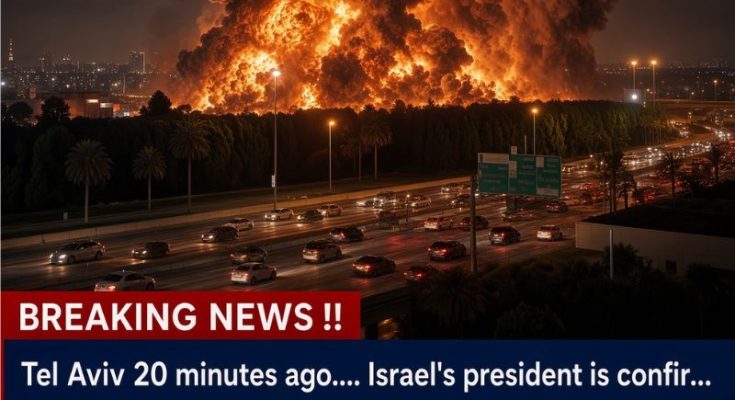
Deadly Missile Strike in Beit Shemesh Deepens Israel-Iran Escalation
A deadly missile strike on the Israeli city of Beit Shemesh has become one of the most devastating episodes of the Israel-Iran conflict, highlighting once again how quickly a regional confrontation can reach civilian communities far from the immediate battlefield.
On March 1, 2026, an Iranian ballistic missile struck a residential area in Beit Shemesh, west of Jerusalem. The impact caused extensive destruction, killed nine people and wounded dozens more. Israeli emergency services and military search-and-rescue teams rushed to the scene as rescuers searched through shattered concrete, damaged buildings and debris.
The strike was particularly devastating because it hit an area containing homes and a synagogue, with a public bomb shelter beneath the building also heavily damaged.
For families living in Beit Shemesh, the attack transformed an ordinary day into a scene of destruction and grief.
A City Suddenly Thrown Into Crisis
Beit Shemesh is located roughly 30 kilometers west of Jerusalem. Although residents have lived under the threat of missile attacks during the conflict, the scale of the destruction in this particular strike shocked the community.
Warning sirens sounded before the impact, sending residents toward protected spaces.
Then came the explosion.
The missile caused severe damage across the surrounding area. Buildings were damaged, vehicles were affected and large amounts of rubble covered the streets.
Emergency crews immediately began working to locate survivors.
According to reports, Magen David Adom initially declared eight people dead at the scene before the death toll rose to nine. Dozens of wounded people were transported to hospitals in Jerusalem and nearby medical facilities.
Among those killed were three teenage siblings, making the tragedy even more painful for the local community.
Rescue Operations Underway
The aftermath of a ballistic missile impact can be extraordinarily dangerous.
Rescuers must work around unstable structures, broken concrete, fires, damaged electrical systems and the possibility that additional people remain trapped beneath the rubble.
Israeli Home Front Command search-and-rescue personnel joined medical teams at the scene. Helicopter support was also used to assist with evacuation and emergency response.
Medical workers faced another difficult challenge: treating multiple victims at the same time while continuing to search for survivors.
Hospitals in Jerusalem received wounded civilians, including children.
Scenes from the area showed emergency personnel moving through the destruction as authorities attempted to account for everyone who had been in the affected buildings.
Why the Attack Was So Significant
The Beit Shemesh strike was not simply another missile incident.
It demonstrated the ability of Iranian ballistic missiles to threaten populated areas deep inside Israel.
For civilians, the distinction between military targets and residential neighborhoods becomes painfully clear when a missile lands near homes.
The strike also raised questions about the effectiveness of defensive systems and civilian protection.
Israeli authorities stated that the warning system had functioned as planned in the Beit Shemesh area, while emphasizing that residents should continue using shelters and protected spaces when instructed.
Even the strongest defensive systems cannot guarantee that every incoming missile will be intercepted or that every protected structure will survive a direct impact.
That reality has left many Israeli families living with constant uncertainty.
The Human Cost
Behind every casualty number is a family.
A number on a news report cannot describe the pain experienced by parents who lose children, children who lose parents, or communities suddenly forced to mourn neighbors and friends.
The deaths of three teenage siblings were especially heartbreaking.
Their story became one of the most painful symbols of the Beit Shemesh attack, illustrating how civilians—including young people—can become victims of a conflict they did not choose.
The emotional consequences will likely last much longer than the physical reconstruction.
Families may return to damaged homes.
Buildings may eventually be repaired.
Destroyed religious and community facilities can be rebuilt.
But people who were killed cannot be brought back.
A Conflict Growing More Dangerous
The Beit Shemesh attack occurred amid a much broader escalation between Israel, Iran and their respective allies.
Missile attacks, military operations and retaliatory strikes have repeatedly increased the possibility that the conflict could spread beyond the original combat zones.
The danger is not limited to Israel and Iran.
Regional states, U.S. forces, armed groups and critical infrastructure have all become part of a wider security crisis.
More recent developments in September have demonstrated that tensions remain high across the region. Reuters reported that Iran and its allies have continued retaliatory actions involving missile and drone attacks, while Israel and the United States have continued military operations connected to the wider conflict.
The situation therefore remains extremely volatile.
Reconstruction After Destruction
One of the most powerful developments following the Beit Shemesh tragedy has been the community’s effort to rebuild.
A synagogue destroyed in the missile strike was later reconstructed and rededicated in September, shortly before Rosh Hashanah. The rebuilding effort became a symbol of recovery after an attack that had devastated the local community.
The rebuilding does not erase what happened.
Instead, it demonstrates how communities attempt to continue living after tragedy.
A repaired building can become a reminder of both loss and resilience.
For residents, returning to familiar streets and community spaces may be an important part of recovering from the psychological trauma caused by the attack.
What Happens Next?
The biggest question is whether attacks like the Beit Shemesh strike will become part of a prolonged cycle of retaliation.
Every missile strike creates pressure for another response.
Every military operation can generate another round of retaliation.
And each escalation increases the risk that civilians will once again be caught in the middle.
Diplomatic efforts therefore remain critically important, even when military tensions are extremely high.
A lasting reduction in violence would require difficult negotiations involving multiple governments and armed groups.
Until that happens, residents across the region remain vulnerable to sudden attacks.
A Reminder of the Human Cost of War
The destruction in Beit Shemesh offers a sobering reminder that wars are ultimately experienced by ordinary people.
They are experienced by families hiding from sirens.
By parents trying to protect their children.
By emergency workers searching through rubble.
By doctors treating injured civilians.
By communities mourning people they knew.
And by survivors trying to rebuild their lives after everything around them has changed.
The strategic objectives discussed by governments and military leaders can seem distant from the people living beneath the missiles.
But for civilians, war is measured in very personal terms.
A destroyed home.
A missing loved one.
A hospital room.
A funeral.
A street that no longer looks the same.
Final Thoughts
The deadly missile strike in Beit Shemesh was one of the most tragic attacks of the Israel-Iran conflict.
Nine people lost their lives, dozens were injured, homes and community buildings were destroyed, and an entire community was forced to confront the devastating consequences of regional warfare.
Months later, the rebuilding of damaged community spaces has shown that life continues despite unimaginable loss.
But rebuilding buildings is easier than rebuilding lives.
The greatest hope for civilians on all sides is that the cycle of missile attacks and retaliation eventually gives way to diplomacy, security and lasting peace.
Until then, the tragedy in Beit Shemesh remains a painful reminder of what happens when regional tensions escalate into direct attacks—and of the human beings who pay the highest price.