American Airlines Flight 191: The Tragedy That Shook Chicago
On May 25, 1979, a routine holiday-weekend flight from Chicago to Los Angeles became one of the deadliest aviation disasters in American history.
American Airlines Flight 191 was scheduled to leave Chicago O’Hare International Airport and fly to Los Angeles. On board were 271 people—258 passengers and 13 crew members. Moments after takeoff, the aircraft suffered a catastrophic mechanical failure and crashed near the airport.
All 271 people aboard were killed.
Two people on the ground also lost their lives, bringing the total number of fatalities to 273.
The tragedy shocked Chicago, the aviation industry, and people across the United States.
The aircraft involved was a McDonnell Douglas DC-10, a large three-engine wide-body passenger jet that had entered service only a few years earlier. Flight 191 appeared to begin normally that Friday afternoon.
The weather was suitable for departure, and the aircraft began its takeoff from O’Hare’s Runway 32R.
But just as the aircraft lifted from the runway, disaster struck.
Witnesses saw one of the aircraft’s engines separate from the left wing. The engine and its supporting pylon broke away from the aircraft as Flight 191 climbed.
The separation caused severe damage to the aircraft’s left wing and affected important flight-control systems.
Inside the cockpit, the crew faced an almost impossible situation.
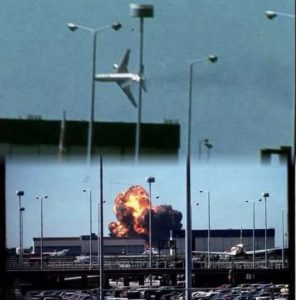
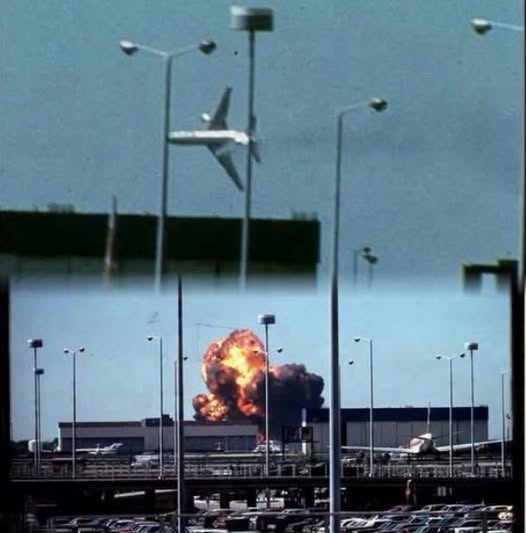
The aircraft continued climbing briefly, but it was unable to maintain normal control. The pilots attempted to respond to the emergency, but the airplane began losing lift and rolling toward the left.
The aircraft reached only a short distance beyond the runway before it descended rapidly.
At approximately 3:04 p.m., Flight 191 crashed into an open area near O’Hare.
The impact destroyed the aircraft and created a massive fire.
Emergency crews immediately rushed toward the crash site.
But the destruction was overwhelming.
There were no survivors among the 271 people aboard.
The two people killed on the ground were also victims of the disaster.
The crash scene quickly became one of the largest emergency operations Chicago had ever witnessed.
Firefighters, police officers, medical personnel, airport workers, investigators, and other emergency responders converged on the area.
The tragedy was particularly difficult because many people at the airport had witnessed the aircraft take off only moments earlier.
For families waiting to hear from loved ones, the hours that followed were filled with uncertainty and fear.
Airline officials began working to identify passengers and notify relatives.
News organizations across the country interrupted regular programming to report the crash.
As investigators began examining the wreckage, attention focused on why the left engine had separated from the aircraft during takeoff.
The investigation eventually determined that the engine and pylon had separated because of damage associated with maintenance procedures.
Investigators found that improper handling of the engine-pylon assembly during maintenance had caused structural damage.
The damage weakened the attachment system.
Although the problem was not immediately visible to airline personnel, it eventually contributed to the catastrophic separation during takeoff.
The loss of the engine itself was only part of the problem.
When the engine and pylon separated, they damaged the aircraft’s left wing and severed important hydraulic lines. The aircraft also lost electrical power to some instruments.
The crew’s ability to understand the full extent of the emergency was severely limited.
One of the most significant findings concerned the warning system.
A cockpit stall-warning system was designed to alert the pilots if the aircraft approached an aerodynamic stall. But because of the damage caused during the engine separation, the warning system did not operate normally.
The pilots therefore had incomplete information about the aircraft’s condition.
Flight 191 continued climbing while the crew attempted to determine what had happened.
The aircraft’s speed and configuration became critical.
With severe damage to the left wing and flight-control systems, the aircraft could no longer be controlled normally.
The left wing dropped.
The nose lowered.
The airplane descended rapidly.
Within seconds, the situation became irreversible.
The crash resulted in enormous loss of life and had a profound effect on aviation safety.
Investigators did not treat the disaster as simply a matter of pilot error.
Instead, the investigation examined the entire chain of events—from aircraft maintenance procedures to the design of the engine attachment system and the information available to the flight crew.
The disaster highlighted how a seemingly small maintenance error could eventually produce catastrophic consequences.
Following the crash, changes were made to maintenance procedures involving engine removal and installation on DC-10 aircraft.
The tragedy also contributed to broader discussions about aviation safety, maintenance training, inspection procedures, and aircraft design.
The DC-10 itself had already experienced serious scrutiny before Flight 191, particularly following another major accident involving a cargo-door failure.
The Chicago disaster intensified public concern about the aircraft.
However, aviation safety experts emphasized that understanding an accident requires examining specific failure mechanisms rather than simply blaming an entire aircraft type.
Over time, investigators and regulators implemented measures intended to prevent similar maintenance-related failures.
Flight 191 remains an important case study in aviation safety because it demonstrated that accidents rarely result from a single isolated problem.
Instead, multiple factors can interact.
A maintenance procedure can create hidden damage.
That damage can remain undetected.
A structural component can eventually fail.
The failure can damage other aircraft systems.
The flight crew can then have only seconds to respond to a rapidly developing emergency.
That chain of events was devastating on May 25, 1979.
For the families of the victims, however, the disaster was never simply an aviation case study.
It represented the loss of parents, children, spouses, brothers, sisters, friends, and colleagues.
Each passenger had a destination.
Some were traveling for vacation.
Some were returning home.
Others were beginning journeys that were supposed to continue for many years.
Instead, their lives ended within minutes of departure.
The tragedy also left a lasting mark on Chicago.
O’Hare was—and remains—one of the world’s busiest airports. Thousands of aircraft take off and land there every day.
The crash demonstrated the enormous responsibility carried by airlines, maintenance organizations, airport personnel, regulators, and flight crews.
Modern commercial aviation is built around lessons learned from disasters.
Every investigation can reveal weaknesses that need to be corrected.
Every safety improvement can potentially prevent another family from experiencing the kind of loss suffered after Flight 191.
Today, American Airlines Flight 191 is remembered not only because of the number of people who died, but because of what investigators learned from the disaster.
The final death toll of 273 people made it one of the deadliest aviation accidents in the United States at the time.
Yet the most important legacy of the tragedy is the effort to ensure that the same sequence of failures does not happen again.
The story of Flight 191 is therefore both heartbreaking and instructive.
It reminds us that aviation safety depends on thousands of individual decisions, procedures, inspections, and safeguards working correctly.
When one part of that system fails, other layers must be strong enough to prevent catastrophe.
On that Friday afternoon in 1979, those defenses were overwhelmed.
The result was a tragedy that Chicago—and the aviation world—would never forget.
More than four decades later, the names of the victims remain part of the history of American aviation.
Their lives were lost in one of the most devastating aircraft accidents the United States had experienced.
But their story also contributed to improvements in aircraft maintenance and safety procedures that have helped make commercial aviation safer.
Flight 191 began as an ordinary journey from Chicago to Los Angeles.
It ended only moments after takeoff.
The 273 lives lost that day remain a solemn reminder of the importance of learning from tragedy—and of the responsibility to make every future flight as safe as possible.