In the midst of the escalating conflict between the United States, Israel, and Iran, a controversial allegation has emerged: some American military commanders have reportedly told troops that the war with Iran is part of “God’s plan” and connected it to the biblical concept of Armageddon. The claims have sparked intense debate about religion, politics, and the role of faith within the U.S. military.
According to reports cited by the watchdog organization Military Religious Freedom Foundation (MRFF), more than 200 U.S. service members have filed complaints describing briefings in which commanders framed the war with Iran as a divinely sanctioned conflict tied to the end-times prophecy found in the biblical Book of Revelation.
These complaints reportedly came from soldiers across multiple branches of the U.S. military, including the Army, Marines, Air Force, Navy, and even the Space Force. The incidents were said to involve more than 40 units located at over 30 military installations around the world.
The Allegations from Service Members
Several of the complaints describe similar scenarios. In one example, a non-commissioned officer wrote that during a combat readiness briefing, their commander attempted to reassure troops about the escalating war by saying the conflict was “all part of God’s divine plan.”
The officer also claimed that the commander cited passages from the Book of Revelation and suggested the conflict could be linked to Armageddon—the prophesied final battle in Christian theology that precedes the return of Jesus Christ.
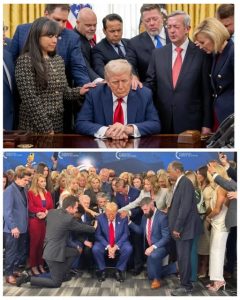
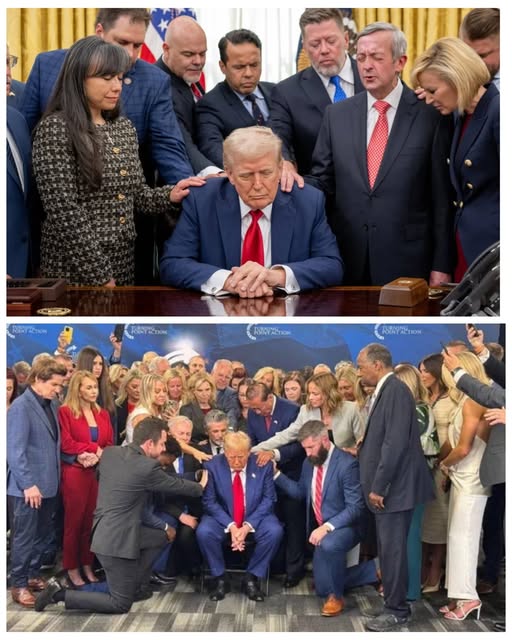
According to the complaint, the commander allegedly told troops that Donald Trump had been “anointed by Jesus” to initiate the conflict with Iran and “light the signal fire” that would trigger prophetic events.
While these statements have not been officially verified by the Pentagon, the reports have fueled intense controversy because they suggest that religious ideology may have been used to frame a real-world military operation.
Who Raised the Alarm?
The complaints were collected by the Military Religious Freedom Foundation, a nonprofit organization that advocates for the separation of church and state within the U.S. armed forces. The group’s founder, Mikey Weinstein, said the reports reflect a worrying trend of “Christian nationalist” rhetoric appearing in military leadership.
Weinstein argues that commanders using religious language in this way can create pressure on troops to conform to a specific belief system. In a highly structured hierarchy like the military, he says, subordinates may feel unable to object even if they belong to different faiths or no faith at all.
Some complaints reportedly came from units with diverse religious backgrounds, including Christians, Muslims, and Jews. This diversity, critics say, makes religious messaging by commanders particularly problematic.
Legal and Constitutional Concerns
The controversy also raises serious constitutional questions. Members of the U.S. military swear an oath to defend the Constitution, which includes the First Amendment’s prohibition on government establishment of religion.
In practical terms, this means commanders are generally expected to avoid using their authority to promote or impose religious beliefs on subordinates. Military regulations emphasize religious freedom, meaning troops are allowed to practice their own faith—or none at all—without pressure from superiors.
Critics argue that framing a military conflict as part of a divine prophecy risks crossing that line.
However, supporters of religious expression in the military counter that commanders and soldiers also retain personal religious freedoms. They say that individuals expressing faith in difficult situations—such as preparing for war—has long been part of military culture.
The Wider Context: War with Iran
The controversy comes at a moment of extreme tension in the Middle East. Recent military operations involving the United States and Israel have targeted Iranian military infrastructure, triggering retaliatory strikes and escalating fears of a broader regional war.
Reports indicate that the conflict has already disrupted global energy markets and triggered military alerts across several countries in the region.
As tensions rise, narratives about the war’s meaning—whether strategic, political, or religious—have increasingly entered public discourse.
Religion and War: A Historical Pattern
This is not the first time religious language has been associated with war. Throughout history, political leaders and military commanders have sometimes invoked divine guidance or moral righteousness when describing conflicts.
Examples range from medieval crusades to modern rhetoric framing wars as struggles between good and evil. In the United States, presidents and military leaders have occasionally used religious language when addressing troops, especially during moments of crisis.
However, critics say explicitly linking military operations to biblical prophecy is far more controversial, especially in a secular constitutional system.
The Pentagon’s Response
So far, the Pentagon has not confirmed the specific allegations described in the complaints. Some officials have referred reporters to statements explaining the strategic reasons for military action against Iran, such as concerns about missile capabilities and threats to U.S. allies.
Because the complaints are anonymous, verifying each incident may be difficult. Nonetheless, the reports have prompted calls for internal review and oversight.
A Divided Reaction
Public reactions to the reports have been sharply divided.
Some commentators see the allegations as evidence of dangerous religious extremism influencing military culture. They warn that framing geopolitical conflicts as apocalyptic religious battles could escalate tensions and undermine rational decision-making.
Others believe the story is being exaggerated or misinterpreted. They argue that isolated comments from individual commanders should not be portrayed as official policy or a widespread phenomenon.
What Happens Next
Whether the allegations prove accurate or exaggerated, the controversy highlights the delicate balance between personal faith and institutional neutrality in the U.S. military.
If investigations confirm that commanders used their authority to promote religious interpretations of the war, disciplinary action could follow under military regulations governing conduct and religious neutrality.
At the same time, the debate reflects deeper cultural and political divisions in American society—particularly over religion’s role in government and public life.
As the conflict with Iran continues to evolve, the question remains: how much influence should faith have in shaping the narrative of war?