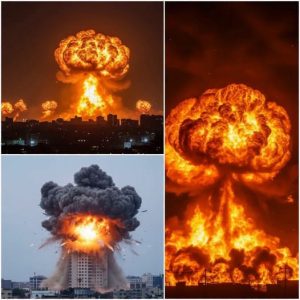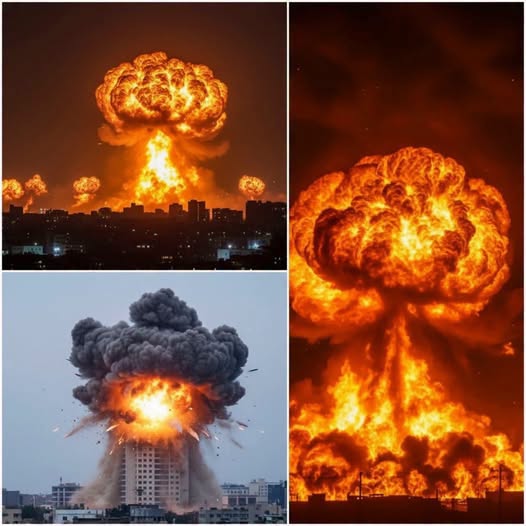
BREAKING NEWS: Maximum Worldwide Alert — Is the World Entering a New Era of War?
The words are spreading rapidly across social media:
“BREAKING NEWS. Maximum worldwide alert. The war begins…”
For anyone reading those words on a phone screen, the message can immediately create fear. Does it mean a new world war has officially started? Are governments preparing for a global confrontation? Has something happened that the public has not yet been told?
The reality is more complicated.
As of September 29, 2026, the world is experiencing several serious and interconnected conflicts, but the dramatic phrase “the war begins” should not automatically be interpreted as confirmation that a single worldwide war has officially started.
What is undeniable is that international tensions remain extremely high.
A World Already Under Pressure
The Middle East remains one of the most dangerous areas of international concern. The United States and Israel are involved in an ongoing war with Iran, while diplomatic efforts are continuing alongside military confrontation.
Reuters reported Tuesday that U.S. and Iranian officials were still involved in discussions through intermediaries, even as President Donald Trump rejected reports that he had offered Iran sanctions relief. Iranian President Masoud Pezeshkian has said Iran is open to negotiations but would not accept coercion.
At the same time, the conflict has affected global energy markets.
Oil prices have remained under pressure because the fighting has disrupted energy supplies and raised concerns about the security of shipping routes. The Strait of Hormuz, one of the world’s most important energy corridors, remains a major focus of international attention.
That means the consequences of the conflict are not limited to the countries directly involved.
A military crisis in one region can affect fuel prices, transportation, food costs, financial markets and international trade thousands of miles away.
Europe Faces Its Own Security Crisis
Meanwhile, the war between Russia and Ukraine continues.
The latest fighting has included Russian missile and drone attacks, while Ukraine continues to defend its territory and conduct attacks against Russian military and industrial targets.
The Associated Press reported that Russia has intensified attacks around Kyiv using ballistic missiles and fast jet-powered drones. Ukraine’s air-defense forces have faced shortages of some Western-made interceptor missiles, adding another layer of pressure.
European governments are also increasingly concerned about security incidents beyond the traditional battlefield.
On September 29, European officials were discussing allegations of Russian-linked sabotage and other hybrid activities. At the same time, Ukraine reported renewed Russian strikes affecting several regions and infrastructure.
These developments explain why words such as “alert,” “escalation,” and “global security” are appearing so frequently in headlines.
But heightened security does not automatically mean that a global war has begun.
Why Headlines Can Be Misleading
The phrase “maximum worldwide alert” sounds like the name of a formal global emergency declaration.
However, there is an important distinction between a dramatic social-media headline and an official declaration from governments or international organizations.
Governments regularly increase military readiness when threats rise.
Air forces may conduct additional patrols.
Navies may move ships.
Military commanders may increase surveillance.
Countries may strengthen border security.
Emergency agencies may review contingency plans.
None of these actions alone proves that the entire world has entered a new war.
In fact, one of the most important lessons during an international crisis is to separate confirmed events from predictions and speculation.
A headline may say that “the war begins,” while the actual evidence may describe negotiations, military movements, threats or preparations.
Those are serious developments—but they are not necessarily the same thing.
The Danger of Miscalculation
Perhaps the greatest danger during periods of intense international tension is not only deliberate military action.
It is miscalculation.
When governments are operating under pressure, a single incident can create a chain reaction.
A missile can be misidentified.
A military aircraft can enter disputed airspace.
A naval encounter can become dangerous.
A cyberattack can be incorrectly attributed.
A political statement can be interpreted as a threat.
And when several countries are already involved in conflicts, the consequences of a mistake can become much larger.
That is why diplomatic communication remains so important.
Even countries that strongly disagree with one another often maintain secret or indirect communication channels specifically because those channels can prevent misunderstandings from becoming catastrophic.
What About the Rest of the World?
The international security picture extends beyond Europe and the Middle East.
Asia also remains closely watched.
On September 29, Reuters reported that South Korea said North Korean mines were responsible for a blast in the Demilitarized Zone that injured two South Korean soldiers. Seoul described the placement of the mines as a violation of the Korean War armistice.
The situation demonstrates how several separate security crises can exist at the same time.
That does not mean all of these conflicts are automatically connected.
It does mean that governments around the world are watching one another more carefully.
Fear Travels Faster Than Facts
There is another battlefield that receives less attention: social media.
During moments of crisis, information can travel around the world within seconds.
A video from one country can be presented as footage from another.
An old photograph can suddenly be described as a new attack.
A prediction can be rewritten as a confirmed event.
A dramatic headline can receive millions of views before journalists or officials have time to verify the underlying claim.
That is why readers should pause before sharing frightening headlines.
Ask:
Who reported this?
When did it happen?
Is there an official confirmation?
Are multiple credible news organizations reporting the same event?
Does the article actually support the headline?
These simple questions can prevent misinformation from spreading during an already dangerous situation.
What Happens Next?
Nobody can know exactly what will happen next.
The current situation remains fluid.
Military operations continue in several regions. Diplomats continue attempting negotiations. Governments are monitoring threats, while ordinary people are watching events unfold with concern.
The most important fact is that serious international conflicts are already happening.
But that is different from saying that a newly declared worldwide war has officially begun.
For now, the world remains in a period of extraordinary geopolitical tension.
The decisions made by governments, military leaders and diplomats in the coming days could influence whether these conflicts remain geographically limited or become even more interconnected.
Stay Informed, But Stay Calm
The headline “Maximum worldwide alert. The war begins” is powerful because it immediately captures attention.
But powerful words are not the same as verified facts.
The world does face genuine dangers. Wars are being fought. Civilians are suffering. Military forces are operating at high levels of readiness. Energy markets are being affected. Diplomatic relationships are under enormous pressure.
Yet in moments like these, accurate information matters more than fear.
Before believing or sharing a dramatic breaking-news post, look beyond the headline.
Check the date.
Check the source.
Look for confirmation.
And remember that international crises can change rapidly.
The world does not need more panic.
It needs people who are informed, careful and willing to distinguish between what is confirmed, what is being reported, and what is merely being predicted.
The situation is serious. The tensions are real. But the claim that a new worldwide war has officially begun should not be accepted without credible confirmation.