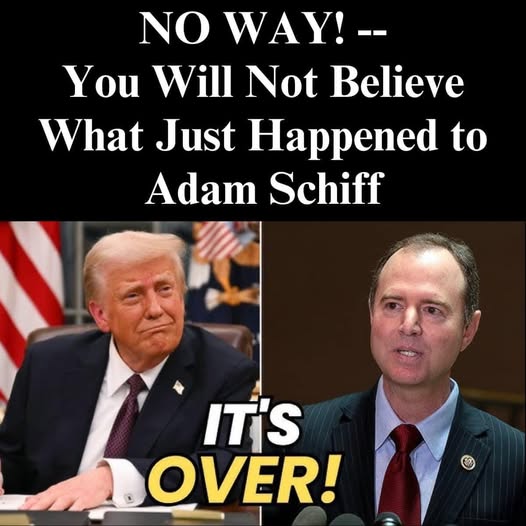
Schiff Demands Bold, Unified Action
In a moment marked by rising political tension and mounting national challenges, Representative Adam Schiff has called for what he describes as “bold, unified action” from lawmakers and civic leaders across the country. Known for his prominent role in congressional investigations and his vocal criticism of executive overreach, Schiff’s latest remarks signal a renewed push for party cohesion and decisive governance at a time when polarization continues to define Washington.
Schiff’s message centers on urgency. In recent public appearances and statements, he has emphasized that incremental responses are no longer sufficient to address the scale of issues facing the nation. From safeguarding democratic institutions to responding to economic pressures and national security concerns, Schiff argues that fragmented efforts will only prolong instability. Instead, he calls for coordinated strategies that align legislative priorities with long-term democratic principles.
At the heart of his appeal is the belief that democracy functions best when institutions operate transparently and when elected officials act collectively in defense of constitutional norms. Schiff has frequently underscored the importance of protecting election integrity, strengthening oversight mechanisms, and ensuring that no branch of government exceeds its authority. His stance reflects a broader concern among some lawmakers that trust in public institutions has eroded, making unity not just politically advantageous but structurally necessary.
Observers note that Schiff’s call for unity is directed primarily at fellow Democrats, urging them to avoid internal fragmentation that could weaken legislative leverage. While ideological diversity exists within the party, Schiff has suggested that differences in approach should not overshadow shared goals. According to him, a divided caucus risks diluting the party’s ability to enact meaningful reforms or counter opposing agendas effectively.
Critics, however, argue that calls for unity often gloss over legitimate policy disagreements. Within any major political party, tensions arise over strategy, messaging, and legislative compromise. Some progressives advocate sweeping reforms in areas such as climate policy and healthcare, while moderates emphasize incremental change and bipartisan negotiation. Schiff’s challenge is to bridge those internal divides while maintaining clarity of purpose.
National security remains a central theme in Schiff’s rhetoric. Having served as chairman of the House Intelligence Committee, he has long positioned himself as a defender of intelligence community oversight and global democratic alliances. He argues that unified congressional action is crucial when confronting foreign interference, cyber threats, and geopolitical instability. In his view, partisan gridlock sends a signal of weakness abroad.
Economic concerns also factor into Schiff’s demand for coordinated leadership. With inflationary pressures and concerns about long-term fiscal sustainability lingering in public discourse, he maintains that decisive legislative action is needed to stabilize markets and support working families. Fragmented policymaking, he contends, can create uncertainty that undermines both investor confidence and consumer security.
Beyond policy specifics, Schiff’s remarks highlight a deeper philosophical question: how can a pluralistic democracy balance healthy debate with effective governance? He contends that unity does not mean uniformity. Rather, it involves aligning around shared democratic values even amid tactical disagreements. For Schiff, this includes defending the rule of law, protecting civil liberties, and upholding ethical standards in public service.
Public reaction to Schiff’s comments has been mixed. Supporters see his call as a necessary response to escalating challenges and a reminder that leadership requires courage and clarity. They argue that in times of institutional stress, decisive collective action is essential. Detractors counter that rhetoric about unity can appear partisan if it excludes bipartisan collaboration. They suggest that true unity should extend beyond party lines to include constructive engagement with political opponents.
Historically, moments of unified action in Congress have often followed crises. After national emergencies or significant threats, lawmakers have sometimes set aside partisan divides to pass sweeping legislation. Schiff’s message implies that the current political climate warrants similar seriousness, even absent a singular defining event. He warns that complacency in the face of gradual democratic erosion can be as dangerous as inaction during acute crises.
Communication strategy also plays a role in Schiff’s push. Political messaging shapes public perception, and he appears keenly aware that clarity and consistency can reinforce public confidence. By framing his appeal around unity and boldness, he positions himself as both a pragmatic legislator and a guardian of democratic norms. This dual framing resonates with voters who prioritize institutional stability.
Yet the path toward unified action is complex. Legislative compromise requires negotiation, concessions, and strategic prioritization. Lawmakers must balance immediate political pressures with long-term objectives. Schiff’s emphasis on boldness suggests he favors assertive moves rather than cautious incrementalism, but implementing that vision requires consensus-building behind closed doors as well as persuasive advocacy in public forums.
The broader political environment further complicates matters. Social media amplifies ideological extremes, often rewarding divisive rhetoric over measured dialogue. In such an environment, sustaining unity demands disciplined communication and a willingness to focus on shared outcomes rather than internal rivalries. Schiff’s challenge lies in translating aspirational language into tangible legislative achievements.
Ultimately, Schiff’s call for bold, unified action reflects a broader anxiety about the resilience of democratic systems in an era of rapid change. Whether addressing electoral security, economic reform, or institutional oversight, he argues that piecemeal solutions fall short of the moment’s demands. His appeal underscores the belief that democratic strength depends not only on policy outcomes but also on the collective resolve of those entrusted with governance.
As debates continue in Congress and across the nation, Schiff’s message serves as a reminder that unity is both a strategic necessity and a moral aspiration. Achieving it will require sustained dialogue, compromise, and leadership capable of bridging divides. Whether his call translates into concrete legislative momentum remains to be seen, but it has clearly reinserted the theme of cohesion into the political conversation.
In a political era defined by polarization, the call for bold, unified action stands as both challenge and opportunity — a test of whether elected officials can rise above factional tensions to pursue enduring democratic stability.