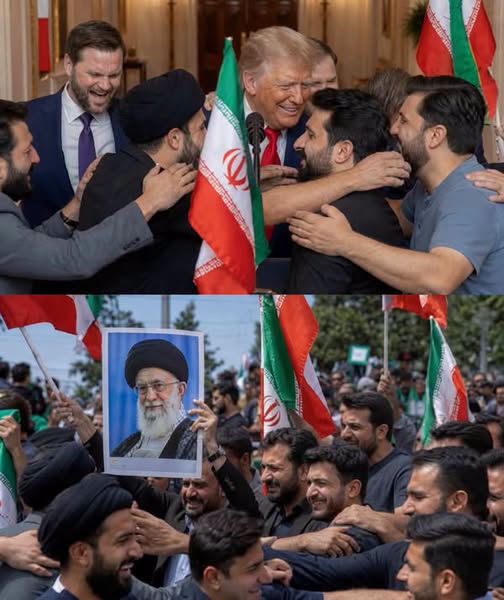
BREAKING NEWS: Trump Makes Major Statement on Iran as Tensions Remain High — What Happens Next?
A major development in the ongoing conflict between the United States and Iran has put renewed attention on President Donald Trump’s latest remarks, the future of military operations, and the possibility of bringing the conflict to an end.
On October 23, 2026, Trump told reporters that the United States could end the war quickly, while questioning whether a rapid conclusion would be preferable to allowing the conflict to gradually wind down. His comments came as tensions continued across the region and questions remained about the next steps for Washington and Tehran.
The remarks have raised important questions about the direction of the conflict, the security of international shipping, and whether a diplomatic solution remains possible.
Trump’s Latest Comments Put the Future of the Conflict in Focus
Speaking to reporters before departing Washington for Florida, Trump indicated that the United States had options for ending the conflict. He suggested that a quick conclusion was possible but did not provide a detailed timetable or announce a finalized peace agreement.
His comments are significant because ending a military conflict involves more than making a public declaration. Decisions about military operations, security guarantees, sanctions, and negotiations can all influence whether fighting stops and whether a lasting agreement becomes possible.
For people following the situation, the central question is whether the administration will pursue a rapid resolution or continue applying military and economic pressure.
As of the latest reporting, the precise conditions for ending the conflict remained unclear. No specific agreement ending the war was announced in the remarks described by Reuters.
Why Iran Remains at the Center of International Attention
The conflict has implications that extend well beyond the borders of the countries directly involved.
Iran occupies a strategically important position in the Middle East, and its relationship with neighboring countries affects regional security. The confrontation has also raised concerns about shipping routes, energy markets, military deployments, and the safety of civilians.
One particularly important issue is the Strait of Hormuz, a narrow waterway connecting the Persian Gulf with the Gulf of Oman. It is a major route for international oil and other energy shipments.
Disruptions in this area can affect shipping costs, insurance premiums, and global energy prices. Countries that depend on imported fuel may be particularly sensitive to prolonged uncertainty.
Trump said on October 23 that oil was continuing to move through the strait and asserted that the United States was achieving its objectives. Those statements reflect the president’s assessment, but they do not by themselves establish that every security concern has been resolved.
The Military Situation Remains Uncertain
During a conflict, public statements from political leaders often emphasize military achievements and strategic objectives. Independent confirmation is nevertheless important when assessing the situation on the ground.
Military operations can involve air strikes, defensive deployments, surveillance missions, and efforts to protect shipping. Each action can affect the choices available to the opposing side.
On October 22, Trump suggested that additional military action against Iran remained possible. He did not provide a specific timetable or identify particular targets in the remarks reported by Anadolu Agency.
That distinction matters. Indicating that further action is possible is not the same as announcing that a new operation has begun.
For now, readers should distinguish between statements about potential future actions and confirmed reports of military operations that have actually taken place.
Could Diplomacy Still Change the Situation?
Even during periods of intense confrontation, diplomatic channels can remain important.
Negotiations may address immediate security concerns, the movement of commercial vessels, economic restrictions, and the conditions required for a longer-term settlement.
However, negotiations can become difficult when the parties disagree about the order in which commitments should be fulfilled. One side may demand security assurances before making concessions, while the other may insist on changes to military or economic policies first.
Third-party governments can sometimes help by communicating proposals, arranging meetings, or providing a channel for messages when direct negotiations are difficult.
A lasting settlement would likely require more than a temporary reduction in hostilities. It would need arrangements that the parties consider acceptable and that can be monitored or implemented in practice.
As of the latest reports, Trump’s comments did not establish that such a comprehensive agreement had been reached.
What the Conflict Could Mean for Ordinary Americans
International conflicts can affect ordinary people even when fighting occurs thousands of miles away.
Energy prices are one possible channel. Uncertainty about oil supplies and shipping routes can influence market expectations, which may contribute to changes in fuel prices.
Travel can also be affected. Airlines may change routes when airspace becomes dangerous or restrictions are introduced. Travelers with plans in affected regions should monitor official travel advisories and airline updates.
Financial markets may respond to uncertainty as investors reassess risks to energy supplies, trade, and regional stability. The effects can vary considerably, and no particular market outcome is guaranteed.
Families with relatives in the region may also face anxiety about their safety. Official consular guidance and reliable information are especially important for people who may need assistance.
These practical consequences help explain why developments involving Iran receive attention around the world.
Why Headlines About Iran Should Be Checked Carefully
During fast-moving international events, social media posts often circulate with dramatic headlines that leave out important details.
A headline claiming that Trump has made a major announcement may refer to a genuine statement, but the wording can exaggerate what was actually said. Other posts may combine remarks from different dates or present an old video as new.
Readers should ask several questions before sharing a breaking-news claim.
- What exactly did Trump announce?
- When and where did he make the statement?
- Is the announcement confirmed by a reliable news organization?
- Did the statement describe a completed event, a proposal, or a possible future action?
- Have officials from the other countries involved responded?
These distinctions are particularly important when a headline ends with an unfinished phrase such as “Iran has…” Without the missing words, it is impossible to know whether the intended claim concerns military action, negotiations, a political decision, or something else entirely.
Accurate reporting helps people understand serious international developments without spreading unnecessary fear or misinformation.
What Happens Next?
The next stage will depend on decisions made by the governments involved, the military situation, and whether practical arrangements for ending the conflict can be established.
Observers will be watching for clear announcements about military operations, the security of commercial shipping, diplomatic contacts, and any formal agreement that could reduce hostilities.
A statement that a conflict could end quickly is not a guarantee that it will. Likewise, the possibility of further military action does not mean that a new attack is inevitable.
The situation will become clearer as officials make decisions and independently verifiable information becomes available.
Final Thoughts
President Trump’s October 23 remarks have placed renewed attention on how and when the United States might bring its conflict with Iran to an end. His comments suggest that he believes a rapid conclusion is possible, but they do not establish that a peace agreement has been reached or that the conflict is over.
The consequences extend beyond military strategy. The security of international shipping, energy markets, regional stability, and the safety of civilians remain important concerns.
As events develop, the public deserves clear reporting based on confirmed statements and reliable evidence.
The biggest question is not simply what a political leader announces, but what concrete decisions follow and whether they lead to a safer, more stable situation.
For now, the most responsible approach is to follow verified updates, distinguish confirmed developments from speculation, and avoid treating an incomplete social media headline as proof of a new event.