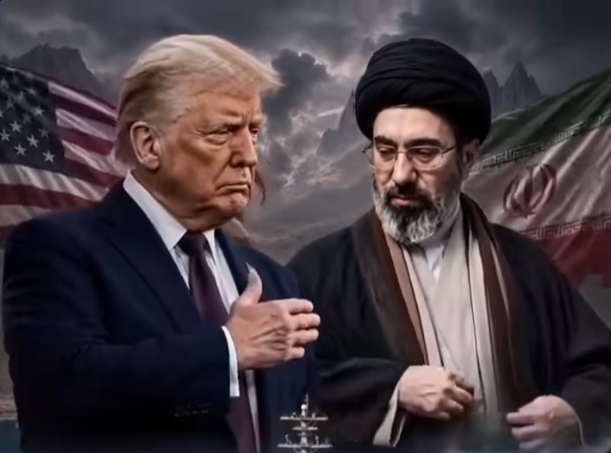
BREAKING NEWS: Trump Makes New Statement About Iran — The World Watches for What Comes Next
Tensions surrounding the United States and Iran continue to attract international attention as President Donald Trump considers the next steps in a conflict that has raised serious questions about regional security, global energy supplies, and the possibility of renewed diplomatic negotiations.
The situation remains uncertain, and every new statement from Washington or Tehran is being closely examined by governments, analysts, financial markets, and ordinary citizens who fear the consequences of a prolonged conflict.
A Critical Moment in U.S.–Iran Relations
President Trump has repeatedly emphasized that preventing Iran from obtaining a nuclear weapon is a central objective of his administration. At the same time, his public statements have left open important questions about how the conflict might end and what conditions would be necessary for a lasting agreement.
On October 8, Trump said the United States would not attack Iran before the November 3 midterm elections, while describing discussions between Washington and Tehran as productive. However, that statement did not establish that a peace agreement had been reached or that the conflict had officially ended.
The president’s remarks offered a potential opening for diplomacy, but major disagreements remained unresolved.
What Does Iran Want?
Iran has maintained that its national interests and nuclear program must be considered in any negotiations. Tehran has also resisted some of Washington’s demands concerning uranium enrichment and its nuclear stockpile.
These disagreements have made negotiations particularly difficult. For the United States, the central concern is preventing Iran from developing nuclear weapons. For Iran, questions of sovereignty, economic pressure, sanctions, and security remain important elements of its position.
Both sides face difficult choices. Continuing the conflict could bring additional economic and human costs, while reaching an agreement would require decisions that each government could face pressure to defend domestically.
For that reason, diplomatic statements must be examined carefully. A willingness to negotiate does not necessarily mean that an agreement is close.
Why the Strait of Hormuz Matters
One of the most important issues in the crisis is the Strait of Hormuz, a narrow waterway connecting the Persian Gulf with the Gulf of Oman.
The strait is a major route for international oil shipments. Any serious disruption could affect shipping costs, energy prices, insurance rates, and the wider global economy.
Countries that depend on imported energy are particularly sensitive to developments in the region. Higher oil prices can increase transportation expenses and contribute to rising costs for businesses and households.
Even reports of possible military escalation can create uncertainty in energy markets. However, actual price movements depend on several factors, including supply, demand, shipping conditions, and expectations about future events.
This is why developments involving Iran are followed far beyond the Middle East.
Could Diplomacy Prevent Further Escalation?
Diplomacy remains one possible path toward reducing tensions. Negotiations could address nuclear restrictions, sanctions, maritime security, and arrangements intended to prevent further attacks.
However, any successful agreement would need more than public declarations. It would likely require clearly defined commitments, a process for verifying compliance, and agreement about what happens if either side believes the terms have been violated.
Regional countries also have a significant interest in preventing the conflict from expanding. Neighboring states face potential consequences from disrupted trade, threats to shipping, military escalation, and instability that could extend beyond national borders.
International mediation may help create opportunities for communication, although mediators cannot guarantee that the parties will accept a proposed settlement.
The central question is whether the governments involved can find terms that address their security concerns without triggering another round of confrontation.
What Could Happen Next?
Several possibilities remain open.
First, negotiations could continue through direct or indirect communication. If both governments make concessions, discussions might eventually produce a framework for reducing hostilities.
Second, diplomatic efforts could stall. Disagreements over nuclear policy, sanctions, maritime access, or security guarantees could prevent meaningful progress.
Third, renewed military escalation remains a risk if negotiations break down or either side concludes that its interests are threatened. Such a development could create additional uncertainty for civilians and businesses across the region.
At this stage, it would be premature to declare any one outcome inevitable. Public statements may reveal negotiating positions, but they do not automatically establish what decisions have been made behind closed doors.
Why Accurate Information Matters
Headlines about international conflict can spread rapidly, especially when they use urgent language such as “breaking news,” “major announcement,” or “historic decision.”
Readers should look for the exact words used by the president, an official White House statement, and independent reporting from established news organizations before accepting claims about a ceasefire, surrender, military victory, or new attack.
A headline stating that Trump announced something about Iran does not, by itself, establish what Iran has done or what the United States plans to do next.
Distinguishing confirmed information from speculation is especially important when reports concern military operations. Incorrect claims can create unnecessary fear and make it harder for people to understand the real situation.
A Situation With Global Consequences
The U.S.–Iran confrontation involves much more than the relationship between two governments. It touches on international security, energy markets, diplomacy, regional stability, and the lives of people who may have little control over decisions made by political leaders.
For families in the region, the most important questions concern safety, stability, and the possibility of returning to normal life. For businesses and consumers around the world, reliable shipping routes and predictable energy prices remain major concerns.
For diplomats, the challenge is finding a path that reduces the risk of further violence while addressing the disagreements that brought the parties into confrontation.
The bottom line: President Trump’s statements about Iran deserve close attention, but the exact announcement must be confirmed before claiming that a major agreement, military operation, or breakthrough has occurred. The next developments will depend on official decisions, the progress of negotiations, and actions taken by the governments involved.
As the situation develops, verified reporting—not speculation—will be essential to understanding what comes next.