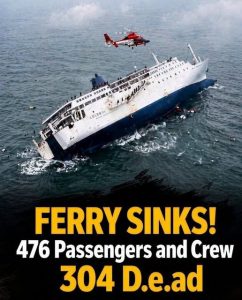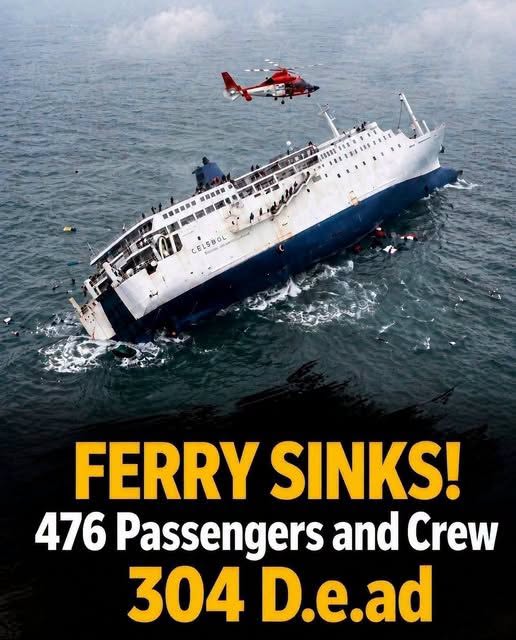
A DEVASTATING MARITIME TRAGEDY: 304 PEOPLE LOST THEIR LIVES IN THE HORRIFIC SEWOL FERRY DISASTER — A SCHOOL TRIP THAT ENDED IN HEARTBREAK
It was supposed to be an unforgettable school trip. Hundreds of students were excited about traveling, spending time with their classmates, and enjoying a journey to one of South Korea’s popular holiday destinations. Parents had said goodbye, teachers were accompanying their students, and families expected everyone to return home safely.
But on April 16, 2014, an ordinary journey became one of the darkest maritime tragedies in modern South Korean history.
The passenger ferry known as the MV Sewol capsized and sank off the southwestern coast of South Korea, claiming 304 lives. Among those who died were 250 students and 11 teachers from Danwon High School in Ansan.
The students had been looking forward to their school excursion to Jeju Island. Instead of returning home with photographs and happy memories, many families received devastating news that changed their lives forever.
More than a decade later, the tragedy remains deeply painful for survivors, relatives, and the entire nation.
A journey that began with excitement
The Sewol ferry departed from Incheon on the evening of April 15, 2014, heading toward Jeju Island.
There were 476 people aboard, including 325 students from Danwon High School, teachers, other passengers, and crew members.
For the students, the trip represented an opportunity to enjoy time away from classrooms and experience something different with their friends.
Many were teenagers with dreams, plans, and hopes for the future.
Their families trusted that the ferry operators and authorities would ensure their safety throughout the journey.
Nobody expected that the following morning would bring such unimaginable devastation.
The terrifying morning of April 16
On the morning of April 16, the ferry began experiencing serious difficulties while traveling through waters near Jindo County.
The vessel suddenly tilted and began taking on water.
Passengers quickly realized something was wrong. Emergency calls were made, and reports of the developing disaster began reaching authorities.
Inside the ship, confusion and fear spread as the vessel continued listing.
One of the most disturbing aspects of the tragedy was the announcement instructing passengers to remain where they were.
Students and other passengers were told not to move, even as the ship continued to tilt and water entered the vessel.
Many people followed those instructions, believing that remaining in their cabins was the safest thing to do.
Meanwhile, the situation became increasingly dangerous.
A rescue operation that raised serious questions
As news of the emergency spread, rescue efforts began.
Coast Guard vessels and helicopters were dispatched to the area, and emergency responders attempted to assist people escaping from the sinking ferry.
However, the response was widely criticized.
The captain and several crew members escaped while many passengers remained trapped inside.
The failure to issue a timely evacuation order became one of the most controversial aspects of the disaster.
Only a small portion of the ferry’s available lifeboats was deployed.
People watching the unfolding emergency from shore and through television broadcasts were desperate for information.
Families waited for updates, hoping their children would be among those rescued.
For many parents, those hours became the longest and most painful of their lives.
The heartbreaking loss of 304 lives
The Sewol ferry disaster ultimately claimed 304 lives.
Among the victims were 250 students and 11 teachers from Danwon High School.
The other victims included passengers and crew members.
A total of 172 people survived.
These numbers represent far more than statistics.
They represent children who never returned to their families, parents who lost sons and daughters, teachers who never came home, and communities that were permanently changed.
The victims had ordinary dreams.
Some wanted to attend university. Others hoped to travel, build careers, or spend more time with their families.
Their futures disappeared in a tragedy that South Korea would never forget.
The families who refused to forget
In the days and months following the disaster, grieving families demanded answers.
They wanted to understand why the ferry sank, why passengers were instructed to remain inside, why the evacuation was delayed, and why the rescue response was so ineffective.
Memorial services were organized, and people across South Korea gathered to remember the victims.
Photographs, flowers, messages, and yellow ribbons became powerful symbols of remembrance.
For the families, the pain did not end when the rescue operation concluded.
Anniversaries brought back memories of the final conversations, unanswered phone calls, and the terrible realization that their loved ones would never return.
Many relatives continued demanding accountability and stronger safety protections.
Their message was simple: no other family should have to experience the same tragedy.
What caused the ferry to sink?
Investigations identified several contributing factors.
The Sewol had undergone structural modifications that affected its stability. It was also carrying excessive cargo, and investigators found problems with how that cargo had been secured.
When the vessel made a sudden turn, cargo shifted, contributing to the ferry’s dangerous movement and eventual capsizing.
The disaster also exposed serious failures in maritime safety management, emergency procedures, and the actions of the crew.
The captain, Lee Joon-seok, was eventually sentenced to life imprisonment by South Korea’s Supreme Court in December 2015.
Other crew members also faced criminal consequences.
The tragedy became a national discussion about safety regulations, government responsibility, emergency preparedness, and the protection of passengers.
The emotional impact on South Korea
The consequences extended far beyond the families who directly lost loved ones.
The tragedy deeply affected the city of Ansan, particularly the Danwon High School community.
Students who survived the disaster experienced profound emotional trauma.
Teachers, classmates, relatives, and friends also struggled with grief.
Research published in 2025 examined the disaster’s effects on academic performance among adolescents in Ansan. It found that the tragedy was associated with negative effects in certain school subjects, highlighting how deeply a community can be affected by a traumatic event.
The disaster also changed conversations about school trips and transportation safety.
Parents wanted stronger guarantees that children traveling with schools would be protected.
Schools and public institutions faced increased pressure to improve emergency planning and safety procedures.
More than a decade later, the memories remain
April 16 has continued to be an important day of remembrance in South Korea.
Families and members of the public gather to honor those who lost their lives.
The names of the victims are remembered, and memorial ceremonies provide opportunities for survivors and relatives to express their grief.
Even after more than a decade, many families continue to seek complete accountability.
The wreck of the Sewol was eventually recovered, but recovering the vessel could never restore the lives that were lost.
The physical remains of the ship became another reminder of a tragedy that continues to influence South Korean society.
A lesson the world must never forget
The Sewol disaster demonstrated how quickly an ordinary journey can become a catastrophe when safety systems, emergency procedures, and responsible leadership fail.
Passenger safety must never be treated as an inconvenience.
Emergency instructions must be clear, evacuation procedures must work, and crew members must be prepared to protect passengers during dangerous situations.
Most importantly, children and vulnerable passengers must never be left without the information and assistance they need during an emergency.
The tragedy also reminds us that safety regulations exist for a reason. They are designed to prevent disasters and protect human lives.
Remembering the victims
Behind the heartbreaking figure of 304 lives lost were individual human stories.
There were 250 students who should have had the opportunity to graduate, celebrate birthdays, pursue their dreams, and build their futures.
There were 11 teachers who had accompanied their students on what was supposed to be an educational adventure.
And there were other passengers and crew members whose lives were also taken.
Their families continue to carry the memories of those they lost.
The Sewol ferry disaster was not simply a maritime accident. It was a national tragedy that exposed serious failures and changed how an entire country thinks about public safety.
May the 304 victims rest in peace. May their families find strength, and may the lessons of April 16, 2014, never be forgotten.
What do you think was the most important lesson the world should learn from the Sewol ferry disaster? Share your thoughts respectfully in the comments.