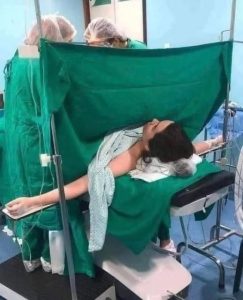
Headlines like “Pregnant woman d!es in surgery because of… See more” are designed to spark immediate emotion — shock, fear, anger, and urgency. But behind such a headline lies a deeply serious and complex medical reality. When a pregnant woman dies during surgery, it is not a simple story. It is almost always the result of a chain of medical events, risk factors, and critical decisions made under pressure.
Pregnancy changes the body in profound ways. A woman’s heart pumps more blood, her lungs work harder, her blood volume increases, and her immune system adapts to support the developing baby. These changes are natural and necessary, but they also increase medical complexity. Any surgical procedure during pregnancy carries additional risk compared to operating on someone who is not pregnant.
There are several common scenarios in which surgery might be required during pregnancy:
- Emergency cesarean section
- Treatment for ectopic pregnancy
- Appendectomy
- Gallbladder removal
- Trauma surgery
- Treatment of severe bleeding
In most cases, modern medicine makes these procedures relatively safe. However, even with advanced monitoring, anesthesia, and surgical protocols, complications can occur.
One of the leading causes of maternal death worldwide is hemorrhage, or severe bleeding. During pregnancy, the uterus receives a large blood supply. If bleeding occurs during surgery and cannot be controlled quickly, blood loss can become life-threatening in minutes. Even in well-equipped hospitals, massive hemorrhage requires rapid transfusion, coordinated teamwork, and precise intervention.
Another major risk factor is embolism — particularly amniotic fluid embolism or pulmonary embolism. A pulmonary embolism occurs when a blood clot travels to the lungs, blocking oxygen exchange. Pregnancy increases clotting risk naturally, which protects against bleeding during childbirth but raises the danger of clot-related complications. An embolism during surgery can cause sudden collapse.
Anesthesia complications are another possibility. Pregnant patients respond differently to anesthesia because of changes in circulation and lung capacity. Airway management can be more challenging, and oxygen levels can drop faster. An adverse reaction or airway obstruction during surgery can escalate quickly.
Infections, though less common in immediate surgical settings, can also contribute. Sepsis — a severe, body-wide response to infection — remains a leading cause of maternal mortality in some regions. If a woman enters surgery already weakened by infection, the stress of the procedure may worsen her condition.
Cardiac complications also deserve attention. Pregnancy increases cardiac output by up to 50%. For women with undiagnosed heart conditions, this strain can trigger heart failure, arrhythmias, or cardiac arrest. In some tragic cases, an underlying cardiac abnormality is only discovered after death.
When a pregnant woman dies during surgery, investigators and medical examiners conduct thorough reviews. These reviews look at:
- Pre-existing conditions
- Timing and urgency of surgery
- Surgical technique
- Anesthesia management
- Blood loss levels
- Response times to complications
- Equipment functionality
- Staffing and communication
Hospitals typically conduct internal mortality reviews to determine whether standards of care were followed and whether improvements are necessary. In many cases, despite best efforts, complications progress too rapidly to reverse.
It is important to understand that maternal mortality rates vary significantly by country. In the United States, maternal deaths are relatively rare compared to global averages, but they still occur at concerning levels. According to public health data, the U.S. maternal mortality rate is higher than many other developed nations. Contributing factors include chronic health conditions, disparities in access to care, delayed treatment, and systemic inequalities.
Globally, the World Health Organization identifies the leading causes of maternal death as:
- Hemorrhage
- Hypertensive disorders (such as preeclampsia)
- Infection
- Unsafe abortion
- Obstructed labor
Surgical intervention can intersect with any of these complications.
One often overlooked factor is timing. In emergency medicine, minutes matter. If a pregnant patient experiences sudden bleeding or fetal distress, doctors may need to operate immediately. In such high-pressure scenarios, decisions must be made rapidly, sometimes with incomplete information. Even the most skilled surgical team cannot eliminate all risk.
Another emotional dimension is the dual responsibility of caring for both mother and baby. In certain emergencies, physicians must prioritize saving the mother, the fetus, or both depending on viability and clinical condition. These are heartbreaking, ethically complex decisions.
Families affected by such tragedies face unimaginable grief. They may have anticipated welcoming a child while simultaneously losing a partner, daughter, or sister. Hospitals often provide counseling services and grief support, but the emotional impact lasts far beyond the immediate event.
In rare cases, surgical errors or negligence may contribute. When that happens, legal investigations may follow. However, it is essential not to assume wrongdoing automatically. Most maternal deaths are linked to medical complications rather than malpractice.
Medical science continues to evolve in efforts to reduce these risks. Improvements in:
- Blood transfusion protocols
- Rapid response obstetric teams
- High-risk pregnancy monitoring
- Advanced imaging
- Early screening for preeclampsia and cardiac issues
have significantly reduced preventable maternal deaths over the past decades. Still, no surgery — especially during pregnancy — is without risk.
Headlines that tease “because of…” often oversimplify complex medical realities. In truth, maternal surgical deaths typically result from multiple interacting factors rather than a single cause. A pre-existing condition may combine with sudden bleeding, compounded by clotting changes and anesthesia effects.
It is also worth noting that maternal mortality reviews often lead to meaningful change. Hospitals revise guidelines, implement simulation training, and improve communication protocols to prevent similar events in the future. Tragedy, while devastating, can drive systemic improvement.
Ultimately, the loss of a pregnant woman during surgery is one of the most heartbreaking outcomes in medicine. It highlights both the fragility of life and the immense responsibility carried by healthcare professionals. While medical advancements have made childbirth and pregnancy far safer than in previous centuries, risk can never be completely eliminated.
Behind every headline is a human story — a family altered forever, a medical team reflecting deeply, and a community grappling with shock. Understanding the medical context does not erase the grief, but it can replace speculation with clarity and compassion.