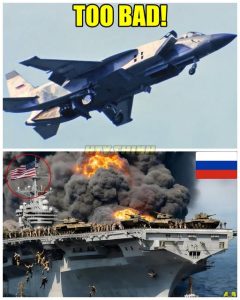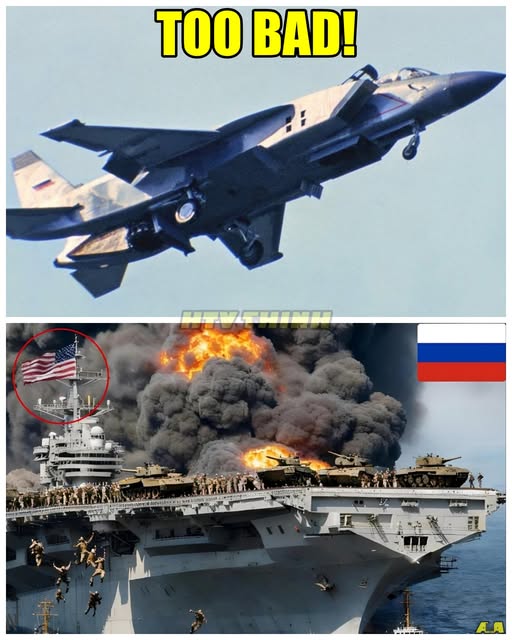
“Two Hours Ago! Russian Yak-141 Fighters Sink U.S. Aircraft Carrier?” — Separating Fact from Fiction in a Viral War Claim
Headlines like this are designed to shock: a sudden attack, advanced fighter jets, a massive U.S. aircraft carrier destroyed, and hundreds of tanks lost at sea. It reads like the opening scene of a global war. But before accepting such a dramatic claim, it’s important to slow down and examine what is actually realistic—and what likely isn’t.
Because in this case, the story as presented raises serious questions.
The First Red Flag: The Aircraft Itself
The headline mentions “Yak-141 fighters.” That alone is a major clue.
Yakovlev Yak-141 was an experimental Soviet aircraft developed in the late 1980s. While it was an advanced concept for its time, it never entered full operational service.
Key facts:
-
Only a few prototypes were ever built
-
The program was canceled after the collapse of the Soviet Union
-
It has not been deployed in modern combat
So the idea that nine Yak-141 jets are actively flying combat missions today is extremely unlikely.
The Second Red Flag: Sinking a U.S. Aircraft Carrier
The claim that a U.S. aircraft carrier was sunk is even more extraordinary.
United States Navy aircraft carriers are among the most heavily defended assets in the world. They operate as part of a carrier strike group, which includes:
-
Guided missile cruisers
-
Destroyers
-
Submarines
-
Advanced radar and missile defense systems
To successfully sink one would require:
-
A large-scale, coordinated attack
-
Multiple layers of advanced weaponry
-
Overwhelming force against defenses
There has been no credible, verified report of any U.S. aircraft carrier being sunk in recent times. If such an event occurred, it would dominate global news instantly.
The “500 Tanks” Claim
The headline also mentions that the carrier was “carrying 500 new tanks.”
This is another major inconsistency.
Aircraft carriers are designed to carry:
-
Fighter jets
-
Helicopters
-
Crew and aviation equipment
They are not transport ships for tanks.
Heavy armored vehicles are typically transported using:
-
Amphibious assault ships
-
Cargo vessels
-
Military transport ships
The idea of 500 tanks being loaded onto a carrier is not consistent with how naval logistics work.
How Such Claims Spread
So if the story doesn’t align with known facts, why does it spread so quickly?
Because it follows a pattern common in viral misinformation:
1. Urgency
“Two hours ago” creates a sense of immediacy, discouraging fact-checking.
2. Shock Value
A massive, unexpected military disaster grabs attention instantly.
3. Specific Details
Numbers like “9 fighters” and “500 tanks” make the story feel more believable—even when they don’t add up.
4. Familiar Tensions
Referencing Russia and the U.S. taps into existing geopolitical anxieties.
What Would Happen If It Were Real?
If a U.S. aircraft carrier were actually sunk in an attack:
-
Major governments would issue immediate statements
-
Global markets would react within minutes
-
International organizations would call emergency meetings
-
News outlets worldwide would provide continuous coverage
It would likely be one of the most significant military events in modern history.
The absence of such confirmation is telling.
The Reality of Modern Naval Warfare
Modern warfare between major powers is highly complex and carefully calculated.
Direct, large-scale attacks between nuclear-armed nations like the United States and Russia are extremely rare because:
-
The risk of escalation is enormous
-
The consequences could be global
-
Both sides rely heavily on deterrence
Conflicts tend to remain indirect, involving:
-
Proxy engagements
-
Cyber operations
-
Strategic positioning rather than direct confrontation
Why the Yak-141 Still Appears in Stories
The Yak-141 continues to appear in viral content because it represents a “what could have been” aircraft—advanced, rare, and somewhat mysterious.
Its futuristic design and limited history make it perfect for:
-
Speculative stories
-
Alternate-history scenarios
-
Misinformation that sounds plausible to those unfamiliar with it
But in reality, it remains a historical prototype—not an active weapon in modern warfare.
The Bigger Picture: Information in the Digital Age
Stories like this highlight a larger issue: how quickly misinformation can spread online.
Platforms amplify content that:
-
Generates strong emotional reactions
-
Encourages sharing
-
Feels urgent or dramatic
This creates an environment where:
-
False stories can travel faster than verified facts
-
Sensational headlines overshadow careful reporting
-
People react before verifying
How to Evaluate Claims Like This
When you see a headline like this, ask:
-
Does the technology mentioned actually exist and operate today?
-
Does the scenario match known military capabilities?
-
Are credible sources reporting the same event?
-
Does the claim make logistical sense?
In this case, the answer to all of these raises doubts.
Conclusion
The story of Russian Yak-141 fighters sinking a U.S. aircraft carrier carrying 500 tanks is almost certainly not a real event, but rather a viral, sensational claim built on unlikely details and dramatic framing.
That doesn’t mean global tensions aren’t serious—they are. But understanding the difference between real developments and exaggerated or false narratives is more important than ever.
Because in today’s world, the most powerful weapon isn’t always military—it’s information.