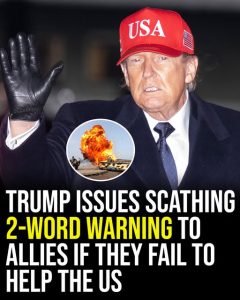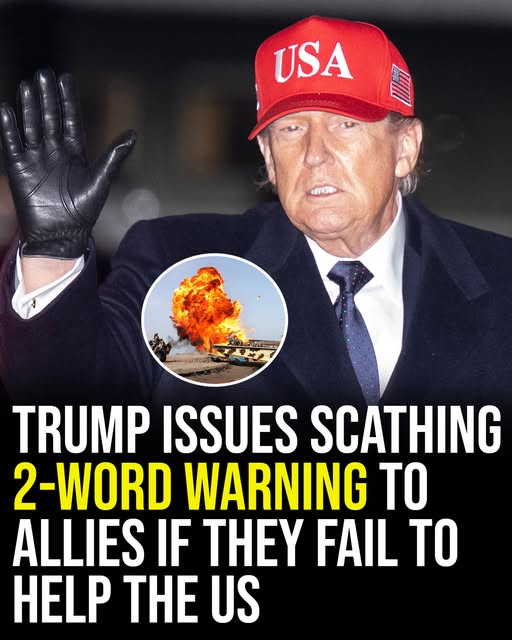
In moments of rising geopolitical tension, even a short phrase can carry enormous weight. That was the case when Donald Trump reportedly issued a stark, two-word warning to U.S. allies amid concerns over the security of one of the world’s most critical maritime chokepoints: the Strait of Hormuz.
Though brief, the message—described by observers as blunt and unmistakable—was interpreted as a signal of growing impatience with allied nations that rely heavily on global oil shipments but have been hesitant to take a more active role in protecting key shipping lanes. The warning, widely paraphrased as “pay up,” reflected a broader theme that defined much of Trump’s foreign policy approach: burden-sharing.
A Chokepoint of Global Importance
The Strait of Hormuz is not just another stretch of water. It is one of the most strategically vital passages on the planet. Roughly a fifth of the world’s oil supply passes through this narrow corridor each day, making it indispensable to global energy markets. Any disruption—whether from military conflict, piracy, or political brinkmanship—can send shockwaves through economies worldwide.
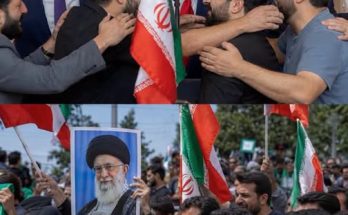
Tensions in the region have long simmered, particularly involving Iran, which borders the strait and has, at times, threatened to block or restrict passage in response to international pressure or sanctions. Such threats have historically prompted strong responses from the United States and its allies, given the potential economic fallout of any interruption.
The Context Behind the Warning
During his presidency, Trump repeatedly emphasized that the United States should not bear the full cost of maintaining global security, especially in regions where other nations have significant economic interests. This perspective extended to the protection of maritime routes like the Strait of Hormuz.
At the heart of the issue was a simple question: Why should the U.S. Navy shoulder the responsibility of safeguarding oil shipments that primarily benefit other countries?
In several statements and public remarks, Trump pointed out that nations in Europe and Asia depend heavily on energy flows through the strait. Countries like Japan, China, and members of the European Union import large quantities of oil that pass through this corridor. Yet, according to Trump, their contributions to securing the route did not match the level of their dependence.
This frustration culminated in the now-famous two-word warning, which was seen as both a demand and a negotiating tactic. By distilling his message into such a concise phrase, Trump ensured it would capture attention and spark debate.
Allies Caught Between Pressure and Pragmatism
For U.S. allies, the situation presented a complex dilemma. On one hand, ensuring the free flow of commerce through the Strait of Hormuz aligns with their economic interests. On the other, increasing military involvement in a volatile region carries significant risks.
European nations, in particular, have often favored diplomatic approaches to tensions involving Iran. While they recognize the importance of maritime security, they have also sought to avoid actions that could escalate into direct conflict. This has sometimes put them at odds with more aggressive postures advocated by Washington.
Asian economies, heavily reliant on imported energy, face similar challenges. Their dependence on the strait is undeniable, yet their willingness to engage militarily varies based on domestic politics, regional considerations, and broader strategic priorities.
Trump’s warning, therefore, was not just about money—it was about commitment. It raised fundamental questions about what it means to be an ally in a world where security and economic interests are deeply intertwined.
A Reflection of “America First”
The two-word message fit squarely within the framework of Trump’s “America First” doctrine. This approach prioritized U.S. interests and often challenged longstanding assumptions about international cooperation.
Under this philosophy, alliances were not abandoned but redefined. Contributions were expected to be more balanced, and partnerships were evaluated through a lens of direct benefit to the United States. The idea was that fairness, rather than tradition, should guide international relationships.
Critics argued that such an approach risked alienating allies and undermining collective security. They warned that demanding immediate, tangible contributions could strain relationships built over decades. Supporters, however, saw it as a necessary correction—an effort to ensure that the U.S. was not disproportionately carrying global responsibilities.
Strategic Messaging in a Digital Age
Another notable aspect of the warning was its simplicity. In an era dominated by rapid news cycles and social media, concise statements often have the greatest impact. A two-word phrase can travel faster and resonate more widely than a detailed policy explanation.
Trump was particularly adept at using this style of communication. Whether through speeches, interviews, or social media posts, he frequently employed short, memorable phrases to convey complex ideas. This approach ensured that his message reached a broad audience, even if it sometimes sacrificed nuance.
In this case, the brevity of the warning amplified its effect. It was easy to quote, easy to share, and difficult to ignore.
The Broader Implications
The debate sparked by Trump’s warning extends beyond the Strait of Hormuz. It touches on larger questions about the future of international security and cooperation.
As global power dynamics shift, the expectations placed on alliances are evolving. The United States remains a dominant military force, but other nations are increasingly being called upon to take greater responsibility for regional stability.
This trend raises important considerations: How should the costs of security be distributed? What level of involvement is reasonable for different countries? And how can alliances adapt to changing realities without losing their core purpose?
A Lasting Conversation
While the immediate context of the warning may have been tied to specific tensions in the Persian Gulf, its underlying message continues to resonate. The idea of shared responsibility in global security is not new, but it has gained renewed urgency in recent years.
For some, Trump’s two-word warning was a blunt but necessary reminder that international cooperation requires active participation from all parties. For others, it was an oversimplification of a complex issue—one that risked reducing nuanced relationships to transactional exchanges.
Either way, the moment stands as a vivid example of how a few carefully chosen words can ignite a global conversation. In the high-stakes world of geopolitics, even the shortest messages can carry the greatest weight.
And as tensions in critical regions like the Strait of Hormuz continue to ebb and flow, the questions raised by that brief warning are unlikely to fade anytime soon.