Justice Served? Israel’s Precision Strike Targets Iran’s Basij Intelligence Chief
In a dramatic escalation of the ongoing conflict in the Middle East, Israel has announced a high-profile targeted strike that it claims eliminated a senior intelligence figure within Iran’s powerful Basij paramilitary network. The development has sent shockwaves across the region, intensifying an already volatile confrontation and raising urgent questions about what comes next.
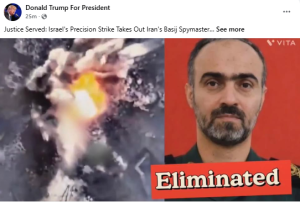
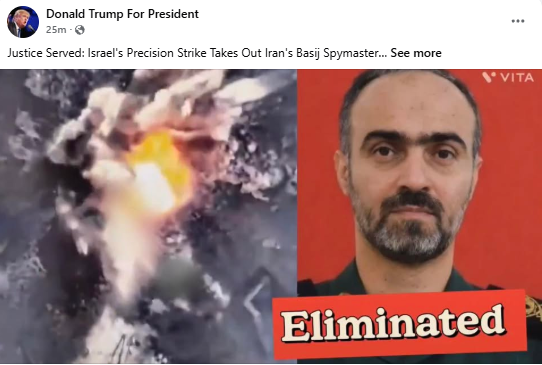
According to multiple reports, Israeli forces say they killed Ismail Ahmadi, described as the intelligence chief of Iran’s Basij militia—an organization deeply embedded in the country’s internal security structure.
A Shadow War Turns Overt
For years, tensions between Israel and Iran played out in secrecy—through cyber operations, covert sabotage, and proxy conflicts across the region. But recent events suggest that this shadow war has moved into a far more direct and dangerous phase.
The reported strike on the Basij intelligence leadership did not occur in isolation. It is part of a broader campaign targeting Iran’s military infrastructure and leadership network. In just a short span of time, several high-ranking Iranian figures have reportedly been killed in similar operations.
This pattern points to a calculated strategy: dismantle not just Iran’s external military capabilities, but also its internal mechanisms of control.
Who Are the Basij?
To understand the significance of this strike, it’s essential to understand the role of the Basij.
The Basij is a paramilitary force tied to Iran’s Islamic Revolutionary Guard Corps (IRGC). While often described as a volunteer militia, it functions as a critical pillar of the Iranian state’s internal security system. Its members are deployed across cities and towns, monitoring dissent, enforcing laws, and responding to protests.
In recent years, the Basij has been heavily involved in suppressing nationwide demonstrations, carrying out arrests, and maintaining surveillance over the population.
The intelligence wing—allegedly led by Ahmadi—plays a particularly sensitive role. It is responsible for identifying perceived threats, tracking opposition movements, and coordinating internal security responses.
That makes it a high-value target.
The Strike: Precision and Intelligence
Israeli officials describe the operation as a precision strike, likely based on actionable intelligence regarding the location of senior Basij leaders. Reports suggest that individuals targeted in the attack were operating from a temporary or concealed site—possibly indicating that Iran’s leadership has been forced into more covert movements amid ongoing strikes.
This level of targeting underscores a key advantage: intelligence penetration.
Experts have long noted Israel’s extensive intelligence capabilities inside Iran, including surveillance networks and human sources. The ability to locate and strike high-ranking officials in or near the capital signals a deep operational reach.
Strategic Impact—or Symbolic Victory?
While Israel has framed the strike as a major success, analysts are divided on its long-term impact.
On one hand, removing a senior intelligence figure can disrupt coordination, create confusion, and weaken command structures—at least temporarily. It also sends a powerful psychological message: no one is beyond reach.
On the other hand, the Basij is a highly decentralized organization. Even after losing top commanders, it continues to function across Iran, maintaining checkpoints, enforcing restrictions, and carrying out arrests.
In other words, the system is designed to survive.
A Broader Campaign Against Leadership
The strike on the Basij intelligence chief is part of a wider effort targeting Iran’s leadership layer. Recent operations have reportedly included attacks on senior political and military figures, signaling a shift toward leadership decapitation tactics.
This approach aims to destabilize Iran from within—weakening its ability to coordinate both domestic control and external military operations.
However, such a strategy carries significant risks.
History shows that targeting leadership can sometimes harden resolve rather than weaken it. It can unify factions, intensify retaliation, and escalate conflicts beyond their original scope.
Global Repercussions
The implications of these strikes extend far beyond the immediate battlefield.
The Middle East sits at the center of global energy flows, and any escalation involving Iran has the potential to disrupt critical supply routes—especially near the Strait of Hormuz, through which a large portion of the world’s oil passes.
Markets are already reacting with volatility, and governments around the world are closely monitoring the situation.
At the same time, divisions are emerging among international allies regarding the goals and limits of the campaign. Some favor a contained approach focused on military capabilities, while others appear to support broader efforts to weaken Iran’s governing structure.
The Human Dimension
Lost amid the geopolitical analysis is the human cost.
Strikes targeting leadership often occur in populated areas, raising concerns about collateral damage and civilian safety. Meanwhile, internal crackdowns in Iran have intensified, with increased arrests and enforcement actions reported in response to perceived threats.
For ordinary people, the conflict is not abstract—it is immediate and deeply personal.
What Comes Next?
The key question now is whether this strike marks a turning point—or just another step in an escalating cycle.
Will Iran retaliate directly, potentially widening the conflict?
Will Israel continue targeting high-ranking officials?
And how will global powers respond if the situation spirals further?
What is clear is that the conflict has entered a new and more dangerous phase—one defined by precision strikes, high-stakes intelligence, and rapidly shifting alliances.
Final Thoughts
The reported killing of a Basij intelligence chief is more than just a tactical development—it is a signal.
A signal that the rules of engagement are changing.
A signal that leadership itself has become a battlefield.
And a signal that the line between covert operations and open conflict is becoming increasingly blurred.
Whether seen as “justice served” or a step toward deeper instability, one thing is certain:
The consequences of this moment are only just beginning to unfold.