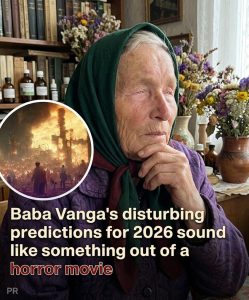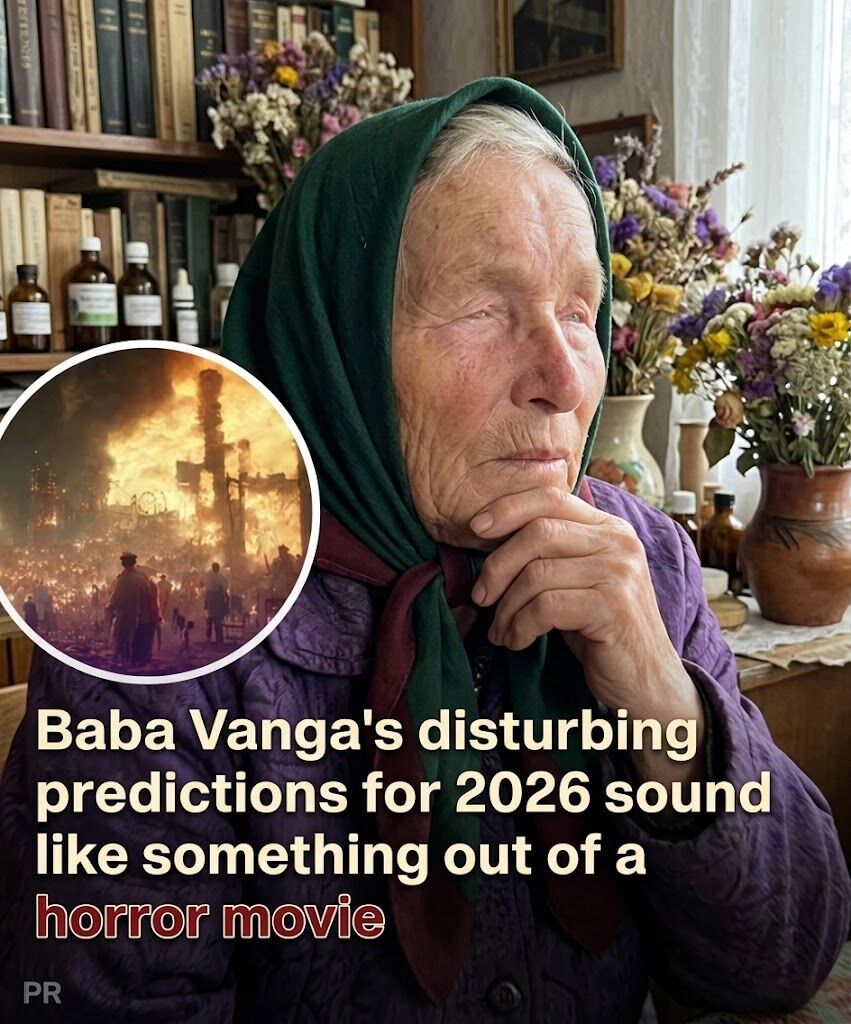
Baba Vanga’s Disturbing Predictions for 2026 Sound Like Something Out of a Horror Movie
For decades, the mysterious prophecies attributed to Baba Vanga have fascinated believers, skeptics, historians, and conspiracy theorists alike. Known as the “Nostradamus of the Balkans,” the blind Bulgarian mystic gained worldwide attention for predictions many claim came true long after her death in 1996.
Every year, renewed interest emerges around what Baba Vanga allegedly foresaw for the future — and the predictions connected to 2026 are among the most unsettling yet. Some descriptions sound less like traditional prophecy and more like scenes pulled straight from a horror film.
Whether viewed as coincidence, symbolism, or supernatural foresight, her visions continue to spark debate around the world.
Who Was Baba Vanga?
Born in 1911 in what is now North Macedonia, Baba Vanga reportedly lost her sight during a violent storm in childhood. According to followers, this traumatic event awakened her psychic abilities. Over time, she became famous throughout Eastern Europe as people traveled long distances seeking guidance about health, relationships, and world events.
Government officials, political leaders, and ordinary citizens alike visited her modest home in Bulgaria. Stories spread that she predicted major historical moments, including geopolitical conflicts, technological advances, and global disasters.
While historians note that many predictions were recorded secondhand and sometimes interpreted after events occurred, her reputation as a prophetic figure has endured for generations.
The Chilling Predictions Linked to 2026
Among the most widely discussed claims are Baba Vanga’s visions related to the mid-2020s — particularly 2026. These predictions have circulated widely online, often described as eerily dark and cinematic.
1. Climate Chaos and Natural Disasters
One of the most frequently cited predictions involves extreme environmental instability. According to believers, Baba Vanga warned of unprecedented weather patterns, powerful storms, and widespread ecological disruption.
The imagery associated with these visions includes flooded cities, burning landscapes, and populations forced to migrate due to environmental changes. Supporters argue that increasing wildfires, heatwaves, and rising sea levels appear to echo these warnings.
Skeptics, however, point out that environmental concerns are common themes in modern discussions and may reflect growing global awareness rather than prophetic insight.
2. Technological Fear and Artificial Intelligence
Another unsettling prophecy linked to 2026 centers on technology evolving beyond human control.
Some interpretations claim Baba Vanga foresaw machines becoming deeply integrated into everyday life — influencing decisions, communication, and even human identity. The prediction is often framed as a warning that technology could blur the line between reality and illusion.
In today’s world of rapidly advancing artificial intelligence, virtual reality environments, and automation, many people find this prediction particularly chilling. The idea that humanity might struggle to control its own inventions feels like a storyline from a dystopian thriller.
3. A Crisis Affecting Major Cities
Certain versions of the prophecy suggest that large urban centers could face serious crises involving infrastructure, energy, or security disruptions. Descriptions mention sudden chaos and confusion spreading through populated regions.
Because such statements are vague, interpretations vary widely. Some link them to cyberattacks, others to economic instability, and still others to natural disasters.
This ambiguity contributes to the eerie fascination surrounding Baba Vanga’s predictions — they are open enough to fit multiple real-world events.
4. Human Isolation Despite Global Connection
One of the most psychologically disturbing themes attributed to Baba Vanga is a future where people become increasingly isolated despite technological connectivity.
The prophecy describes individuals surrounded by communication tools yet feeling emotionally disconnected from one another. Many readers interpret this as a reflection of modern social media culture, where digital interaction sometimes replaces real human contact.
This vision resonates strongly today, making the prediction feel less supernatural and more like a social warning.
Why Her Predictions Feel So Frightening
Unlike traditional fortune-telling, Baba Vanga’s prophecies rarely focused on specific dates or clear narratives. Instead, they used symbolic language filled with emotional imagery — darkness, transformation, upheaval, and rebirth.
Psychologists suggest that vague predictions allow people to project current fears onto them. During uncertain times, humans naturally search for patterns or meaning, making prophetic interpretations more compelling.
The reason her 2026 predictions sound like a horror movie may be simple: they mirror modern anxieties about climate change, technological dependence, global instability, and social transformation.
Believers vs. Skeptics
The debate surrounding Baba Vanga remains intense.
Believers argue:
- She predicted major global events decades in advance.
- Multiple witnesses documented her statements.
- Some predictions appear too precise to dismiss.
Skeptics counter:
- Many prophecies were recorded after events happened.
- Interpretations change over time.
- Vague wording allows retroactive fitting of outcomes.
Historians emphasize that separating fact from myth is difficult because most records of her predictions were not formally documented during her lifetime.
The Cultural Power of Prophecy
Regardless of accuracy, Baba Vanga’s influence reveals something deeper about human nature.
Prophecies endure because they offer narratives during uncertain periods. When societies face rapid change, people look toward visions of the future — whether scientific forecasts, religious teachings, or mystical predictions — to understand what lies ahead.
Her story reflects humanity’s timeless fascination with destiny and the unknown.
Why 2026 Captures Attention
The year 2026 sits at an interesting point in history. Technological acceleration, environmental concerns, and geopolitical shifts create a sense that the world is entering a new era.
As a result, predictions associated with this period attract extraordinary attention. They feel relevant because they intersect with real global conversations about survival, innovation, and adaptation.
What sounds terrifying may actually be symbolic of transformation rather than doom.
A Warning Rather Than a Prediction?
Some researchers suggest that Baba Vanga’s visions should not be viewed as literal forecasts but as moral or philosophical warnings.
Seen this way, her messages encourage humanity to:
- Respect nature
- Use technology responsibly
- Preserve human connection
- Prepare for change rather than fear it
Instead of predicting catastrophe, the prophecies may simply reflect the consequences of collective choices.
The Enduring Mystery
Nearly three decades after her death, Baba Vanga remains one of the most mysterious figures in modern folklore. Her legacy exists somewhere between history, myth, spirituality, and popular culture.
Whether her predictions for 2026 prove meaningful or fade into legend, their impact is undeniable. They spark discussion, curiosity, and reflection about humanity’s future.
And perhaps that is the true power of prophecy — not revealing the future, but forcing us to think about the path we are creating today.
Because sometimes, the scariest visions are not about what will happen… but about what could happen if we fail to learn from the present.