Toddler Trapped in Hospital, Desperate for a New Heart After Common Virus Left Her Critically Ill
What began as an ordinary childhood illness quickly turned into every parent’s worst nightmare.
Just weeks ago, a cheerful toddler known for her laughter and endless energy developed symptoms that seemed harmless at first—a mild fever, fatigue, and what doctors initially believed was a routine viral infection. Like countless families each year, her parents assumed rest, fluids, and time would bring recovery.
Instead, the virus triggered a devastating chain reaction that left the little girl fighting for her life inside a pediatric intensive care unit, now urgently waiting for a life-saving heart transplant.
Her story has captured hearts across communities, reminding people how quickly life can change—and how fragile even the healthiest young lives can be.
A Normal Day That Turned Into Crisis
According to family members, the toddler had been perfectly healthy. She loved dancing in the living room, chasing bubbles in the backyard, and cuddling with her favorite stuffed animal before bedtime.
When she developed cold-like symptoms, nothing seemed unusual. Children frequently experience viral infections, especially during seasonal outbreaks. Doctors reassured the family that most viruses pass without serious complications.
But within days, her condition worsened.
She became unusually tired. Her breathing grew shallow. Her skin appeared pale, and she struggled to stay awake. Alarmed, her parents rushed her to the emergency room—never imagining that the visit would mark the beginning of a long and uncertain hospital stay.
When a Common Virus Attacks the Heart
Doctors soon discovered that the virus had caused viral myocarditis, a rare but severe inflammation of the heart muscle. In some cases, a virus can confuse the immune system, causing it to attack heart tissue while trying to fight infection.
The result can be catastrophic.
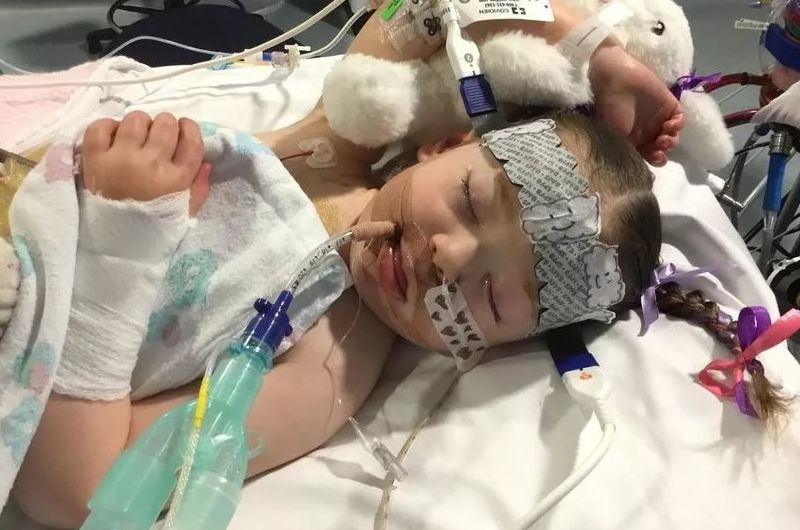
The toddler’s heart began losing its ability to pump blood effectively. Within hours, she was transferred to intensive care and connected to machines designed to support failing organs.
According to specialists and organizations like the American Heart Association, myocarditis in children is uncommon but unpredictable. Many recover fully, but some experience rapid heart failure requiring advanced treatments—including transplantation.
For this family, doctors delivered the words no parent ever expects to hear:
“She will need a new heart to survive.”
Life Inside the Hospital
Days have now turned into weeks inside the hospital room that has become the toddler’s temporary world.
Bright toys sit beside complex medical equipment. Cartoon stickers decorate machines that quietly monitor heart rhythms and oxygen levels. Nurses move gently around the room, adjusting medications and offering comfort to exhausted parents who rarely leave their child’s side.
The toddler remains connected to life-support technology that helps circulate blood while doctors wait for a donor heart.
Her parents describe a strange reality—celebrating small victories most people take for granted:
- A stable heartbeat overnight
- A moment when she squeezes their fingers
- A brief smile despite tubes and monitors
Each day becomes a delicate balance between hope and fear.
The Emotional Toll on Families
Families facing pediatric transplant waiting lists endure intense emotional strain. Parents must remain strong for their child while coping with uncertainty few people can truly understand.
They sleep in chairs. Meals become irregular. Time outside feels unreal compared to the constant beeping of hospital machines.
The hardest part, her mother says, is waiting.
A suitable donor heart must match size, blood type, and medical compatibility. The timing must be exact. Until that moment arrives, doctors can only stabilize her condition and hope.
“It’s impossible,” her father shared through tears. “You pray for your child to live, knowing another family somewhere is facing unimaginable loss.”
The Reality of Pediatric Organ Donation
Stories like this highlight the critical need for organ donors.
Thousands of children worldwide wait for lifesaving transplants each year. Unlike adults, toddlers require extremely specific donor matches, which makes the waiting process even more challenging.
Medical teams coordinate nationwide systems to locate compatible organs as quickly as possible. When a match becomes available, surgical teams mobilize immediately—sometimes traveling across states within hours.
Doctors emphasize that organ donation decisions made by families can transform tragedy into survival for another child.
For families waiting, every phone call could bring life-changing news.
A Community Rallies Around Hope
Since news of the toddler’s condition spread, neighbors, friends, and strangers have rallied to support the family. Messages of encouragement flood social media. Handmade cards from schoolchildren decorate hospital walls.
Fundraisers help cover medical costs and lost income as parents remain at the hospital full-time. Volunteers organize meal deliveries and prayer gatherings.
What began as a private medical crisis has grown into a powerful reminder of collective compassion.
Healthcare workers say community support often becomes a vital source of strength during long hospital battles.
The Strength of a Child
Despite her fragile condition, the toddler continues to show remarkable resilience.
Nurses describe moments when she responds to familiar voices or relaxes when her favorite lullaby plays softly in the background. Even heavily medicated, she demonstrates the quiet determination that often surprises medical teams caring for critically ill children.
Doctors frequently say children fight differently—they live moment to moment, free from fear about the future.
Her courage has inspired not only her family but also hospital staff who witness both heartbreak and hope every day.
Waiting for the Call
Somewhere, at an unknown time, a phone will ring.
That call could mean a compatible donor heart has been found.
Within minutes, surgeons, transplant coordinators, and nurses would begin a carefully choreographed process designed to give the toddler a second chance at life.
Until then, the family waits—counting hours, celebrating stability, and holding onto faith.
A Message Beyond One Family
This story is more than a medical emergency; it is a reminder of how quickly ordinary life can change. A common virus, something most families encounter every year, altered the course of one child’s future overnight.
It also highlights broader truths:
- Childhood illness can escalate unexpectedly.
- Early medical attention saves lives.
- Organ donation remains one of the most powerful acts of compassion.
Most importantly, it reminds us of the resilience found in love—parents refusing to give up, doctors working tirelessly, and communities uniting around a child they may never meet.
Hope Still Lives in the Room
Inside the hospital, beneath the glow of monitoring screens and quiet whispers of encouragement, hope remains alive.
Her parents continue reading bedtime stories, holding her tiny hand, and imagining the day she will run outside again—free from machines, laughter echoing where fear once lived.
For now, the world waits with them.
Waiting for healing.
Waiting for a miracle.
Waiting for a new heart that could turn tragedy into a new beginning for one small life still fighting with incredible strength.