Did You Know? The Real Reason Dogs Sniff Your Private Areas — And What It Actually Means
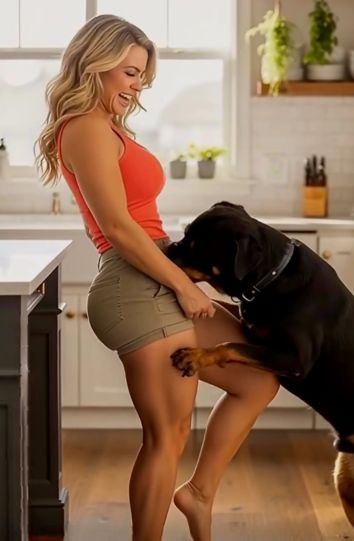
It’s one of those awkward moments almost everyone who has spent time around dogs has experienced. You walk into a room, greet a friendly dog, and suddenly — before you can react — the dog goes straight for your private area with intense curiosity.
Many people laugh nervously, others feel embarrassed, and some even worry that something might be wrong. Online myths often claim dramatic explanations, but science tells a far more fascinating story.
The truth is simple: when a dog sniffs your private parts, it’s not being rude or inappropriate. It’s actually using one of the most powerful biological tools in the animal kingdom — its sense of smell.
Dogs Experience the World Through Scent
Humans rely mostly on vision. Dogs rely primarily on smell.
A dog’s nose contains up to 300 million scent receptors, compared to about 5–6 million in humans. The portion of a dog’s brain dedicated to analyzing smells is also dramatically larger relative to body size.
To a dog, scent is information. It tells them:
- Who you are
- Where you’ve been
- Your emotional state
- Your health signals
- Whether you’re familiar or new
When a dog approaches someone, sniffing is their equivalent of reading a detailed personal profile.
Why Dogs Focus on Private Areas
Dogs often aim for areas where scent glands are most active. Humans have specialized sweat glands called apocrine glands, which are concentrated in places such as:
- Armpits
- Groin region
- Feet
These glands release chemical signals known as pheromones — natural compounds that carry biological information.
Because many dogs stand at waist height, the groin area becomes the easiest and strongest scent source available to them.
From the dog’s perspective, it’s simply the quickest way to gather information.
They’re Not Being Disrespectful
Humans interpret behavior through social rules, but dogs follow instinct.
Among dogs themselves, sniffing rear or scent-rich areas is a normal greeting. It’s how they identify one another, detect mood, and understand social hierarchy.
So when a dog sniffs a human in that way, it is essentially saying:
“Hello. I’m learning who you are.”
There is no embarrassment or hidden meaning involved — only communication.
What Information Dogs Can Detect
Scientists have discovered that dogs can detect extraordinary details through scent alone.
1. Emotional State
Dogs can smell chemical changes linked to emotions such as stress, fear, happiness, or excitement. Hormones released through sweat subtly alter scent signatures.
That’s one reason dogs sometimes approach nervous or anxious people more directly.
2. Hormonal Changes
Hormonal fluctuations affect body odor. Dogs may show increased curiosity toward individuals experiencing natural hormonal shifts.
This doesn’t mean anything unusual is wrong — only that the dog notices changes humans cannot perceive.
3. Health Signals
Research shows dogs can sometimes detect illnesses through scent markers. Specially trained dogs have even identified conditions like diabetes episodes or certain cancers.
Most household pets are not medical detectors, but their noses still pick up biological cues.
Why Some People Get Sniffed More Than Others
You may notice that dogs target certain individuals repeatedly. Several factors influence this behavior:
- Strong body odor after exercise
- Recent contact with other animals
- New lotions, perfumes, or detergents
- Sweating or elevated body temperature
- Food smells lingering on clothing
Dogs are naturally curious about anything unfamiliar or particularly interesting.
Puppies vs. Adult Dogs
Young dogs and puppies often sniff more frequently because they are still learning social behavior.
They gather information constantly, exploring the world nose-first. As dogs mature and receive training, many learn calmer greeting habits.
However, even well-trained dogs may occasionally revert to instinctive sniffing.
How to Politely Stop the Behavior
While normal for dogs, the behavior can make people uncomfortable. Fortunately, gentle redirection works well.
You can:
- Turn slightly sideways to move scent areas away
- Offer your hand for the dog to sniff instead
- Step back calmly without sudden movement
- Ask the owner to cue a sit command
Avoid yelling or pushing the dog harshly, as this may confuse or frighten them.
Consistency helps dogs learn appropriate greetings.
What Experts Say About Canine Communication
Animal behaviorists emphasize that sniffing is essential communication for dogs. Preventing all sniffing can actually increase anxiety because dogs lose access to information they rely on.
Instead, experts recommend teaching dogs alternative greeting behaviors while still allowing natural exploration in controlled ways.
Understanding canine instincts helps strengthen trust between humans and animals.
The Science of the Dog Nose
A dog’s nose is so sensitive that scientists estimate it can detect certain scents at concentrations thousands of times lower than humans can perceive.
Dogs also possess a specialized organ called the vomeronasal organ, sometimes referred to as Jacobson’s organ. This structure allows them to analyze pheromones separately from ordinary smells.
This extra sensory system explains why dogs appear intensely focused when sniffing — they are processing layers of information invisible to us.
Common Myths Debunked
Let’s clear up a few popular misconceptions.
Myth: The dog senses something embarrassing about you.
Reality: The dog is simply gathering scent information.
Myth: Only certain people attract this behavior.
Reality: Anyone can be sniffed depending on scent cues.
Myth: It means a medical problem.
Reality: Usually not. Dogs are curious, not diagnosing.
Why Understanding Dogs Matters
Moments like these highlight an important truth: humans and dogs experience the world differently.
What feels awkward to us is perfectly normal communication for them.
When people learn the biological reasons behind canine behavior, interactions become less uncomfortable and more enjoyable. Instead of embarrassment, the moment can become an opportunity to appreciate just how remarkable dogs truly are.
Final Thoughts
So the next time a dog greets you a little too enthusiastically, remember — it isn’t judging you, embarrassing you, or trying to be inappropriate.
It’s simply using the most powerful sense it has to say hello.
Dogs live in a universe made of scent, and your body carries information more detailed than any introduction humans could ever give. Understanding this transforms an awkward encounter into a reminder of the deep, instinctive connection between humans and their oldest animal companions.
To a dog, that quick sniff isn’t strange at all.
It’s just good manners in the language of scent.