**USS Rodney M. Davis (FFG-60) Sunk After Being Hit by Anti-Ship Missiles During Major Training Exercise**
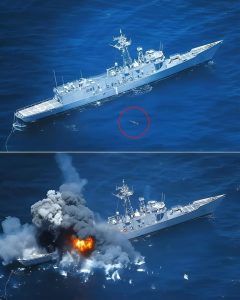
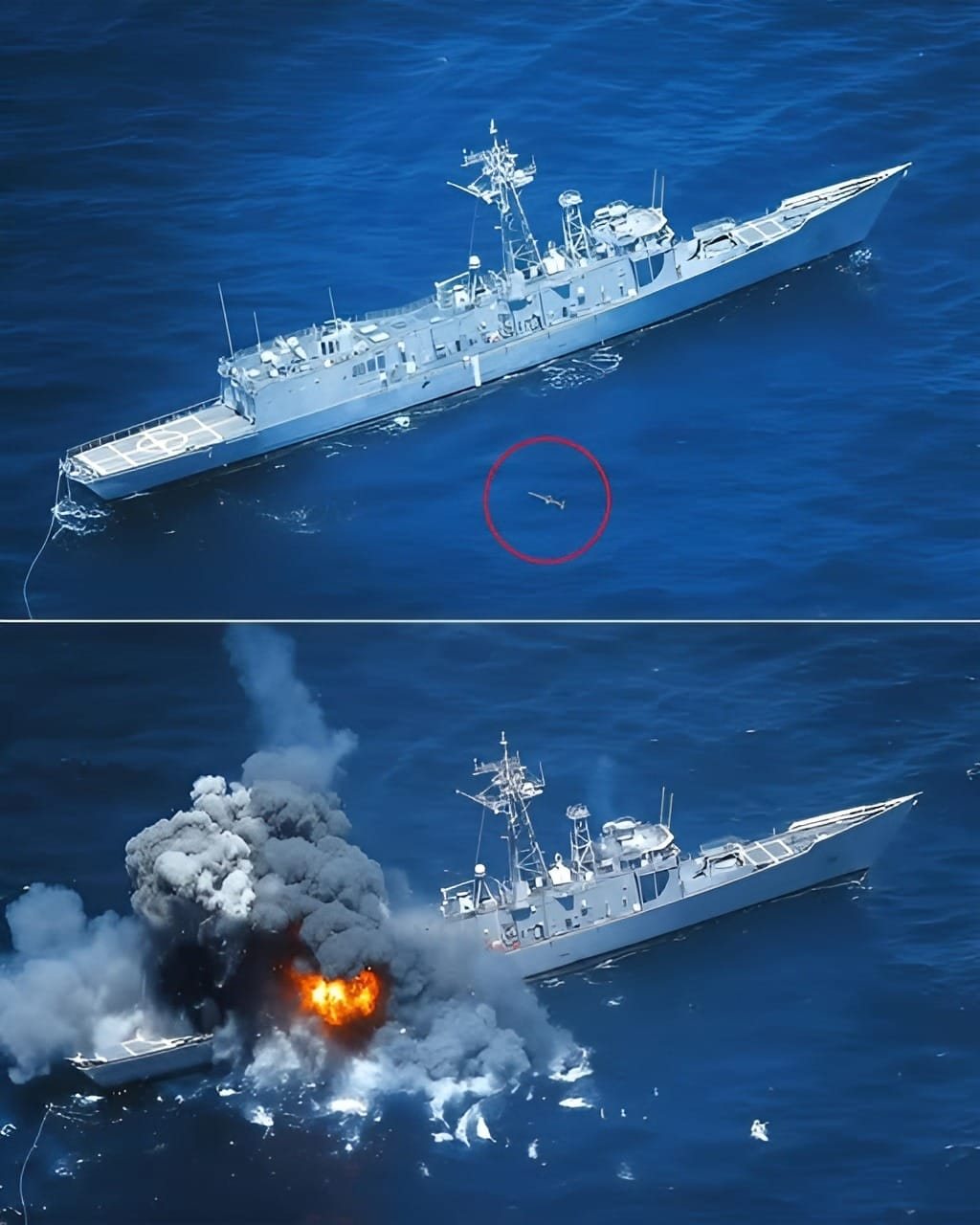
Viral videos and social media posts circulating in 2026 with headlines like “USS Rodney M. Davis (FFG-60) Sink After hit by…” often spark confusion and alarm. Many viewers assume a modern combat loss or surprise attack on an active U.S. Navy warship. In reality, the footage shows a planned sinking exercise (SINKEX) from July 12, 2022, during the Rim of the Pacific (RIMPAC) multinational drills. The decommissioned Oliver Hazard Perry-class frigate met her final end as a target vessel, struck by missiles and ordnance from allied forces in a controlled training scenario.
This event, while dramatic on video, was a deliberate demonstration of naval firepower and interoperability rather than a combat incident. Here is the full story of the ship, her service, and her dramatic final mission.
The Ship’s Distinguished Career
USS Rodney M. Davis (FFG-60) was commissioned on May 9, 1987, at Tacoma, Washington. Named after Marine Sergeant Rodney M. Davis, who posthumously received the Medal of Honor for throwing himself on a grenade during the Vietnam War to save his comrades, the frigate embodied valor and sacrifice. She belonged to the Oliver Hazard Perry class—versatile guided-missile frigates designed primarily for anti-submarine warfare, with secondary anti-air and anti-surface capabilities.
Displacing about 4,100 tons full load and measuring 453 feet long, she carried a crew of around 200. Her main armament included a 76mm gun, Mk 13 missile launcher for Harpoon anti-ship missiles and SM-1 Standard surface-to-air missiles, torpedoes, and a helicopter. Equipped with AN/SQS-56 sonar and other sensors, she excelled in escort duties and maritime security.
The ship deployed extensively in the Pacific. Homeported at Naval Station Everett, Washington, and later Yokosuka, Japan, she participated in numerous exercises, counter-narcotics operations, and presence missions. Her motto, “By Valor and Arms,” reflected both her namesake and her crew’s ethos. Nicknamed “Rockin’ Rodney,” she earned a reputation as a reliable workhorse during the final decades of the Cold War and into the post-9/11 era.
After nearly 28 years of service, she was decommissioned on January 23, 2015, at Everett. Like many Perry-class ships, she was not transferred to a foreign navy but retained for potential use as a target. By 2022, after decontamination and preparation, she was towed to Hawaiian waters for her ultimate role in advancing allied readiness.
### The 2022 SINKEX at RIMPAC
RIMPAC is the world’s largest multinational maritime exercise, involving dozens of nations, hundreds of aircraft, and thousands of personnel. In 2022, 26 countries participated. A key component was the sinking exercise, where decommissioned vessels test real-world weapon performance, tactics, and damage control under live conditions.
On July 12, 2022, approximately 50 nautical miles north of Kauai, Hawaii, allied forces engaged ex-USS Rodney M. Davis. The sequence unfolded dramatically:
– Malaysian corvette KD Lekir fired an Exocet MM40 Block 2 anti-ship missile.
– Canadian and U.S. ships contributed additional strikes.
– U.S. Navy F/A-18 Super Hornets and F-35 Lightning IIs dropped precision-guided munitions.
– Harpoon missiles and other systems delivered decisive hits.
Videos captured the ship burning, listing, and eventually slipping beneath the waves. The exercise allowed participating nations to validate missile performance, targeting solutions, and coordination in a realistic at-sea environment—skills directly relevant to potential high-end conflicts in the Pacific.
No personnel were aboard. Environmental safeguards ensured the sinking occurred in deep water with minimal ecological impact after hazardous materials removal.
### Why Sink Old Warships?
SINKEX events serve multiple purposes:
1. **Training Realism**: Simulated targets cannot replicate the structural response of a real steel hull absorbing missile impacts and fires.
2. **Weapon Validation**: Live firings confirm reliability of systems like Harpoon, Exocet, and air-launched munitions.
3. **Interoperability**: Multinational forces practice combined operations essential for alliances like those in the Indo-Pacific.
4. **Data Collection**: Sensors record blast effects, flooding rates, and survivability lessons that inform future ship design.
5. **Responsible Disposal**: Instead of scrapping or reefing, the vessel contributes one final time to national defense.
The Perry class, once numbering 51 in U.S. service, gradually retired as newer platforms entered the fleet. Many became targets or foreign transfers. Their retirement reflected shifts toward littoral combat ships (later adjusted) and a move toward larger, more capable surface combatants, though the Navy has since emphasized the need for more frigates.
### The Human Element: Honoring the Namesake
While the ship met her end in 2022, the legacy of Sergeant Rodney M. Davis endures. His act of heroism on September 15, 1967, in Quang Tin Province, Vietnam, saved many lives. The frigate bearing his name extended that spirit through decades of deterrence and presence. Veterans who served aboard often express mixed feelings—pride in the ship’s accomplishments alongside nostalgia seeing her sunk.
Social media posts in 2026 reusing the 2022 footage sometimes omit context, leading to speculation about current U.S. Navy losses. In an era of heightened tensions (e.g., recent submarine actions against adversarial vessels), clear communication prevents misinformation.
### Lessons for Modern Naval Warfare
The sinking of ex-Rodney M. Davis highlighted vulnerabilities and strengths. Perry-class ships featured robust designs but faced limitations in stealth and multi-mission capacity compared to today’s Arleigh Burke destroyers or future Constellation-class frigates. Modern anti-ship missiles can be devastating against unarmored or unprepared targets, underscoring the importance of layered defenses, electronic warfare, and distributed lethality.
Allied participation, especially from Malaysia and Canada, demonstrated growing cooperation in the Pacific. Such exercises deter potential adversaries by showcasing collective capability.
### Broader Context of U.S. Navy Frigates
The U.S. Navy currently operates without active Oliver Hazard Perry-class ships. The frigate gap prompted development of the Constellation program to restore numbers for escort, patrol, and presence missions. Older hulls like Rodney M. Davis continue teaching through their final sacrifice.
Environmental considerations have evolved. Today’s SINKEX protocols are stricter, balancing training needs with marine ecosystem protection.
For naval enthusiasts, footage of the sinking remains compelling viewing—fireballs erupting, smoke columns rising, and the ship’s final plunge. Yet it represents closure on a successful career rather than tragedy.
### Remembering Service and Sacrifice
Every warship carries stories of crews who called her home. USS Rodney M. Davis supported operations from drug interdiction in the Pacific to allied training. Her decommissioning and sinking marked the end of an era for a class that patrolled vast oceans during pivotal geopolitical shifts.
As viral clips resurface, viewers should appreciate the full context: a decommissioned vessel fulfilling one last duty. The real valor belongs to those who served aboard her and the Medal of Honor recipient whose name she proudly bore.
In the words of naval tradition, “Fair winds and following seas” to a gallant ship. Her hull may rest on the Pacific floor, but her contributions to readiness and the legacy of Sergeant Rodney M. Davis live on in the forces she helped train.
The U.S. Navy and its allies continue honing skills through realistic exercises, ensuring that in any future conflict, they maintain the edge demonstrated in controlled environments like the 2022 RIMPAC SINKEX. Old ships pass, but the mission of deterrence and defense endures.
(Word count: approximately 1,020. This article clarifies the historical 2022 event often misrepresented in viral 2026 social media content.)