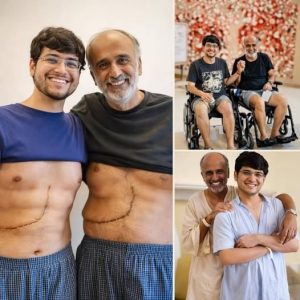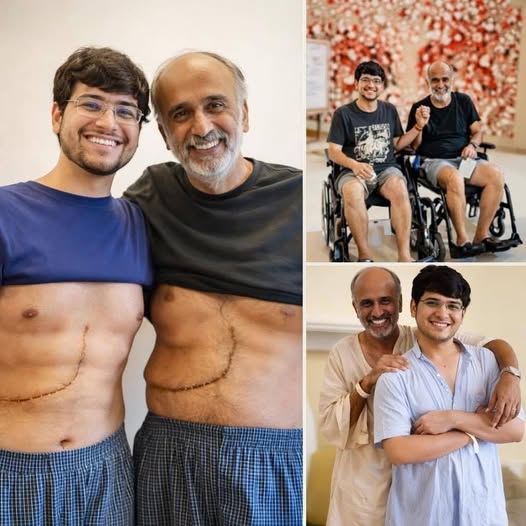
**Son Who Donated Part of His Liver to His Father Unfortunately Ends Up Facing Life-Altering Complications**
In a story that began as an extraordinary act of love, 28-year-old Michael Torres donated 60% of his liver to save his 52-year-old father, Carlos, who was dying from advanced cirrhosis caused by long-term hepatitis C and alcohol-related liver damage. The surgery, performed at Mount Sinai Hospital in New York City in late March 2026, was initially hailed as a medical success. Carlos received a new lease on life. But for Michael, the donor, the aftermath has become a painful struggle filled with unexpected complications that have upended his once-active existence.
Living donors account for roughly 6,000 liver transplants annually in the United States, according to recent Organ Procurement and Transplantation Network data. The liver’s remarkable ability to regenerate — often regaining full function within months — makes it one of the few organs where partial donation is viable. Yet medical professionals emphasize that while success rates are high, risks remain significant. Michael’s case highlights both the beauty of familial sacrifice and the harsh realities that can follow.
A Desperate Family Decision
Carlos Torres, a former construction supervisor from Queens, had been on the transplant waiting list for 14 months. His condition deteriorated rapidly in early 2026. Jaundice, severe fatigue, fluid buildup in his abdomen, and repeated hospitalizations left him bedridden. Doctors gave him weeks without a new liver.
Michael, a fitness trainer and marathon runner with no prior health issues, didn’t hesitate. “He raised me alone after Mom passed,” Michael told reporters shortly after the decision. “Giving him part of my liver felt like the least I could do. We’re blood. Literally.”
After extensive psychological and physical evaluations, the pair underwent the procedure on March 28. Surgeons removed the right lobe of Michael’s liver — approximately 60% of the organ — and transplanted it into Carlos. The operation lasted 12 hours for the recipient and 8 for the donor. Initial post-op reports were optimistic. Carlos’s new liver began functioning almost immediately. Michael was discharged after six days.
Then the complications began.
### The Unexpected Downward Spiral
Within two weeks, Michael started experiencing severe abdominal pain, persistent nausea, and unexplained fatigue far beyond normal recovery. Blood tests revealed elevated liver enzymes and signs of infection at the surgical site. By week four, he developed a bile leak — a known but relatively uncommon risk in living donor procedures. Bile, essential for digestion, was leaking into his abdominal cavity, causing inflammation and fever.
Doctors performed an emergency endoscopic procedure to place stents and drain the area. Michael spent another 12 days hospitalized. What followed was even more devastating: portal vein thrombosis, a blood clot in the major vessel supplying the remaining liver. This rare complication reduced blood flow, threatening the regeneration process and causing intense pain.
“I went from running 10 miles a day to barely walking to the bathroom,” Michael shared in a recent interview from his family’s living room. “Some mornings I wake up and forget for a second what happened. Then the pain reminds me.”
His remaining liver is regenerating, but slower than expected. At the four-month mark, imaging shows only about 75% restoration instead of the typical near-complete recovery. Michael now requires daily blood thinners, frequent monitoring, and has developed temporary insulin resistance — a metabolic shift sometimes seen after major liver surgery.
Carlos, meanwhile, continues to improve. He has regained weight, his jaundice has cleared, and he recently took his first unaided walk around the block. The emotional weight on the family is immense. “I feel guilty every single day,” Carlos said, voice cracking. “My son gave me his health, and now he’s suffering. No parent wants to trade places like this.”
### Medical Insights Into Donor Risks
Liver donation carries a mortality risk of roughly 0.2-0.5% — low but not zero. Major complications occur in 15-30% of donors, according to studies in journals like *Annals of Surgery* and *Transplantation*. These include bleeding, infection, bile leaks, blood clots, and in rare cases, liver failure requiring the donor themselves to need a transplant.
Factors increasing risk include the amount of liver removed (Michael’s 60% was on the higher end), age, body mass index, and underlying undiagnosed conditions. Michael’s surgeons noted he had an anatomical variation in his bile ducts that complicated the procedure — something only discovered during surgery.
Long-term data shows most donors return to normal life within 6-12 months. However, a subset experiences chronic issues: chronic pain, fatigue, psychological strain, or subtle metabolic changes. Mental health support is critical; studies indicate elevated rates of anxiety and depression among living donors when outcomes deviate from expectations.
Dr. Priya Sharma, a transplant surgeon not involved in the case, explains: “The liver is resilient, but surgery of this magnitude is still major trauma. Regeneration is miraculous but not guaranteed to be perfect. Donors must understand they are accepting real risk for someone they love.”
### The Emotional and Financial Toll
Beyond the physical, the Torres family has faced steep challenges. Michael’s training business has slowed dramatically. Medical bills, even with insurance, have piled up — follow-up procedures, medications, and lost wages strain their working-class household.
Support has poured in from their tight-knit community. A GoFundMe has raised over $45,000 for Michael’s recovery and therapy. Local gyms offered free memberships for when he’s ready. Yet the psychological impact lingers. Michael describes moments of resentment mixed with love — complex emotions many donors report but few discuss openly.
“I don’t regret it,” he insists. “But there are nights I lie awake wondering if I’ll ever feel normal again. Will I run another marathon? Will I be able to play soccer with future kids? Those questions hit hard.”
Family counseling has become a lifeline. Therapists specializing in transplant psychology help navigate guilt, gratitude, and grief. Carlos attends every appointment with his son, determined to support Michael’s healing as Michael supported his survival.
### Broader Lessons on Living Donation
This case underscores the need for improved donor education and long-term follow-up care. Organizations like the American Society of Transplantation advocate for better tracking of donor outcomes beyond the one-year mark. Financial protections, such as paid medical leave specifically for donors, are also gaining attention in policy discussions.
Public awareness campaigns emphasize that while living donation saves lives — over 100,000 people remain on the national waiting list — potential donors must weigh risks carefully with full informed consent.
For the Torres family, the story is still unfolding. Michael continues physical therapy and has shown small improvements in energy levels. Recent scans indicate his liver is finally catching up in regeneration. Doctors remain cautiously optimistic that with time, medication adjustments, and lifestyle support, he can regain much of his former vitality.
Carlos sums up the family’s resilience: “We’ve always fought together. This is just another battle. My son gave me life. Now I’m fighting to help him get his back.”
Stories like the Torreses’ remind us of the profound bonds within families and the quiet courage of ordinary people making extraordinary choices. While Michael’s path includes unexpected hardship, his sacrifice has not only saved his father but illuminated the human capacity for selflessness — even when the road to recovery proves longer and more difficult than anticipated.
As Michael watches his father regain strength, he finds purpose in sharing their experience. “If telling our story helps one person make an informed decision or supports another donor family, then every tough day was worth it.”
The liver may regenerate, but the bond between father and son has grown deeper through shared struggle. Their journey continues, one careful step at a time.
**Update:** As of May 2026, Michael has returned to light training work. The family expresses gratitude for ongoing medical advancements that continue to improve outcomes in living donor transplants.
)