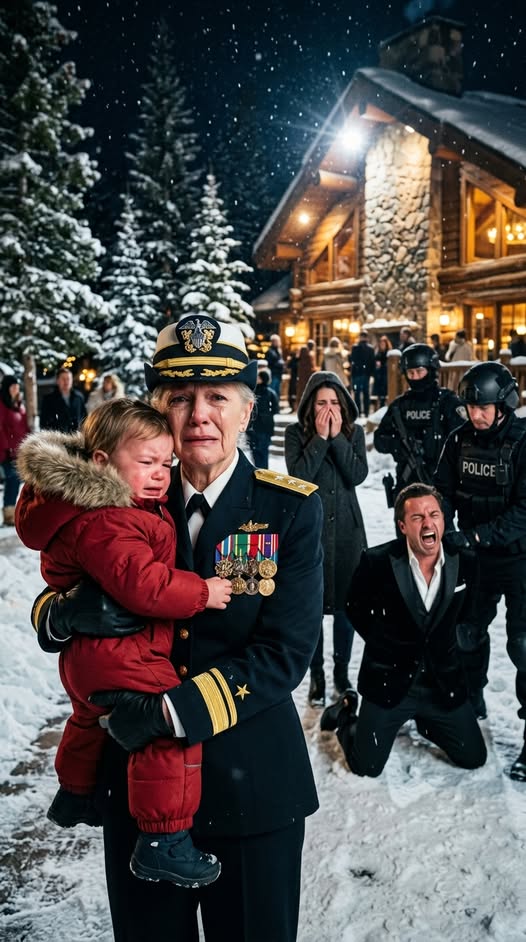
My Arrogant Son-in-Law Locked My 5-Year-Old Grandson in a Freezing Wine Vault for “Scratching a Rolex”
The call came just after noon.
I was trimming roses in my backyard when my daughter’s number flashed across my phone. I almost ignored it. Our conversations had become brief and strained over the years, mostly because of her husband, Victor.
Victor was wealthy, successful, and convinced that everyone around him existed to serve him.
Including me.
Especially me.
Whenever I visited their estate, I was treated less like family and more like hired help. I cooked meals, watched the children, folded laundry, and cleaned up after parties. Not once did Victor thank me.
Still, I loved my grandchildren.
That afternoon, my daughter sounded rushed.
“Mom, can you come over? We have guests tonight.”
Translation: They needed free childcare.
I agreed.
When I arrived at the mansion, something immediately felt wrong.
The house was unusually quiet.
Too quiet.
I set down my bag and looked around.
“Where’s Ethan?” I asked.
My five-year-old grandson was normally running through the halls like a tiny tornado.
No answer.
Victor sat at the kitchen island scrolling through his phone.
“He’s being disciplined,” he said casually.
I frowned.
“What does that mean?”
“He scratched my Rolex.”
My stomach tightened.
“A child scratched a watch?”
Victor shrugged.
“Actions have consequences.”
Then he smirked.
“He’s in the wine vault.”
For a moment, I thought I had misunderstood.
“The wine vault?”
“Yes.”
“The refrigerated wine cellar?”
“Exactly.”
I felt my pulse spike.
“How long has he been in there?”
Victor glanced at his watch.
“Maybe forty minutes.”
I stared at him.
Forty minutes.
In a room kept near refrigerator temperatures.
For a five-year-old child.
I turned toward my daughter.
She stood near the stove pretending to arrange flowers.
“You allowed this?”
She wouldn’t meet my eyes.
“He needs discipline,” she muttered.
I could hardly believe what I was hearing.
Years earlier, I had spent three decades as a military trauma surgeon.
I had worked in war zones.
I had treated gunshot wounds, explosions, burns, and hypothermia.
I knew exactly what prolonged cold exposure could do to a child.
Especially a frightened one.
I marched toward the cellar door.
Victor stood.
“Don’t.”
I stopped.
“Move.”
“He stays there until he learns his lesson.”
My voice became dangerously calm.
“He’s five years old.”
“And?”
“And he’s a child.”
Victor rolled his eyes.
“You always spoil him.”
That was enough.
I opened the door.
A wave of cold air hit me instantly.
Inside, curled against a wall between racks of expensive wine bottles, sat Ethan.
His little arms were wrapped around himself.
His lips trembled.
His cheeks were pale.
“Grandma?”
The sound of his voice shattered my heart.
I rushed forward and lifted him into my arms.
His skin felt icy.
I carried him upstairs without saying another word.
Victor followed.
“You’re undermining my parenting.”
I ignored him.
Years of military service had taught me something valuable.
When lives are at risk, arguments are irrelevant.
Action matters.
I wrapped Ethan in blankets.
Checked his temperature.
Monitored his breathing.
Assessed circulation.
Thankfully, he wasn’t in immediate danger.
But he was terrified.
That alone was unacceptable.
While Ethan rested, Victor poured himself a drink.
“You’re overreacting.”
His mother, Margaret, had arrived for dinner preparations.
She laughed.
“Honestly, children these days are too sensitive.”
Then she pointed toward the kitchen.
“Are you still making dinner?”
I looked at her.
For years, I had tolerated their arrogance.
Their insults.
Their entitlement.
Their belief that my age made me weak.
That my kindness meant helplessness.
Neither of them knew much about my past.
I rarely discussed it.
They knew I had been a surgeon.
They never cared enough to ask for details.
To them, I was simply the elderly mother-in-law who babysat for free.
Margaret handed me an apron.
“Guests arrive in two hours.”
I stared at the apron.
Then I quietly placed it on the counter.
“No.”
The room fell silent.
Victor laughed.
“No?”
“No.”
I walked to the front hallway.
Inside my bag was something I carried everywhere.
An old military medical kit.
Weathered.
Scarred.
Still functional.
I placed it on the dining table.
Victor smirked.
“What is this supposed to be?”
Without answering, I closed the heavy dining room doors.
Then I locked them.
The click echoed through the room.
For the first time, Victor looked confused.
“What are you doing?”
I slowly opened the kit.
Inside were photographs.
Service medals.
Emergency reports.
Letters of commendation.
Documents spanning thirty years.
Thirty years spent making life-and-death decisions under impossible conditions.
Thirty years protecting people.
Thirty years documenting injuries caused by negligence and abuse.
I removed a thick folder.
Victor’s smile began to fade.
“What is that?”
I looked directly into his eyes.
Then I whispered a single sentence.
“Do you know how many child-endangerment cases I have testified in?”
The color drained from his face instantly.
Ghost white.
Suddenly he understood.
This wasn’t an emotional grandmother throwing a tantrum.
This was a highly trained medical professional.
A former military surgeon.
An expert witness.
Someone who knew exactly what had happened to Ethan.
Someone who could document it.
Someone whose testimony carried weight.
A lot of weight.
The room became completely silent.
I continued.
“I documented Ethan’s body temperature.”
I held up my notes.
“I photographed his condition.”
Another document.
“I recorded the duration of confinement.”
Victor swallowed hard.
“I assessed potential cold-related injury.”
His confidence evaporated.
Margaret shifted nervously.
My daughter looked horrified.
Then I said something that changed everything.
“If I make one phone call, every detail of today becomes part of an official record.”
Nobody spoke.
I wasn’t threatening them.
I was explaining reality.
A child had been locked in a freezing room as punishment.
No amount of wealth could change that fact.
No expensive lawyers could erase it.
Victor opened his mouth.
Nothing came out.
For the first time since I had known him, he looked afraid.
Not angry.
Afraid.
Because bullies rely on power.
And power disappears when someone refuses to be intimidated.
Finally, my daughter burst into tears.
“I’m sorry.”
I looked at her.
Not with anger.
With disappointment.
“You were supposed to protect him.”
She nodded silently.
Victor sank into a chair.
The arrogance was gone.
The smugness was gone.
Only shame remained.
I picked up my medical kit.
Then I walked toward Ethan’s room.
Before leaving, I paused at the doorway.
“Discipline teaches.”
I looked at Victor.
“Cruelty damages.”
No one argued.
That evening, dinner guests never arrived.
The elaborate meal was never cooked.
The mansion felt strangely small.
I sat beside Ethan until he fell asleep.
His tiny hand wrapped around mine.
As I watched him breathe peacefully, I thought about all the battlefields I had survived.
All the injuries I had treated.
All the suffering I had witnessed.
And I realized something.
The most important battle I ever fought wasn’t overseas.
It wasn’t in a field hospital.
It wasn’t during a war.
It was standing between a frightened little boy and the people who should have protected him.
Because sometimes courage isn’t loud.
Sometimes it doesn’t involve shouting.
Sometimes the strongest response is calm, precise, and unwavering.
And sometimes all it takes is one sentence to remind arrogant people that they are not untouchable.