Every Single Democrat Voted “No” on a $100 Million Child Exploitation Funding Bill? Here’s Why Context Matters
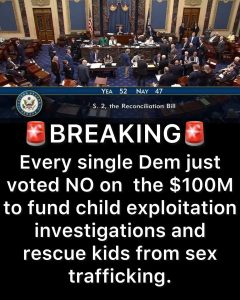
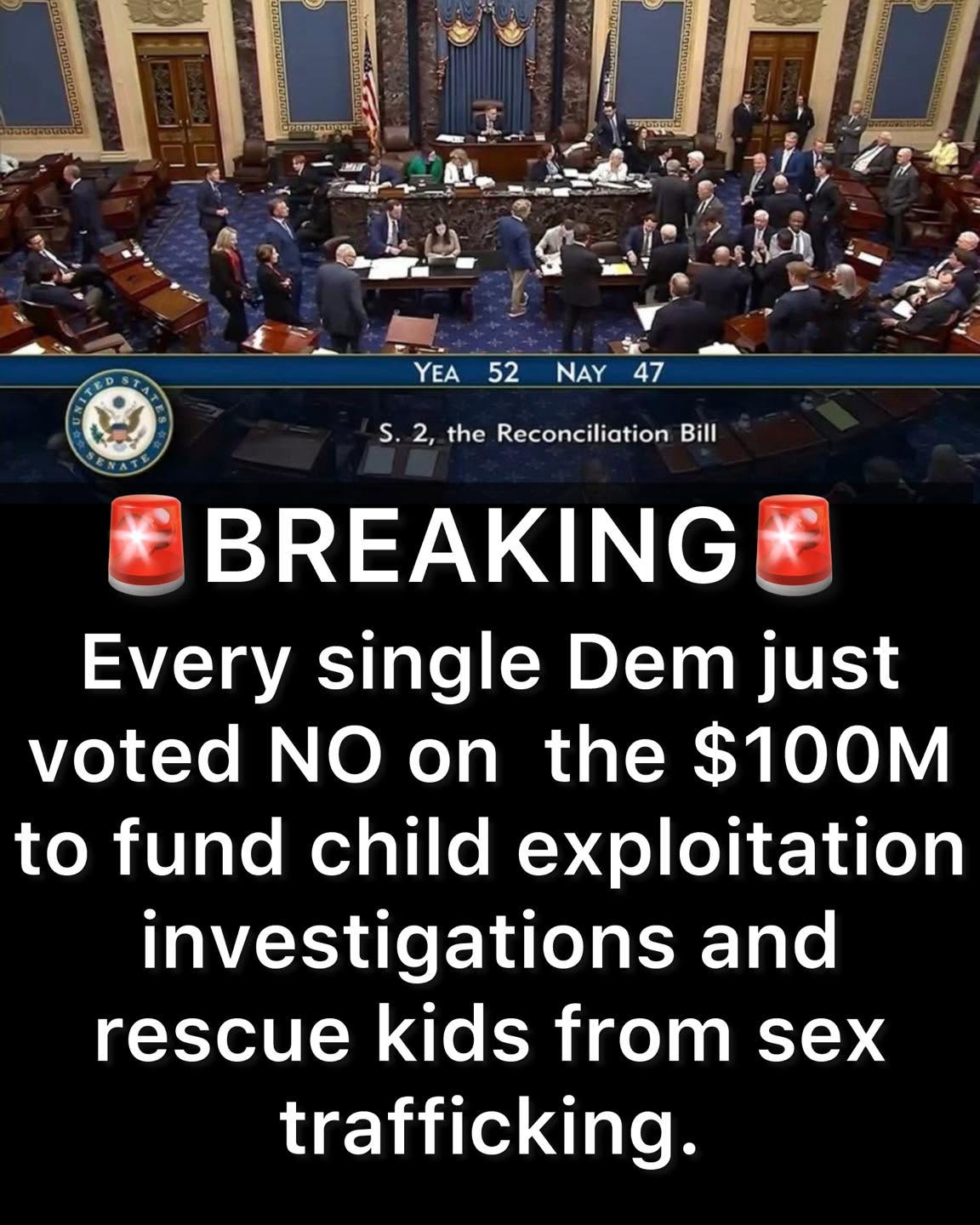
Social media posts and political headlines often circulate with dramatic claims such as, “Every single Democrat just voted NO on $100 million to fund child exploitation investigations and rescue children from sex trafficking.” At first glance, such a statement can sound shocking and straightforward. However, legislative votes are rarely as simple as a single sentence suggests.
When lawmakers vote against a bill, it does not automatically mean they oppose the stated purpose of that bill. Members of Congress frequently vote based on a variety of factors, including how a bill is written, what other provisions it contains, how it is funded, whether they believe it duplicates existing programs, or broader political disagreements surrounding the legislation.
Understanding Congressional Votes
Bills introduced in Congress often contain multiple sections and provisions. A lawmaker may strongly support combating child exploitation and human trafficking while still opposing a particular bill for other reasons.
For example, legislators may object to:
- The way funds are allocated.
- Additional unrelated provisions included in the legislation.
- Budgetary concerns.
- Oversight and accountability measures.
- Jurisdictional questions.
- Political or constitutional concerns.
As a result, a vote against a bill does not necessarily equal opposition to its stated goal.
The Fight Against Child Exploitation
Combating child exploitation and human trafficking is generally one of the few issues that receives broad bipartisan support in American politics.
Federal agencies involved in these efforts include:
- The FBI.
- The Department of Justice.
- The Department of Homeland Security.
- The National Center for Missing and Exploited Children.
- State and local law enforcement agencies.
Together, these organizations investigate trafficking networks, identify victims, rescue exploited children, and prosecute offenders.
Over the years, both Republican and Democratic administrations have supported programs aimed at preventing exploitation and assisting victims.
Why Political Claims Spread Quickly
Claims about congressional votes often spread rapidly because they simplify complex issues into emotionally powerful messages.
A headline stating:
“Politicians voted against helping children”
is likely to generate strong reactions.
However, understanding what lawmakers actually voted on requires examining:
- The bill’s full text.
- Committee reports.
- Public statements from supporters and opponents.
- Amendments added during the legislative process.
- Existing funding mechanisms.
Without that context, voters may receive an incomplete picture.
Human Trafficking Remains a Serious Problem
Regardless of political affiliation, most Americans agree that child exploitation and trafficking are serious crimes requiring aggressive enforcement.
Victims often face:
- Physical abuse.
- Psychological trauma.
- Coercion and manipulation.
- Long-term emotional challenges.
Law enforcement agencies and advocacy groups continue to emphasize the importance of prevention, victim services, public awareness, and criminal prosecution.
Technology has also become an important tool in identifying offenders and locating victims.
Funding Questions Can Become Political
Even when lawmakers agree on a goal, disagreements often emerge regarding funding.
Questions may include:
- How much money should be allocated?
- Which agencies should receive it?
- How should spending be monitored?
- Should funding be permanent or temporary?
- Does the proposal overlap with existing programs?
These debates occur regularly across many policy areas, including law enforcement, education, healthcare, and national security.
Bipartisan Efforts Have Occurred Before
Historically, anti-trafficking legislation has often received support from members of both major political parties.
Congress has passed numerous measures aimed at:
- Supporting victims.
- Increasing criminal penalties.
- Expanding investigations.
- Improving law enforcement coordination.
- Enhancing public awareness.
While disagreements sometimes occur over specific bills, the overall objective of protecting children from exploitation has generally attracted bipartisan backing.
Evaluating Political Headlines
When encountering a viral political claim, it can be helpful to ask several questions:
- What was the exact bill being considered?
- What provisions did it contain?
- Why did supporters support it?
- Why did opponents oppose it?
- Were there alternative proposals addressing the same issue?
- What explanations did lawmakers provide for their votes?
These questions often reveal a more complete story than a headline alone.
The Importance of Evidence
Political discussions are healthiest when they focus on verifiable information rather than assumptions.
Before accepting claims that a particular group voted against helping children, veterans, seniors, law enforcement, or any other constituency, it is worth reviewing the legislative record and official explanations from both sides.
In many cases, the disagreement centers not on the underlying goal but on the specific policy approach.
Conclusion
A statement such as “Every single Democrat voted NO on $100 million to fund child exploitation investigations and rescue children from sex trafficking” may describe a particular vote, but it does not automatically explain the reasons behind that vote. Legislative decisions are often more complicated than social media posts suggest.
Protecting children from exploitation and trafficking remains a major public concern and an area where lawmakers across the political spectrum have historically supported enforcement efforts. Understanding the details behind any specific bill requires looking beyond the headline and examining the legislation itself, the arguments made by supporters and opponents, and the broader policy context.
Careful evaluation of the facts helps create a more informed discussion and a clearer understanding of what actually happened.