If You Have These Two Holes in Your Back, It Means You Don’t… See More
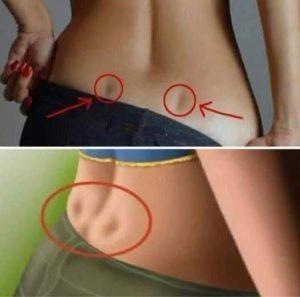
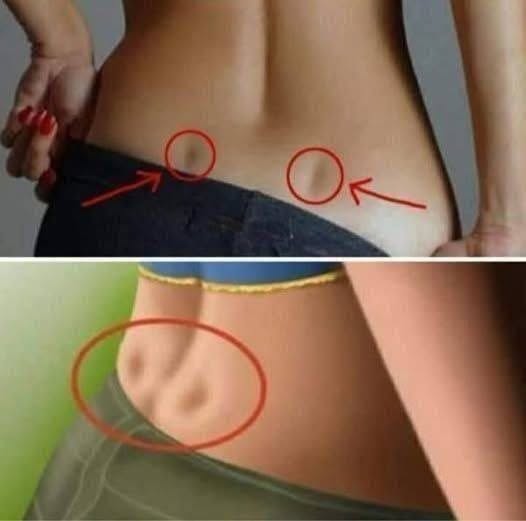
Have you ever noticed two small indentations on the lower part of your back, just above your hips? If so, you are not alone. These small dimples, often called “back dimples” or “Venus dimples,” have fascinated people for generations and are frequently the subject of viral social media posts. Many of these posts make extraordinary claims about what these dimples mean, often suggesting they reveal secrets about a person’s health, fitness, attractiveness, or even personality.
The truth, however, is much simpler—and more interesting.
Back dimples are small indentations that appear where the skin is attached to the underlying pelvic bone by short ligaments. They are usually located symmetrically on either side of the lower back. These dimples are completely natural and are primarily determined by genetics. Some people are born with them, while others are not.
One of the biggest myths surrounding back dimples is that they indicate exceptional health or athletic ability. While many fit individuals happen to have them, the dimples themselves are not a sign of strength, endurance, or physical fitness. They are simply a structural feature of the body. A person can be extremely healthy without having them, and someone with them is not automatically healthier than anyone else.
Another common misconception is that back dimples only appear in people with low body fat. While they may be more visible in some lean individuals, genetics plays a much larger role than body weight. Some people maintain visible dimples regardless of minor changes in weight, while others never develop them at all.
Throughout history, these dimples have been associated with beauty and attractiveness. In some cultures, they were considered symbols of elegance and physical appeal. The term “Venus dimples” itself comes from the Roman goddess of beauty, Venus. For men, similar indentations are sometimes called “Apollo dimples,” named after the Greek god Apollo.
Because of these associations, many online articles exaggerate their significance. Headlines often claim that having back dimples means you possess rare qualities or hidden advantages. Such stories spread quickly because they make people curious about their own bodies. However, most of these claims are based on folklore rather than science.
Medical experts explain that back dimples have little practical significance. They generally do not affect movement, posture, or overall health. In most cases, they are simply an inherited anatomical trait. Doctors rarely pay special attention to them unless they are associated with unusual symptoms, which is uncommon.
Interestingly, some people spend years wondering why they have these indentations while their friends or family members do not. The answer usually comes down to genetics. Just as eye color, hair texture, and facial features can vary between individuals, so can the presence of back dimples.
The fascination with physical features is nothing new. Humans naturally look for clues and patterns in appearance. Throughout history, people have believed that certain traits reveal personality, intelligence, or future success. Science has repeatedly shown that such assumptions are usually unreliable.
Back dimples provide a perfect example. While they may look distinctive, they do not reveal anything significant about a person’s character, talents, or lifestyle. They are simply one of many variations that make every human body unique.
Social media has amplified interest in these features. A viral post might claim, “If you have these two holes in your back, it means you have perfect genetics,” or “People with back dimples are naturally more attractive.” Such statements often gain thousands of shares despite lacking scientific evidence.
Part of the reason these posts succeed is that people enjoy discovering unusual facts about themselves. Learning that a feature on your body has a name can feel exciting. However, excitement should not be confused with proof. Many viral claims are designed to attract attention rather than provide accurate information.
Researchers who study anatomy emphasize the importance of understanding normal body variation. There is no single “correct” appearance for the human body. Features like freckles, dimples, attached earlobes, widow’s peaks, and back dimples are all examples of natural diversity.
In some cases, individuals who do not have back dimples may feel disappointed after reading exaggerated online claims. Others who do have them may assume they possess special characteristics because of what they have read. Neither conclusion is supported by evidence.
Health professionals encourage people to focus on factors that truly matter, such as nutrition, exercise, sleep, mental well-being, and preventive healthcare. These aspects have a genuine impact on quality of life, unlike whether or not someone has visible dimples on their lower back.
Body positivity advocates also point out that assigning special value to specific physical features can create unnecessary insecurities. Every body is different, and diversity should be appreciated rather than ranked according to arbitrary standards.
The popularity of back dimples highlights a broader trend in modern culture. People are increasingly interested in understanding their bodies, but they often encounter misinformation along the way. Developing critical thinking skills helps separate genuine scientific knowledge from catchy internet myths.
If you have these two small indentations on your back, what does it really mean? Most likely, it means you inherited a particular anatomical feature from your parents. Nothing more and nothing less. They do not predict your future, determine your health, or reveal secret aspects of your personality.
What they do demonstrate is the incredible variety found in human anatomy. No two people are exactly alike, and small differences such as these contribute to what makes each person unique.
So the next time you see a headline claiming that your back dimples prove something extraordinary about you, take it with a grain of salt. The real story may not be as dramatic as the viral post suggests, but it is grounded in science and reality.
Back dimples are simply one of many fascinating features that remind us how diverse and remarkable the human body can be. Whether you have them or not, they are just another example of the countless variations that make every individual unique.