BREAKING: Iranian Parliament Approves Proposal on the Strait of Hormuz—What It Could Mean
Reports claiming that the Iranian parliament has approved the closure of the Strait of Hormuz often spread rapidly across social media, accompanied by dramatic headlines suggesting that global shipping has come to an immediate halt. While such headlines attract attention, the reality is usually more complex than a single sentence can capture.
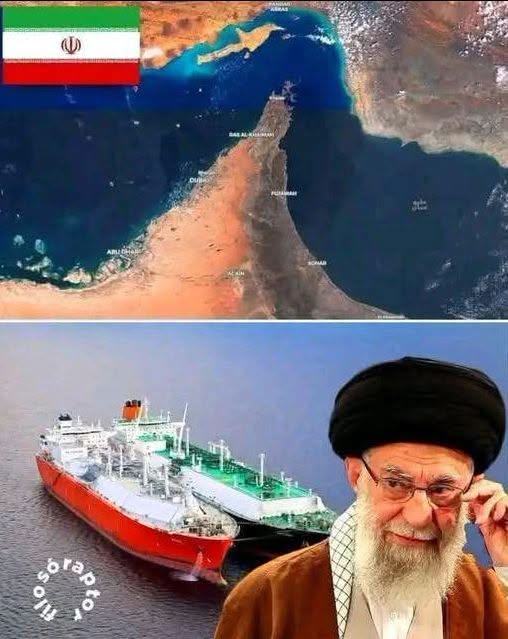
The Strait of Hormuz is one of the world’s most strategically important waterways. Located between Iran and Oman, it connects the Persian Gulf with the Gulf of Oman and the Arabian Sea. Every day, a significant portion of the world’s oil and liquefied natural gas exports passes through this narrow passage, making it a critical route for international trade and global energy markets.
Whenever tensions increase in the Middle East, speculation about the future of the Strait of Hormuz quickly becomes international news. Governments, shipping companies, energy producers, and financial markets all monitor developments closely because any disruption could affect fuel prices, supply chains, insurance costs, and shipping schedules around the world.
A parliamentary vote or proposal in Iran is often an important political signal, but it does not necessarily mean the strait is immediately closed. In Iran’s political system, major national security and military decisions involve multiple state institutions and are subject to broader government authority. As a result, headlines about parliamentary actions should not automatically be interpreted as evidence that shipping has stopped.
If restrictions were ever implemented, the consequences could be significant. Oil tankers carrying crude from countries such as Saudi Arabia, Iraq, Kuwait, the United Arab Emirates, and Qatar depend heavily on this maritime route. Even the possibility of disruption can cause uncertainty in energy markets and lead to higher oil prices as traders react to potential supply risks.
Shipping companies would likely respond by increasing security measures, adjusting sailing schedules, or seeking alternative routes where possible. However, alternative routes are limited, and transporting large volumes of oil by pipeline or other means cannot always replace the capacity of the Strait of Hormuz.
Financial markets also react quickly to geopolitical developments. Investors often move toward assets considered safer during periods of uncertainty, while energy companies, airlines, and transportation businesses closely monitor changes in fuel prices that could affect operating costs.
Governments around the world generally encourage freedom of navigation through international waterways. Many countries maintain naval forces in the region to protect commercial shipping and to help ensure that global trade continues with minimal disruption. Diplomatic efforts typically intensify whenever tensions rise, as many nations have a shared interest in preventing conflict that could interrupt international commerce.
For ordinary people, the effects of prolonged disruption could eventually extend beyond energy markets. Higher transportation costs can influence the prices of goods, airline tickets, and manufactured products. Businesses dependent on global shipping may also face delays if maritime traffic becomes more difficult or expensive.
Because of the high stakes involved, breaking news about the Strait of Hormuz should always be interpreted carefully. Early reports during rapidly developing events may be incomplete or lack important context. News organizations frequently update their reporting as more information becomes available from official sources and international observers.
Social media posts often compress complicated geopolitical events into short, dramatic statements. While these headlines generate attention, they may leave out key details about legal authority, implementation, diplomatic negotiations, or the difference between a proposal, a parliamentary vote, and actual government action.
Understanding those distinctions is essential for accurately interpreting major international developments. A vote in parliament may represent a political position or recommendation without immediately changing conditions on the ground.
Ultimately, the Strait of Hormuz remains one of the most closely watched strategic waterways in the world. Any credible threat to commercial navigation receives immediate attention from governments, shipping companies, energy markets, and international organizations because of its potential impact on the global economy.
As events continue to unfold, readers should follow updates from multiple reliable news organizations and official government statements rather than relying solely on viral headlines or social media posts. Careful reporting and verified information provide a clearer picture of rapidly changing situations than sensational claims alone.
In moments of international tension, separating confirmed facts from speculation is especially important. While developments involving the Strait of Hormuz deserve close attention, understanding the broader context helps explain why headlines about the region often generate worldwide interest and why the situation can evolve quickly as diplomatic, political, and military responses unfold.