RAF Spitfire Remnants Unearthed in County Monaghan: A Forgotten WWII Story Returns to Light
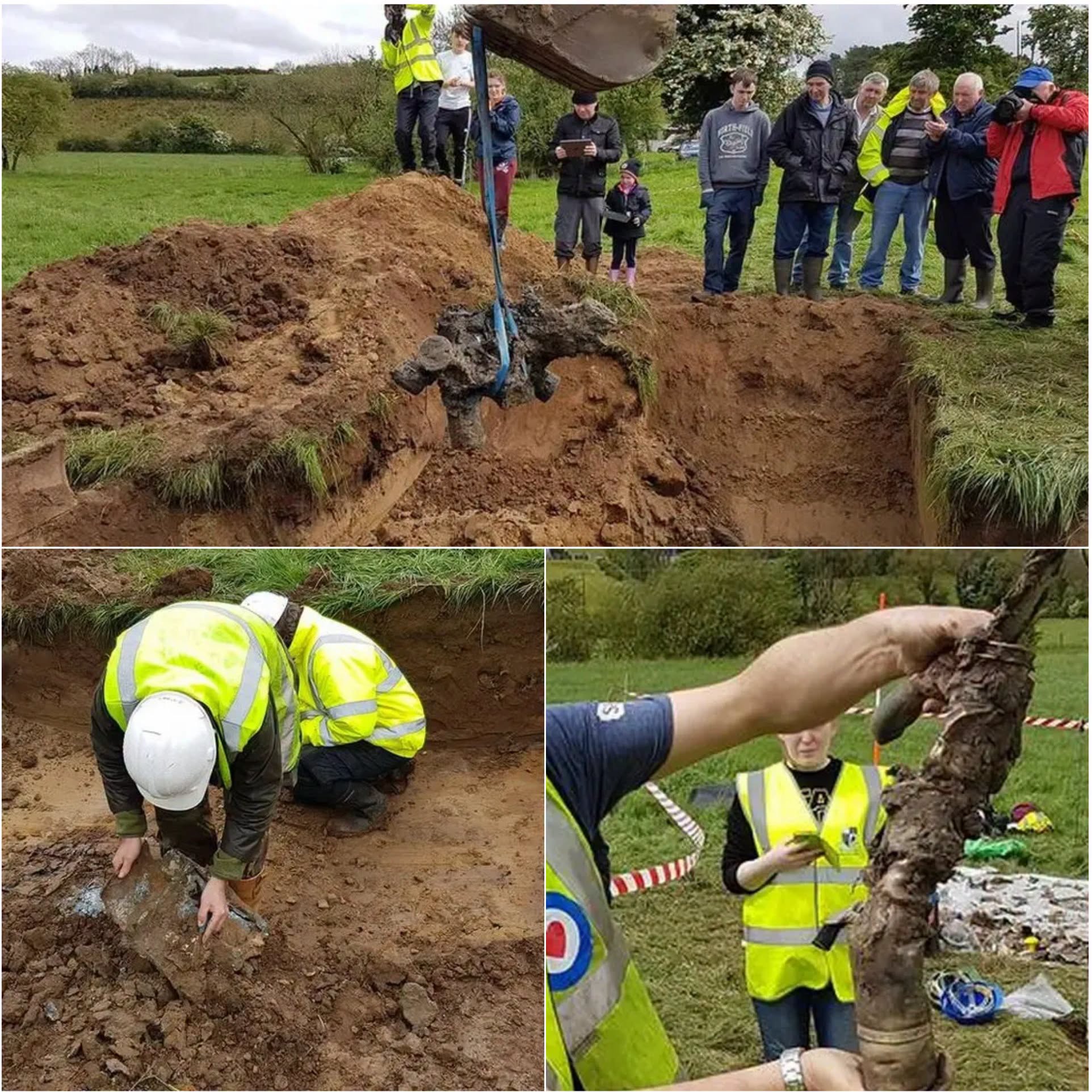
Nearly eight decades after one of the most famous aircraft of the Second World War disappeared from the skies, remnants of an RAF Spitfire in County Monaghan have brought a remarkable chapter of aviation history back into focus.
For generations, the Spitfire has represented courage, determination, and the extraordinary technological effort that shaped the Battle of Britain and the wider Second World War. Thousands of these aircraft were built, and many were lost in combat, training accidents, and operational flights.
Some disappeared forever.
Others left behind fragments that remained hidden in fields and beneath the landscape for decades.
The discovery of Spitfire remnants in County Monaghan is a reminder that Ireland’s landscape still contains physical traces of the enormous conflict that transformed Europe and the wider world.
The Spitfire: An Icon of the RAF
Few aircraft are as closely associated with British wartime history as the Supermarine Spitfire.
Designed by R. J. Mitchell and developed by Supermarine, the single-seat fighter became one of the most recognizable aircraft of the Second World War.
Its elliptical wings, powerful engine, and exceptional maneuverability made it a formidable fighter.
The aircraft became particularly famous during the Battle of Britain in 1940, when RAF pilots used Spitfires and Hurricanes to defend Britain against German attacks.
The Spitfire’s reputation continued to grow throughout the war.
It was used for interception, reconnaissance, ground attack, and other missions.
Thousands of pilots flew Spitfires in different parts of the world.
But while the aircraft became a symbol of victory, individual Spitfires were still vulnerable machines operating in extremely dangerous circumstances.
A War Reaches the Irish Landscape
Ireland remained neutral during the Second World War.
The country was not a combatant in the conflict, but neutrality did not completely isolate Ireland from the war.
Military aircraft occasionally entered Irish airspace, and aircraft accidents occurred in or near the country.
Ireland’s geographic position made it impossible to completely escape the realities of a war being fought across the surrounding region.
Aircraft could become lost, experience mechanical problems, run out of fuel, or encounter difficult weather.
When an aircraft came down in Ireland, the event could become part of a complicated story involving neutrality, military authorities, local communities, and the crews themselves.
The remains of military aircraft therefore provide an unusual window into Ireland’s wartime experience.
Why Aircraft Remnants Matter
Finding pieces of an old aircraft might initially seem like a small historical event.
A fragment of metal.
A piece of an engine.
A section of an aircraft structure.
Perhaps a component that has spent decades exposed to the elements.
But to aviation historians, even a small artifact can be enormously important.
Aircraft parts can contain serial numbers, manufacturing markings, engineering characteristics, or other clues that help identify a particular machine.
Those clues can then be compared with historical records.
If researchers can establish the identity of an aircraft, they may be able to determine when it was built, where it served, who flew it, and what happened during its final flight.
A piece of wreckage can therefore transform an anonymous accident into a documented human story.
The Human Story Behind the Machine
Every military aircraft carried a person.
Behind the famous image of the Spitfire was a young generation of pilots who were expected to fly machines at high speed while facing enormous risks.
Flying a fighter aircraft during wartime required extraordinary concentration.
Pilots had to manage navigation, weather, fuel, aircraft performance, communications, and potential threats.
Even training flights could be dangerous.
Mechanical failures could occur without warning.
Weather could change rapidly.
And an aircraft operating at low altitude could have very little time to recover from an emergency.
For the families of missing or deceased airmen, an aircraft discovery can therefore carry emotional significance.
A wreck can provide evidence about the final moments of a flight and preserve the memory of someone whose story might otherwise have faded.
County Monaghan and the Discovery
The emergence of Spitfire remnants in County Monaghan adds another fascinating chapter to the history of military aviation on the island of Ireland.
County Monaghan lies in the northeast of Ireland, an area with a landscape shaped by farmland, lakes, roads, villages, and rolling countryside.
Today, it may be difficult to imagine wartime aircraft passing overhead.
But during the 1940s, aircraft movements were an increasingly familiar part of life across Europe.
When fragments of a wartime aircraft are discovered many decades later, their location becomes particularly important.
Researchers can study the landscape and compare the physical evidence with historical documentation.
This can help establish whether the fragments belong to the same aircraft and whether their location corresponds to a known accident.
The Passage of Nearly 80 Years
Time changes everything.
An aircraft that once represented cutting-edge technology can eventually become little more than scattered pieces of aluminum, steel, wiring, and other materials.
Vegetation grows over crash sites.
Land is cultivated.
Roads and buildings change.
Memories disappear as witnesses and participants pass away.
That is why archaeological discoveries involving wartime aircraft can be so valuable.
They preserve evidence that written records alone cannot always provide.
The physical remains can reveal what happened to an aircraft long after eyewitnesses are gone.
In some cases, discoveries also correct or clarify older accounts.
A story that may have existed only as local memory can potentially be connected to official military records.
The Importance of Responsible Investigation
Discovering historic aircraft remains also comes with responsibilities.
Military wreck sites should not be treated simply as treasure-hunting opportunities.
They can represent the final resting place of service members.
Artifacts may also be historically significant and protected under relevant laws.
Professional archaeologists, historians, aviation researchers, and government authorities can help determine how such discoveries should be handled.
The objective is not simply to remove objects from the ground.
It is to document the site, preserve evidence, establish identity, and understand the historical circumstances surrounding the aircraft.
That careful process is what allows future generations to learn from discoveries like the Monaghan Spitfire remnants.
The Spitfire’s Enduring Legacy
The Spitfire continues to occupy a unique place in British and European history.
Even people who know little about military aviation can often recognize its distinctive shape.
For many, the aircraft symbolizes the pilots who defended Britain during the darkest days of the war.
But every surviving Spitfire tells a different story.
Some survived the war and became museum exhibits.
Some were lost in combat.
Others disappeared during training or operational flights.
And some left only fragments behind.
Those fragments can be just as historically meaningful as an intact aircraft.
They connect today’s world with a period when Europe was fighting for its future.
More Than Pieces of Metal
It is easy to look at an old aircraft fragment and see only a piece of machinery.
But history gives that object another meaning.
A fragment may have been manufactured in a British factory during wartime.
It may have been installed on an aircraft flown by a young pilot.
It may have traveled hundreds or thousands of miles.
It may have crossed the skies during a period when the outcome of the war remained uncertain.
And eventually, it became part of the Irish landscape.
Decades later, someone discovered it again.
That journey is what makes aviation archaeology so fascinating.
Remembering the Past
The discovery of RAF Spitfire remnants in County Monaghan is ultimately about more than the aircraft itself.
It is about memory.
It is about the people who lived through the Second World War and the communities that witnessed its effects from a distance.
It is also about how historical evidence can survive in unexpected places.
A field that appears ordinary today may contain traces of extraordinary events.
A small piece of metal can lead researchers toward documents, photographs, military records, and personal histories.
And an aircraft that disappeared generations ago can suddenly become part of the public conversation again.
The Spitfire remains one of the enduring symbols of the Second World War.
But discoveries such as the remnants in County Monaghan remind us that behind every famous aircraft were individual machines, individual pilots, and individual stories.
Nearly eight decades later, those stories can still emerge from the ground.
What once seemed lost can sometimes be found again—and when it is, the discovery gives historians another opportunity to remember the people and events that shaped the world we live in today.