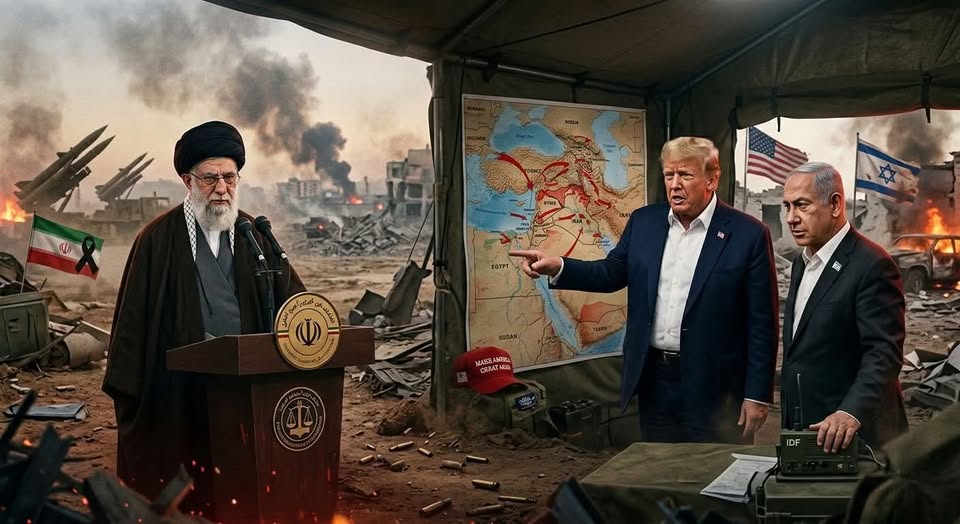
“Urgent: Iran will strike America tonight and will start with the state of…” — headlines like this are designed to grab attention, trigger fear, and spread rapidly. But when you slow down and examine the situation carefully, a very different picture emerges.
Right now, tensions between the United States and Iran are undeniably high. Military actions, retaliatory strikes, and political statements have created a volatile environment, especially across the Middle East. Missiles have been launched, airstrikes have occurred, and global leaders are watching closely as events unfold. However, there is a critical distinction between regional conflict and a direct attack on the U.S. mainland—and that distinction matters.
There is no credible evidence, intelligence report, or verified news source confirming that Iran plans to strike the United States tonight, or that any specific U.S. state is being targeted. In fact, available information suggests the opposite. U.S. intelligence assessments shared with officials have indicated no imminent Iranian plan to launch a direct attack on American soil. That alone is a major indicator that viral posts claiming otherwise are unreliable.
So why are people seeing messages like this?
The answer lies in how information spreads during times of crisis. Whenever there is war or rising geopolitical tension, misinformation spreads almost as quickly as real news—sometimes faster. Social media platforms become flooded with dramatic claims, many of which are exaggerated, misleading, or entirely fabricated. Some are created intentionally to provoke panic. Others are simply reshared without verification by people who believe they are helping.
In previous escalations involving Iran and the U.S., similar patterns have appeared. Old videos get reposted as if they are happening “right now.” AI-generated footage is passed off as real attacks. Claims of imminent strikes circulate with no official backing. These false narratives can reach millions of people within hours, creating a sense of urgency that feels real—but isn’t grounded in fact.
That doesn’t mean the situation should be ignored. It just means it should be understood correctly.
Iran has demonstrated the capability to carry out missile and drone strikes, but historically, its actions have been focused on regional targets—such as military bases, neighboring countries, or strategic infrastructure in the Middle East. Directly attacking the U.S. mainland would represent a massive escalation, one that would almost certainly trigger an overwhelming response. Because of that, such a move is considered extremely unlikely without clear warning signs—and none have been confirmed.
Additionally, large-scale attacks on the United States are not something that happen without detection. The U.S. has extensive surveillance, intelligence networks, and defense systems designed specifically to identify threats before they occur. If there were a credible, immediate danger to a specific state or city, there would be official alerts, emergency guidance, and widespread confirmation across major news organizations. That is not happening right now.
It’s also worth noting that even during intense conflicts, governments often communicate indirectly or through intermediaries to avoid catastrophic escalation. Behind the scenes, there are usually ongoing efforts—diplomatic, strategic, or military—to manage risk and prevent worst-case scenarios. That doesn’t eliminate danger, but it reduces the likelihood of sudden, unannounced attacks on civilian populations thousands of miles away.
So when you see a message that says something like “Iran will strike America tonight,” it’s important to pause and ask a few key questions:
- Is this confirmed by multiple trusted sources?
- Is there any official statement supporting it?
- Does it match what we know about how conflicts typically unfold?
In this case, the answer to all three is no.
The reality is that we are in a tense moment globally, but not every alarming headline reflects an immediate threat. Fear spreads faster than facts, especially when the message is vague, dramatic, and unfinished—like “starting with the state of…” which is a classic tactic used to make people click, share, and speculate.
What you should take seriously is the broader situation: tensions are real, the conflict is ongoing, and uncertainty exists. But what you should not take at face value are unverified claims that predict specific attacks without evidence.
Staying informed is important—but staying grounded is just as important.
At this moment, there is no verified indication of an imminent Iranian attack on the United States tonight.