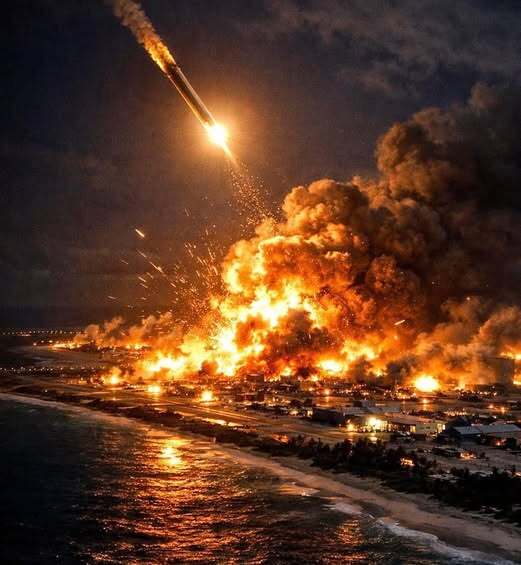
🚨 UNBELIEVABLE: “Iran Hit America?” — What’s Actually Going On Behind the Viral Claim
The headline “UNBELIEVABLE: IRAN HIT AMERICA?!” is the kind of viral phrase designed to stop people mid-scroll. It sounds urgent, dramatic, and explosive — and that’s exactly why it spreads so fast online.
But when we look at verified reporting and current geopolitical updates, the situation is much more complex than a single sensational claim.
There is no confirmed evidence or official reporting that Iran has successfully attacked the United States homeland or destroyed American forces in a direct strike in the way viral posts often suggest.
What is happening is something different: a period of heightened tension, military incidents, and misinformation spreading alongside real regional conflict dynamics.
🌍 Why This Type of Headline Spreads So Fast
Modern conflict coverage moves at internet speed. Before journalists confirm details, social media often circulates fragments of information — radar images, explosions in other regions, or unverified claims — and turns them into dramatic narratives.
Headlines like:
- “BREAKING: Iran hit America”
- “Fleet destroyed”
- “War confirmed”
are typically designed for engagement, not accuracy.
They rely on three psychological triggers:
- Fear
- Curiosity
- Urgency
When people see them, they instinctively click before verifying.
⚔️ What Verified Reporting Actually Shows
Recent credible reports describe ongoing tensions involving Iran and U.S. forces in the broader Middle East region, including maritime disputes, air defense alerts, and regional military activity.
For example:
- Iran has increased activity in strategic waterways and maritime zones
- Intelligence and defense analysts report continued low-level hybrid and proxy-related operations in parts of Europe and the Middle East
- The U.S. continues naval and military operations in the region as part of deterrence and security efforts
These developments reflect regional conflict pressure, not a confirmed successful attack on U.S. territory.
In other words, the reality is tense — but not the dramatic “America hit” scenario viral posts suggest.
🧠 How Misinformation Turns Into “Breaking News”
False or exaggerated breaking news stories usually follow a pattern:
1. A real event somewhere in the world
An explosion, interception, or military alert occurs in a conflict zone.
2. Misinterpretation
Someone online connects unrelated dots — for example, a radar alert becomes “missile strike confirmed.”
3. Amplification
Influencers repost it with dramatic wording.
4. Viral transformation
The story becomes simplified into:
“Iran attacked America”
Even if no such confirmation exists.
🛰️ The Reality of Military Conflicts Today
Modern conflicts are often:
- Electronic
- Maritime
- Proxy-based
- Information-heavy
Direct large-scale strikes between superpowers are extremely rare because of global consequences.
Instead, most activity involves:
- Deterrence patrols
- Drone interceptions
- Cyber operations
- Regional proxy clashes
- Strategic signaling
This creates confusion for the public because real military tension exists without the simplified “movie-style” events viral posts describe.
🔥 Why “Fleet Attacked” Claims Appear So Often
Naval forces operate in international waters near sensitive regions. Because of this:
- Radar contacts are common
- Drone interceptions happen
- Communication jamming is frequent
These routine military events can be misrepresented online as major attacks.
A radar alert becomes:
“Fleet under attack”
A drone interception becomes:
“War begins”
Context is often missing — and context is everything.
🧩 The Psychological Impact of Viral War Claims
When people see headlines like this, it triggers strong emotional reactions:
- Fear of global war
- Confusion about safety
- Anger or political blame
- Immediate sharing without verification
This is why misinformation spreads faster than corrections. The correction feels “less exciting,” so it travels slower.
Experts call this the “attention gap” problem — false claims dominate because they are more emotionally engaging than accurate reporting.
📉 What Official Sources Emphasize
Defense and intelligence updates consistently stress:
- No confirmed direct Iranian attack on U.S. homeland
- Regional tensions remain high but controlled
- Many viral claims online are unverified or misleading
Even in periods of escalation, governments are careful about confirming incidents only after verification from multiple sources.
🌐 The Bigger Picture: Information Warfare
Today’s conflicts are not just fought with weapons — they are also fought with information.
Social media becomes a battlefield where:
- Narratives compete
- Speed overrides accuracy
- Emotion drives visibility
This is why terms like “BREAKING” appear so frequently, even when nothing officially breaking has occurred.
🧭 How to Read Headlines Like This Safely
Before believing viral claims, it helps to ask:
- Is there confirmation from reputable news outlets?
- Are multiple independent sources reporting it?
- Does the language sound emotional or sensational?
- Is the post anonymous or unsourced?
If answers are unclear, the safest assumption is that the story is unverified or exaggerated.
🧾 Final Reality Check
Despite the viral claim “Iran hit America”, current verified reporting shows:
- Ongoing geopolitical tension ✔️
- Military activity in the region ✔️
- Information confusion and viral misinformation ✔️
- No confirmed strike on U.S. homeland or fleet ✔️
The situation is serious in terms of global diplomacy and regional security — but the dramatic claim circulating online does not reflect confirmed reality.