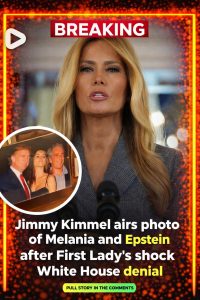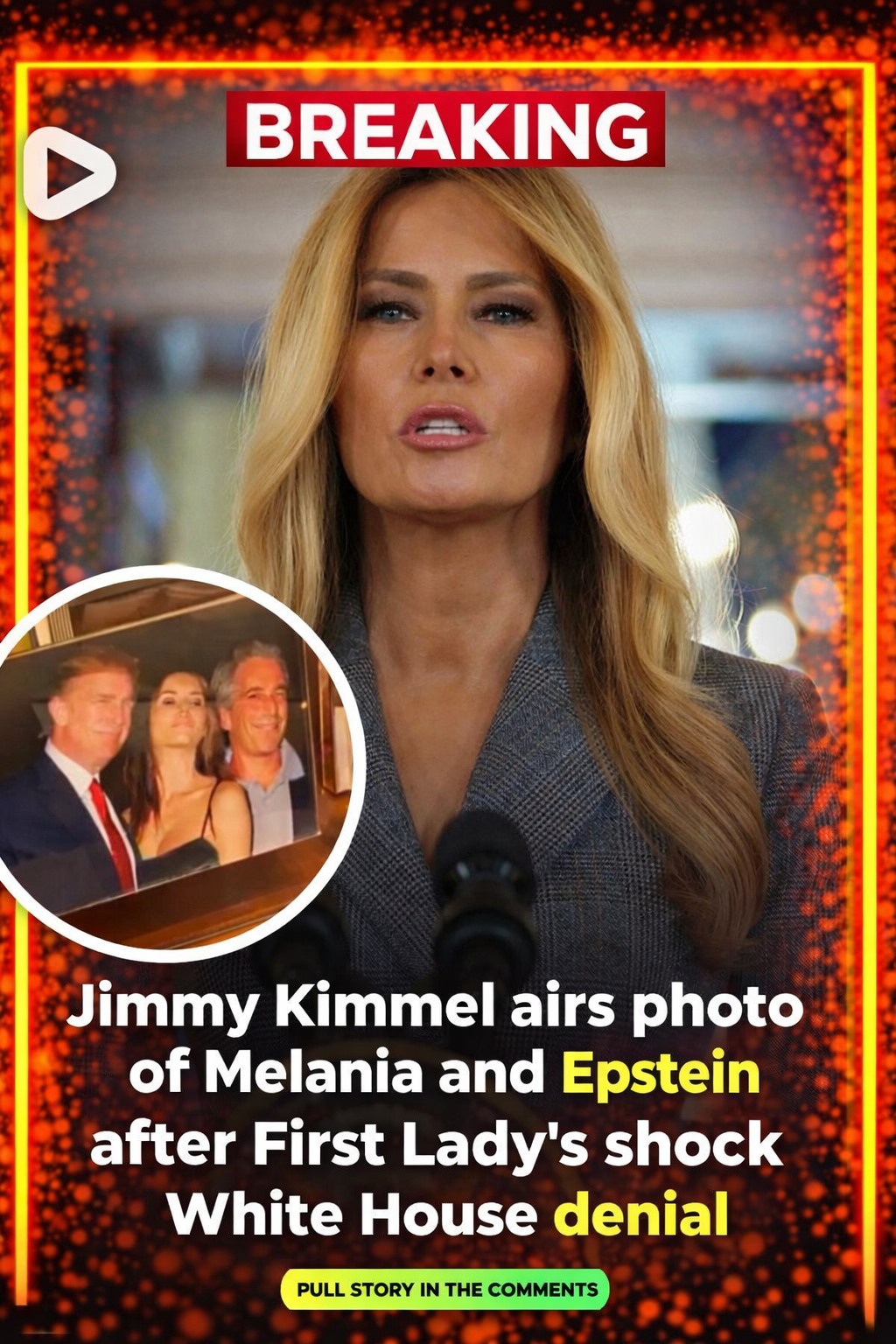
Jimmy Kimmel Airs Photo of Melania and Epstein After First Lady’s Shock White House Denial
Late-night television collided with political controversy once again when comedian and host Jimmy Kimmel devoted a segment of his monologue to a resurfaced photograph involving former First Lady Melania Trump and disgraced financier Jeffrey Epstein.
The moment quickly went viral, igniting debate across media outlets, political circles, and social platforms about context, public perception, and the power of televised satire.
The White House Denial That Started It All
The controversy began earlier that week when questions emerged during a press briefing regarding past social connections among high-profile figures photographed at elite events during the 1990s and early 2000s.
A spokesperson issued a firm denial that Melania Trump had maintained any meaningful relationship or association with Epstein, emphasizing that appearing at the same public events did not imply personal ties.
The statement described suggestions of a connection as “misleading” and urged media organizations to avoid drawing conclusions from isolated images.
While such denials are common in political communications, the issue gained unexpected momentum when late-night television entered the conversation.
Kimmel’s On-Air Reveal
During an episode of Jimmy Kimmel Live!, Jimmy Kimmel addressed the news with his signature mix of humor and commentary.
After referencing the official denial, Kimmel displayed a widely circulated archival photo showing Melania Trump attending a social gathering where Epstein also appeared among several guests.
The audience reacted audibly as the image appeared onscreen.
Kimmel framed the moment as commentary on how historical photographs often resurface during political controversies, joking about how many public figures later discover unexpected company in old party photos.
His remarks were comedic in tone but carried clear political undertones, prompting immediate reactions online.
Why the Photo Drew Attention
The photograph itself was not newly discovered. Similar images had circulated previously in news archives documenting high-society events attended by celebrities, business leaders, and political figures decades ago.
However, timing proved crucial.
By airing the image shortly after the official denial, the segment created a dramatic contrast between political messaging and visual evidence of shared social spaces.
Media analysts noted that late-night hosts frequently highlight such contrasts because they translate complex political stories into accessible television moments.
The image did not suggest wrongdoing or a personal relationship, but its broadcast reignited discussions about how public figures’ past social circles are interpreted in hindsight.
The Role of Late-Night Television in Politics
Late-night programs have increasingly become part of America’s political conversation. Hosts like Jimmy Kimmel blend comedy with commentary, often influencing public perception as much as traditional news coverage.
Researchers studying media trends observe that many younger viewers encounter political stories first through entertainment programs rather than formal news broadcasts.
Kimmel’s segment reflected this evolving media landscape, where satire and journalism sometimes overlap.
Supporters argued that comedians serve as cultural commentators who question official narratives. Critics, however, accused late-night shows of amplifying controversy without sufficient context.
Public Reaction Splits Online
Within hours of airing, clips of the segment spread across social media platforms, generating millions of views.
Reactions divided sharply:
- Some viewers praised Kimmel for challenging political messaging and encouraging transparency.
- Others accused him of sensationalizing a decades-old photograph for ratings.
- Political commentators debated whether satire helps public understanding or deepens polarization.
Hashtags related to the segment trended nationwide as commentators dissected both the photograph and the broader issue of historical associations.
Understanding Social Photographs in Elite Circles
Experts in political history emphasized an important point: during the 1990s and early 2000s, Epstein attended numerous high-profile events attended by politicians, celebrities, and business figures.
Appearing in the same photograph at a public gathering does not necessarily indicate friendship or collaboration.
Large social events often include hundreds of attendees, many of whom never interact directly.
Historians cautioned against retroactively assigning meaning to every shared appearance, noting that public scrutiny intensifies when later scandals reshape how past interactions are viewed.
The Broader Media Conversation
The incident sparked renewed discussion about how media outlets — including comedy programs — handle sensitive topics involving controversial figures.
Journalism scholars pointed out that visual media carries unique persuasive power. Images can feel more definitive than written statements, even when context remains incomplete.
Kimmel’s decision to air the photo demonstrated how entertainment platforms can influence political narratives simply by choosing which images audiences see.
Some analysts described the moment as an example of modern “image politics,” where visuals become central to public debate.
Political Responses
Political allies and critics responded quickly.
Supporters of Melania Trump argued that resurfacing old images unfairly implied connections that had never existed. They emphasized that many public figures unknowingly appeared alongside Epstein before his criminal activities became widely known.
Others maintained that public figures should expect scrutiny regarding past associations, particularly when controversies involve well-known individuals.
Neither side appeared likely to shift positions, highlighting the deeply polarized environment surrounding political discourse.
Comedy, Controversy, and Responsibility
The episode also revived an ongoing debate about the responsibilities of comedians addressing serious topics.
Late-night hosts walk a delicate line between humor and influence. While their primary goal is entertainment, their large audiences grant them significant cultural impact.
Kimmel himself acknowledged during the broadcast that comedy often thrives on uncomfortable truths and public contradictions.
Whether viewers interpreted the segment as accountability or provocation depended largely on personal political perspectives.
A Moment Reflecting Modern Media Culture
Ultimately, the viral moment revealed less about a single photograph and more about how information spreads today.
A White House denial, an archival image, and a late-night comedy segment combined to create a national conversation within hours.
In previous decades, such discussions might have unfolded slowly through newspapers and televised interviews. Today, a monologue clip can instantly shape headlines and online debate.
The story demonstrated how entertainment, politics, and digital media now operate within the same ecosystem.
The Lasting Impact
As news cycles moved forward, the controversy gradually faded from front-page attention. Yet the episode left behind broader questions:
- How should historical images be interpreted?
- What role should comedy play in political accountability?
- And how quickly should audiences draw conclusions from viral moments?
For many observers, the incident served as another reminder that modern public discourse often begins not in press conferences or policy debates, but on television stages where humor, politics, and perception intersect.
In an era where every image can resurface and every joke can become headline news, even a late-night monologue can spark a conversation far beyond the studio lights.