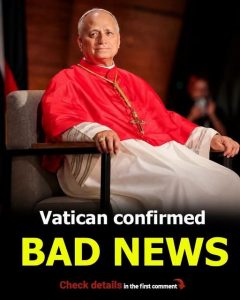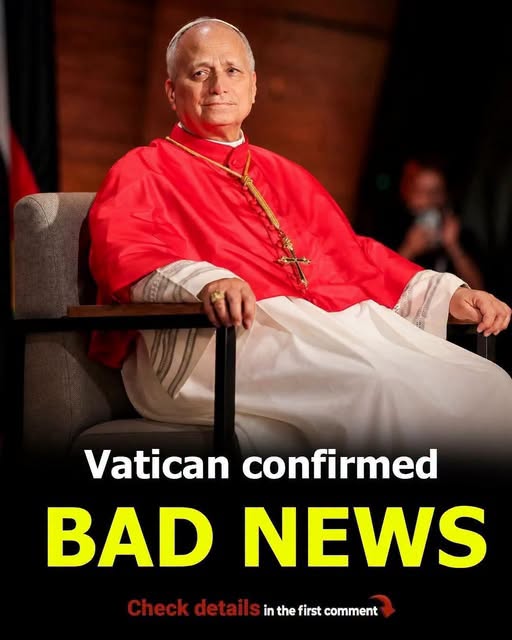
VATICAN CONFIRMS IMPORTANT NEWS ABOUT POPE LEO XIV — CATHOLICS AROUND THE WORLD PRAY AS THE PONTIFF RECOVERS
A serious health announcement from the Vatican has captured the attention of Catholics and people of faith around the world. Pope Leo XIV has undergone surgery for lung cancer, prompting an outpouring of prayers, messages of support, and concern for the leader of the Catholic Church. But the latest medical update brings an important message of hope.
VATICAN CITY — October 25, 2026.
For millions of Catholics around the world, news about the health of the pope is deeply personal. The pope is more than the head of a global religious institution. For many believers, he represents spiritual guidance, unity, compassion, and a reminder that faith can provide strength during some of life’s most difficult moments.
That is why recent developments concerning Pope Leo XIV have attracted such widespread attention.
The Vatican confirmed that the 71-year-old pontiff was diagnosed with lung cancer after doctors examined a growth discovered during medical examinations. On October 13, he underwent surgery at Rome’s Gemelli Hospital, where surgeons removed the lower lobe of his right lung.
The diagnosis was serious, and the news understandably caused concern among the faithful.
However, subsequent examinations brought encouraging results. On October 21, the Vatican announced that the cancer was localized and that an oncological assessment had determined that no further treatment was necessary.
Although the pope continues to recover and must follow medical advice, these findings offer a more reassuring picture than many feared when the diagnosis was first announced.
1. A Medical Announcement That Captured the World’s Attention
The first reports of Pope Leo XIV’s upcoming surgery immediately drew attention from Catholics, religious leaders, and international news organizations.
The pope had announced that doctors discovered a lung nodule and recommended an operation to remove it. A lung nodule is an abnormal area of tissue in the lung. Such nodules can have many causes, including inflammation, infection, scarring, or cancer.
The discovery of a nodule does not automatically mean that a person has cancer. Further examinations are needed to determine its nature.
In the pope’s case, however, laboratory examination of the tissue confirmed lung adenocarcinoma, a common type of lung cancer.
The Vatican subsequently explained that the surgery had been completed successfully and without complications.
For people following the story, the diagnosis was undoubtedly concerning. Even when cancer is discovered early, the word itself can cause fear, uncertainty, and difficult questions about the future.
For the pope, the situation also involved the responsibilities of leading a worldwide Church while undergoing a significant medical procedure.
The announcement brought renewed attention to the human side of the papacy. Behind the ceremonial robes, public appearances, speeches, and religious responsibilities is a person who, like anyone else, can face illness and the need for medical care.
That reality resonated with many people who have experienced similar circumstances in their own families.
2. What the Vatican Confirmed About the Surgery
On October 13, Pope Leo XIV underwent thoracic surgery at Gemelli Hospital in Rome.
According to the Vatican’s medical updates, surgeons removed the lower lobe of his right lung. The operation was performed using a video-assisted surgical technique.
The surgical team reported that the procedure was successful and that no complications occurred during the operation.
The diagnosis was confirmed through examination of the removed tissue.
The pope remained in the hospital for postoperative monitoring and recovery. During that period, doctors evaluated his condition and determined when it would be appropriate for him to return to the Vatican.
On October 17, he was discharged from the hospital.
His discharge was an encouraging milestone because it meant that his medical team considered him well enough to continue recovering outside the hospital.
However, leaving the hospital does not necessarily mean that every aspect of recovery is complete. Major surgery can require additional time, follow-up examinations, rest, and gradual adjustments to normal activities.
The Vatican’s subsequent statements made clear that Pope Leo would need to continue taking precautions.
The public was therefore presented with two important facts: the operation had been successful, and the pope still needed time to recover.
Both details matter when evaluating his condition.
3. The Most Important Medical Update: No Further Treatment Necessary
On October 21, the Vatican announced the results of the final examinations performed on tissue removed during the operation.
The tests confirmed that the tumor was lung adenocarcinoma and that the disease was localized.
Following an oncological assessment, the doctors concluded that no further treatment was necessary.
This was an important development in the story.
The diagnosis itself was serious, but the finding that the cancer was localized meant that doctors had not found evidence that it had spread beyond the identified area, according to the Vatican’s announcement.
The decision not to recommend additional treatment was another encouraging part of the medical assessment.
Cancer treatment depends on numerous factors, including the type of tumor, its size, its location, the findings from laboratory tests, and whether it has spread to other areas of the body.
In some cases, surgery can be sufficient treatment, particularly when a tumor is detected at an early stage and can be completely removed.
The pope’s medical team concluded that further cancer treatment was not necessary based on the examinations conducted.
It is important, however, not to interpret this announcement as a guarantee about every future health outcome. Doctors can report what current tests show and what treatment is recommended, but continued medical follow-up remains important.
For now, the Vatican’s statement provides a clear reason for cautious optimism.
4. Why the News Has Been So Emotional for Catholics
For many Catholics, hearing that the pope has cancer naturally leads to concern and prayer.
Catholic teaching places considerable emphasis on caring for the sick, accompanying people through suffering, and recognizing the dignity of every human life.
When a pope becomes ill, these teachings take on a particularly personal meaning for many believers.
People may remember moments when a priest visited a sick relative, when a religious community supported a grieving family, or when prayer helped them find comfort during a difficult period.
The pope’s situation can bring those memories back.
Some Catholics respond by attending Mass, lighting candles, saying the Rosary, or including the pope in their daily prayers.
Others may offer simple words of encouragement through messages, letters, or online posts.
These gestures cannot replace medical care, but they can express solidarity and remind people that illness does not have to be faced in isolation.
The pope himself acknowledged the importance of the support he received.
During his general audience on October 21, he thanked the faithful for their prayers and expressed gratitude for what he described as God’s generosity.
His words reflected the importance of faith and community during a period of medical uncertainty.
5. Pope Leo XIV Returns to Public Life Gradually
After leaving the hospital on October 17, Pope Leo XIV began gradually resuming some of his public responsibilities.
He appeared at the window of his Vatican apartment for the traditional Sunday Angelus prayer on October 18, thanking those who had supported him during his hospitalization.
He also participated in a general audience in St. Peter’s Square on October 21.
These appearances were important because they showed that he was able to reconnect with the public while continuing his recovery.
However, a public appearance should not be interpreted as proof that a person has completely recovered from surgery.
Medical recovery often involves balancing activity with rest. Even when a patient feels better, doctors may recommend avoiding strenuous travel or other activities until sufficient healing has taken place.
That is particularly relevant for someone whose responsibilities include meetings, ceremonies, public addresses, and international travel.
The Vatican has therefore continued to communicate adjustments to the pope’s schedule.
The approach reflects a practical principle: returning to work should be guided by medical advice rather than by public expectations alone.
6. Why Pope Leo Canceled His Visit to Assisi
One of the developments that contributed to headlines about the pope’s health was the cancellation of his planned visit to Assisi on October 27.
The Vatican announced on October 23 that he would not attend the scheduled gathering because his doctors advised against the planned helicopter journey so soon after his surgery.
The announcement came with an important clarification.
A follow-up chest X-ray had confirmed that his postoperative recovery was progressing very well.
Nevertheless, his medical team considered it prudent to avoid the planned trip because of the short time that had passed since the operation.
This is an example of why headlines need to be read carefully.
A canceled engagement can sound alarming when presented without context. Readers may immediately wonder whether the pope’s condition has deteriorated.
In this instance, the Vatican’s explanation was that the decision was a precaution intended to support his recovery.
The cancellation did not, by itself, establish that his cancer had returned, that the operation had failed, or that he had suffered a new medical emergency.
Instead, it demonstrated that his recovery continued to influence his schedule.
The gathering in Assisi was connected to interreligious dialogue and the pursuit of peace, themes that have long been important in Catholic diplomacy.
Although Pope Leo would not attend in person, the Vatican said he would send a message expressing his closeness to the organizers and participants.
This allowed him to maintain a connection with the gathering while respecting medical recommendations.
7. A Message About Peace During a Time of Personal Recovery
On October 25, Pope Leo XIV delivered a public address from the Vatican window overlooking St. Peter’s Square.
According to Reuters, he called for an end to violence in Yemen and expressed concern about the humanitarian crisis affecting people in the country’s southwestern region of Taiz.
He urged an immediate cessation of hostilities so people in Yemen and the surrounding region could live in peace.
He also offered prayers for those killed and injured in an attack on an Orthodox Christian church in Jordan.
The address was notable because it demonstrated that, while recovering from surgery, the pope continued to speak publicly about humanitarian suffering and religious coexistence.
His remarks did not mean that he had returned to every previous responsibility. Rather, they showed that he could resume selected public activities while observing the limits of his recovery.
For many observers, the moment illustrated how a pope’s spiritual and diplomatic role continues even when his personal circumstances require adjustments.
The pope’s concern for people experiencing violence also provided a reminder that his public message extends beyond the internal affairs of the Catholic Church.
It includes appeals for peace, care for vulnerable communities, and respect among religious groups.
8. Understanding Lung Adenocarcinoma
Because the pope’s diagnosis has attracted so much attention, it is useful to understand the medical term used by the Vatican.
Lung adenocarcinoma is a form of lung cancer that develops in glandular cells. It is the most common subtype of lung cancer.
The diagnosis alone does not tell the entire story of an individual’s prognosis.
Doctors must consider the stage of the cancer, the size and characteristics of the tumor, whether lymph nodes are involved, whether the disease has spread, and the results of other examinations.
When a tumor is localized and can be removed surgically, treatment may have a very different course from that required for cancer that has spread extensively.
In Pope Leo XIV’s case, the Vatican stated that the disease was localized and that the subsequent oncological assessment found no need for additional treatment.
That is the central medical fact that should guide reporting about his condition.
It would be inappropriate to speculate beyond the information his doctors have provided.
The public also does not need access to every private medical detail to understand the announced outcome.
The relevant information is that the diagnosis was confirmed, surgery was performed, the tumor was localized, and the medical team recommended no further treatment at that time.
9. Why Follow-Up Care Still Matters
Even when a patient receives encouraging results after surgery, recovery remains a process.
Doctors may recommend follow-up appointments, imaging examinations, physical rehabilitation, breathing exercises, or other measures depending on the individual’s circumstances.
After lung surgery, patients may need time to regain strength and return to their usual activities.
The exact recovery period varies from person to person and depends on several factors, including the procedure performed and the person’s overall health.
For Pope Leo XIV, the Vatican has indicated that doctors are monitoring his recovery and advising caution about travel.
This is not inconsistent with the announcement that further cancer treatment is unnecessary.
The two statements address different issues.
The first concerns whether additional cancer therapy is needed based on the medical findings.
The second concerns the healing process after surgery and the practical steps required to protect the patient’s recovery.
A person can have reassuring cancer test results while still needing time to recover from an operation.
Understanding that distinction helps prevent unnecessary alarm when the Vatican announces a canceled engagement or a change in the pope’s schedule.
10. The Importance of Responsible Reporting
Whenever a prominent public figure experiences a health problem, the internet can quickly fill with dramatic claims.
Some posts may accurately report a medical announcement. Others may exaggerate the situation, omit important details, or suggest that a new emergency has occurred without evidence.
The pope’s recent diagnosis illustrates why readers should check the source and date of a headline before sharing it.
For example, the statement that Pope Leo XIV underwent surgery for lung cancer is supported by the Vatican’s announcements.
The statement that his doctors found the cancer localized and recommended no further treatment is also supported by the Vatican’s October 21 update.
The cancellation of his Assisi visit is confirmed, but the stated reason was that the planned journey came too soon after surgery.
Those facts should not be transformed into an unsupported claim that the Vatican has announced his death or a sudden worsening of his cancer.
Accuracy matters especially when the subject is a person’s health.
Sensational wording may attract attention, but it can also cause needless distress to family members, followers, and people who already have concerns about serious illness.
A responsible article should explain what has happened, what the available evidence shows, and what remains unknown.
That approach respects both the public’s interest and the dignity of the person being discussed.
11. What Pope Leo XIV’s Situation Means for the Catholic Church
The pope’s health naturally raises questions about the schedule and continuity of the Church’s activities.
The Catholic Church operates across continents, with dioceses, parishes, religious communities, charities, schools, hospitals, and diplomatic representatives serving millions of people.
Its work does not stop when the pope needs medical care.
Cardinals, bishops, priests, religious sisters and brothers, lay leaders, and many other people continue their responsibilities throughout the world.
The pope’s own activities, however, can influence major events, public messages, international visits, and meetings with religious or political leaders.
When his schedule changes, the Vatican must determine which commitments can proceed, which require a substitute representative, and which should be postponed.
The cancellation of the Assisi visit was one example of such an adjustment.
The pope’s ability to send a message rather than attend in person allowed the event to maintain a connection with him without requiring him to travel.
Future arrangements will depend on his recovery and medical advice.
It would be premature to assume that one canceled engagement means that the Church faces a broader institutional crisis.
The available announcements describe a medical recovery and adjustments to the pope’s activities, not a change in the Church’s leadership structure.
12. The Human Side of Leadership
Public figures are often viewed through the responsibilities they carry rather than through their personal experiences.
A president is expected to govern. A judge is expected to interpret the law. A religious leader is expected to offer guidance and serve a community.
But these roles do not remove the ordinary realities of human life.
Illness, uncertainty, pain, recovery, and the need for rest can affect anyone, regardless of position or public standing.
The pope’s surgery has offered a reminder of that truth.
For many people, the story is not only about a medical diagnosis. It is also about the experience of waiting for results, listening to doctors, receiving difficult news, and hoping that treatment will be successful.
Families facing cancer often understand this sequence intimately.
A scan can raise questions. A biopsy can confirm a diagnosis. An operation can bring relief while introducing new concerns about recovery. Later test results may provide a clearer picture of what comes next.
The emotional experience can be exhausting, even when the medical outlook becomes more encouraging.
The pope’s situation has made that familiar human experience visible on a global stage.
His public role does not make him immune to the uncertainty of illness, and his diagnosis should not be treated as entertainment.
It deserves the same seriousness and compassion that anyone facing a major medical challenge deserves.
13. The Role of Prayer During Uncertainty
For believers, prayer can be a meaningful response when someone becomes ill.
Catholics may pray for healing, patience, strength, and wisdom for medical professionals. They may also pray for family members and caregivers who support the patient through recovery.
Prayer does not require people to deny the seriousness of an illness or assume that every outcome is guaranteed.
For many believers, it is a way of expressing hope while acknowledging that life can be uncertain.
In the pope’s case, messages of prayer have come from people who see him as their spiritual leader and from others who simply wish him well.
The response reflects a wider human instinct to offer solidarity when someone faces a difficult situation.
People of different religious traditions may express that solidarity in different ways, while those who are not religious may offer good wishes and encouragement.
The shared sentiment is that a person recovering from serious illness should receive compassion rather than speculation.
14. What We Know About the Pope’s Current Situation
As of October 25, 2026, the key publicly reported developments are clear.
Pope Leo XIV was diagnosed with lung adenocarcinoma after a lung nodule was examined.
He underwent surgery on October 13, during which surgeons removed the lower lobe of his right lung.
He was discharged from the hospital on October 17.
On October 21, the Vatican reported that final examinations confirmed the cancer was localized and that no further treatment was necessary.
A subsequent chest X-ray showed that his postoperative recovery was progressing very well.
On October 23, the Vatican announced that he would cancel his October 27 visit to Assisi because his doctors advised against the helicopter journey so soon after surgery.
On October 25, he delivered a public address from the Vatican window, speaking about violence and humanitarian suffering.
These developments point to a serious diagnosis followed by encouraging medical findings and a continuing period of recovery.
They do not support claims that the Vatican has announced his death or that doctors have reported a new cancer emergency.
The most responsible conclusion is that the pope has experienced a significant health challenge, that his latest announced cancer assessment is encouraging, and that his activities continue to be adjusted according to medical advice.
15. What Happens Next?
The pope’s next steps will depend on his recovery and the recommendations of his doctors.
His public schedule may gradually expand as his medical team determines that additional activities are appropriate.
Some engagements may be adjusted, while others may proceed as planned.
The Vatican is also expected to communicate significant developments through its official channels.
The pope has a scheduled apostolic journey to Uruguay, Argentina, and Peru beginning November 6. His medical team has previously indicated that it saw no clinical reason at that point to prevent the trip, but the final decision will depend on his continuing recovery and any updated medical advice.
Until then, it is important not to assume that every future commitment is either guaranteed or canceled.
A planned event is not proof that a person has been medically cleared for every activity, just as a canceled event is not necessarily evidence of a worsening condition.
The details of future travel and public appearances should be evaluated using the latest official announcements.
16. A Moment for Compassion Rather Than Fear
The phrase “bad news from the Vatican” can immediately create anxiety, particularly when it concerns the health of the pope.
There is no question that a cancer diagnosis is serious news. The announcement about Pope Leo XIV’s illness deserved attention and concern.
But the complete story also includes the successful surgery, the encouraging test results, the absence of a need for further cancer treatment, and the pope’s gradual return to public activity.
Leaving out those developments would give readers an incomplete understanding of the situation.
The same principle applies to the canceled Assisi visit. It is a confirmed change to his schedule, but the Vatican explained that the decision was made as a precaution during his recovery.
A balanced account can acknowledge the seriousness of the original diagnosis without overlooking the encouraging findings that followed.
For Catholics and other readers, the appropriate response may be to remain informed, respect the pope’s privacy, and wish him continued strength as he recovers.
The story is still developing, but the medical information made public so far offers reasons for cautious hope.
17. A Message of Hope for Families Facing Illness
The pope’s experience may also resonate with families who are currently dealing with cancer or another serious illness.
For those families, medical appointments can become the center of daily life. Waiting for a scan, receiving laboratory results, preparing for an operation, and planning recovery can create enormous emotional pressure.
When good news finally arrives, it can bring relief. But relief may coexist with exhaustion and uncertainty about what comes next.
The pope’s situation does not predict the outcome for any other patient. Cancer is complex, and every person’s diagnosis and treatment plan are different.
Still, the sequence of events offers an opportunity to remember the value of timely medical assessment, professional care, and clear communication.
It also highlights the importance of supporting people during recovery, even after the most urgent medical procedure has ended.
A person who leaves the hospital may still need practical assistance, patience, and encouragement.
Families and caregivers often provide that support quietly, without public recognition.
The same compassion that people are expressing toward the pope can also be extended to neighbors, friends, relatives, and strangers facing difficult medical circumstances.
18. Why Hope and Caution Can Exist Together
It is possible to feel encouraged by the pope’s latest test results while recognizing that he is still recovering from surgery.
These responses are not contradictory.
Hope acknowledges positive developments and the possibility of continued improvement.
Caution recognizes that recovery takes time and that medical decisions should be based on evidence rather than assumptions.
The Vatican’s statements support both perspectives.
The localized cancer finding and the recommendation against further treatment are encouraging. The advice to avoid the Assisi journey reflects the need to protect the recovery process.
Neither fact should be ignored.
When public figures experience serious health problems, people sometimes feel pressure to choose between optimism and concern. In reality, a balanced response can include both.
Readers can celebrate the good news while continuing to follow official updates.
They can pray for the pope without spreading unverified claims.
They can recognize the seriousness of cancer without assuming the worst.
That is a more humane and accurate way to approach the story.
19. The Importance of the Vatican’s Medical Updates
The Holy See Press Office plays an important role in communicating official information about the pope’s activities and significant health developments.
Its statements allow journalists and the public to distinguish confirmed information from speculation.
In this case, the announcements provided a sequence of updates: the planned operation, the results of the surgery, the pope’s discharge from hospital, the final cancer assessment, and the cancellation of the Assisi visit.
Each announcement answered a different question.
The surgery statement described what the medical team had done.
The subsequent examination results explained what doctors had learned about the tumor.
The treatment assessment clarified whether additional cancer therapy was necessary.
The travel announcement explained why a particular engagement would not proceed.
Reading these statements together provides a much clearer picture than relying on a single headline.
It also demonstrates why dates matter. An older report may describe a period when the pope was hospitalized, while a later report may describe his return to public activity.
Both reports can be accurate descriptions of different moments in the same medical episode.
The latest confirmed information should always be considered alongside the earlier history.
20. Final Thoughts: Serious News, Encouraging Results, and a Recovery Still Underway
Pope Leo XIV’s recent health experience has understandably drawn attention around the world.
His diagnosis of lung adenocarcinoma was serious news. His surgery was a significant medical event, and the subsequent changes to his schedule show that recovery remains a priority.
Yet the latest official medical findings are encouraging.
The Vatican confirmed on October 21 that the cancer was localized and that no further treatment was necessary. His postoperative recovery was subsequently reported to be progressing very well.
He canceled his planned visit to Assisi on October 27 because his doctors advised against the journey so soon after surgery, not because the Vatican announced that his cancer had returned.
On October 25, he again addressed the public from the Vatican, calling for peace and expressing concern for people affected by violence.
These developments deserve to be understood together.
The story is not simply one of bad news. It is a story of a serious diagnosis, successful surgery, encouraging test results, medical precautions, and a gradual return to public responsibilities.
For Catholics around the world, it is also a moment to express solidarity with their spiritual leader and to remember the millions of other people who face illness each day.
May Pope Leo XIV continue to recover under the care of his medical team. May his doctors and caregivers be given the wisdom and strength needed to support him. And may families facing their own medical challenges find comfort, practical assistance, and hope.
Please remember: The most reliable way to follow the pope’s health is to consult official Vatican announcements and established news organizations. Avoid sharing claims about a sudden emergency, a terminal diagnosis, or his death unless those claims are supported by reliable, confirmed reporting.
Sometimes the most important news is not the most dramatic headline. It is the complete truth, presented with accuracy, dignity, and compassion.