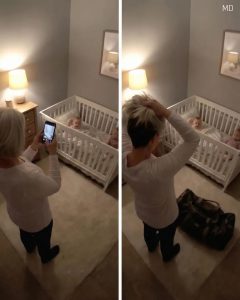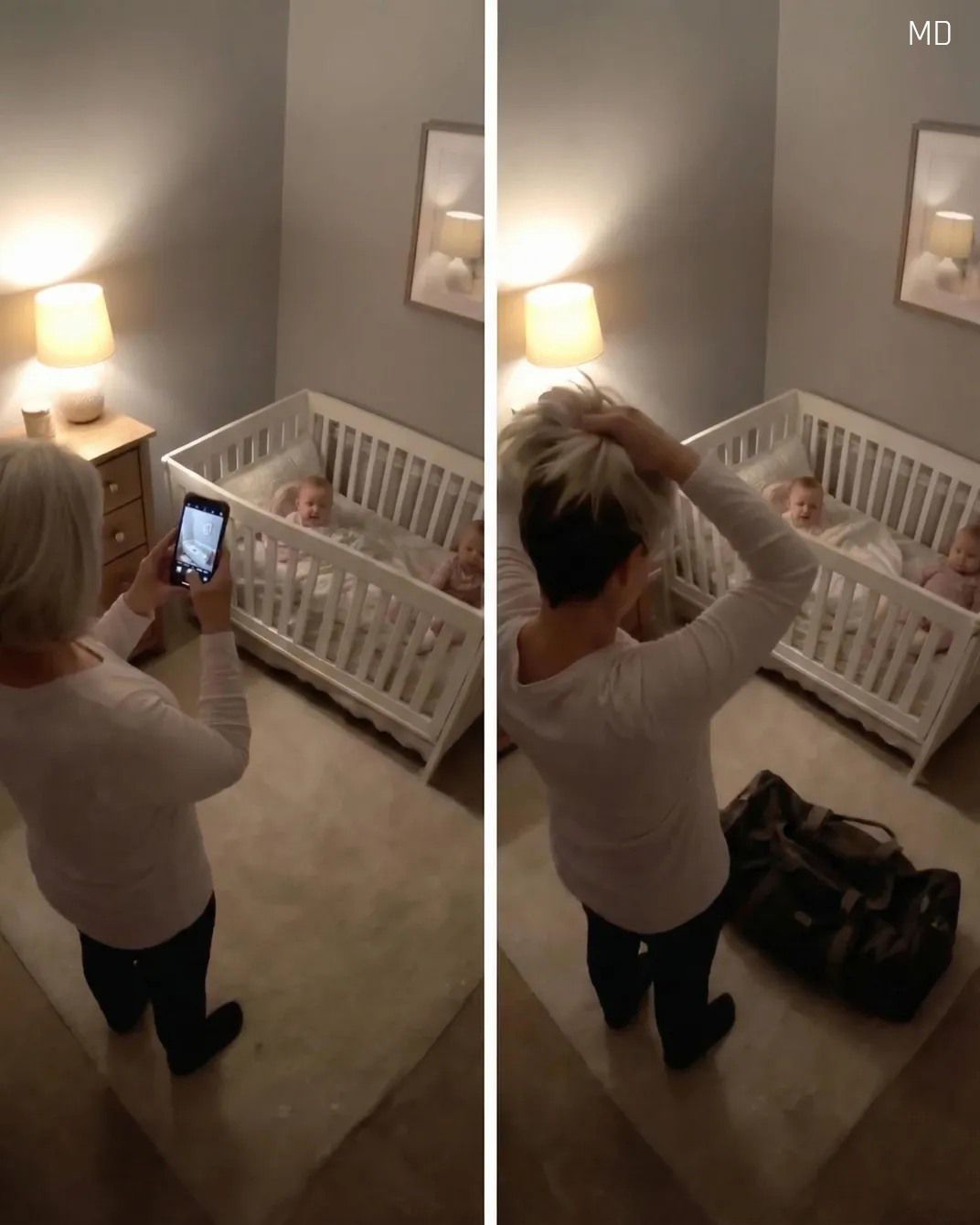
I hired her because she reminded me of my mother.
Soft voice. Sensible shoes. Silver hair pulled back in a low bun. When she smiled, her eyes crinkled like she had spent a lifetime looking at babies and finding them miraculous. At sixty, she said she’d raised three children and had five grandchildren. She called my eleven-month-old twin boys “little blessings” within minutes of meeting them.
If you’ve never had twins, imagine sleep deprivation as a permanent personality trait. That’s who I was when I interviewed her. I had dark circles that no concealer could fix. I measured time in ounces of formula and minutes between naps. My husband traveled frequently for work, and most days I felt like a one-woman emergency response team for two tiny, crawling chaos machines.
So when she offered to help two evenings a week, I nearly cried from relief.
Her name was Margaret.
The first few nights were blissfully uneventful. She arrived early. She washed her hands without being asked. She listened carefully as I explained which twin liked to be rocked and which one preferred the crib. She wrote notes—actual handwritten notes—about feeding times and diaper changes.
When I left the house that first evening, I sat in my car and stared at the steering wheel, stunned by the unfamiliar quiet.
I almost turned around twice. That’s what motherhood had done to me. It rewired my brain for constant vigilance.
But the nanny cam gave me comfort. We had installed it above the bookshelf in the nursery when the boys were born. It wasn’t about distrust—it was about peace of mind. Or so I told myself.
For the first two weeks, the footage was boring in the best way. Margaret humming lullabies. Margaret folding baby laundry. Margaret kneeling patiently while one twin tried to pull himself up using her cardigan as leverage.
I began to relax.
And then came Thursday night.
I was out to dinner with a friend I hadn’t seen in months. We were halfway through our appetizers when my phone buzzed with a motion alert from the nursery camera. That wasn’t unusual—the twins were in their “everything is a climbing opportunity” phase.
Still, I tapped the notification.
The screen opened to the nursery in night-vision green.
At first, everything looked normal. Both cribs in place. The soft glow of the sound machine. One twin asleep. The other sitting up, clutching his blanket.
Margaret wasn’t in the rocking chair.
I assumed she’d stepped into the bathroom.
Then the nursery door opened slowly.
She stepped in—but something was different.
She wasn’t humming.
She wasn’t smiling.
She moved with a strange urgency, glancing toward the camera in a way she never had before. My stomach tightened.
She walked to the bookshelf directly beneath the camera.
And then she reached up.
The screen jolted violently as the lens tilted sideways.
I stopped breathing.
The feed didn’t cut off, but the angle changed just enough that the cribs were partially out of view. My heart began pounding so hard I thought I might faint.
Why would she adjust the camera?
I told myself it was accidental.
Maybe she was dusting.
Maybe she bumped it.
Then I watched her step backward, look directly into the lens—into me—and lift her hand.
She waved.
Not the gentle grandmotherly wave I’d seen before.
A slow, deliberate one.
My fork clattered against my plate.
“Are you okay?” my friend asked.
I couldn’t answer.
Margaret turned away from the camera and did something that made my entire body go cold.
She unplugged the monitor base sitting on the dresser.
The audio cut instantly.
The video flickered.
I was already standing.
“I have to go,” I whispered, grabbing my purse.
The drive home felt endless, even though it was only twelve minutes. My hands shook on the steering wheel. Every catastrophic scenario raced through my head. Were the boys safe? Had she hurt them? Was someone else in the house?
I kept refreshing the camera app. The video feed remained on but silent. The angle still wrong.
When I pulled into the driveway, I didn’t even close my car door fully. I ran to the front door and fumbled with my keys, adrenaline making my fingers clumsy.
The house was quiet.
Too quiet.
I stepped inside and called out, trying to keep my voice steady. “Margaret?”
No answer.
I moved toward the nursery, my pulse roaring in my ears.
And then I heard it.
Laughter.
Not sinister.
Not panicked.
Just… laughter.
Baby laughter.
I pushed open the nursery door.
Both twins were sitting on the floor in a pile of blankets, squealing.
Margaret was kneeling in front of them, holding what looked like a small sock puppet over her hand.
She turned when she saw me, startled.
“Oh!” she said. “You’re home early.”
My chest heaved as I scanned the room. The cribs were intact. The babies were unharmed. No signs of struggle. No strangers hiding in corners.
“What happened to the camera?” I demanded, my voice sharper than I intended.
Her expression shifted—from surprise to embarrassment.
“Oh, that,” she said softly. “I’m so sorry. I knocked it while reaching for a book. And then I realized the boys were more interested in crawling around, so I moved the base monitor so I wouldn’t trip over the cord.”
I stared at her.
“You waved at it,” I said.
A faint blush crept up her neck.
“I did,” she admitted. “My daughter has cameras in her house too. Sometimes I forget they’re not just… recording devices. They feel like someone watching. I suppose I felt silly and waved.”
The air left my lungs in a shaky exhale.
I looked at my sons. They were reaching for her again, tugging at her sleeve, delighted.
I suddenly saw the scene through a different lens.
She had taken them out of their cribs because they wouldn’t settle. She had built a blanket nest on the floor. She had found an old sock in the diaper bag and turned it into a puppet. She had unplugged the audio because the cord ran across the space where they were playing.
Nothing sinister.
Just improvisation.
And my own fear filling in the gaps.
Tears pricked my eyes—this time from exhaustion and relief colliding at once.
“I’m sorry,” I said quietly. “I panicked.”
She gave me a gentle look. “That means you’re a good mother.”
Later that night, after she left, I rewatched the footage with a steadier heart. I saw the moment she bumped the camera—an accident. I saw her glance at it with mild annoyance, not menace. I saw her wave, almost playfully.
I realized how easily silence and a tilted lens had transformed into terror in my mind.
Sleep deprivation had turned my imagination into a threat factory.
Margaret returned the following week.
And the week after that.
Now, when the motion alert pings my phone, I don’t assume the worst. I remind myself that sometimes what we think we see isn’t the full story.
Motherhood has taught me many things.
That night taught me this:
Fear can be loud.
But sometimes the truth is much quieter—and much kinder—than we expect.