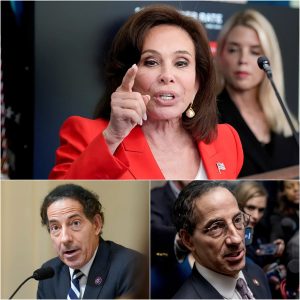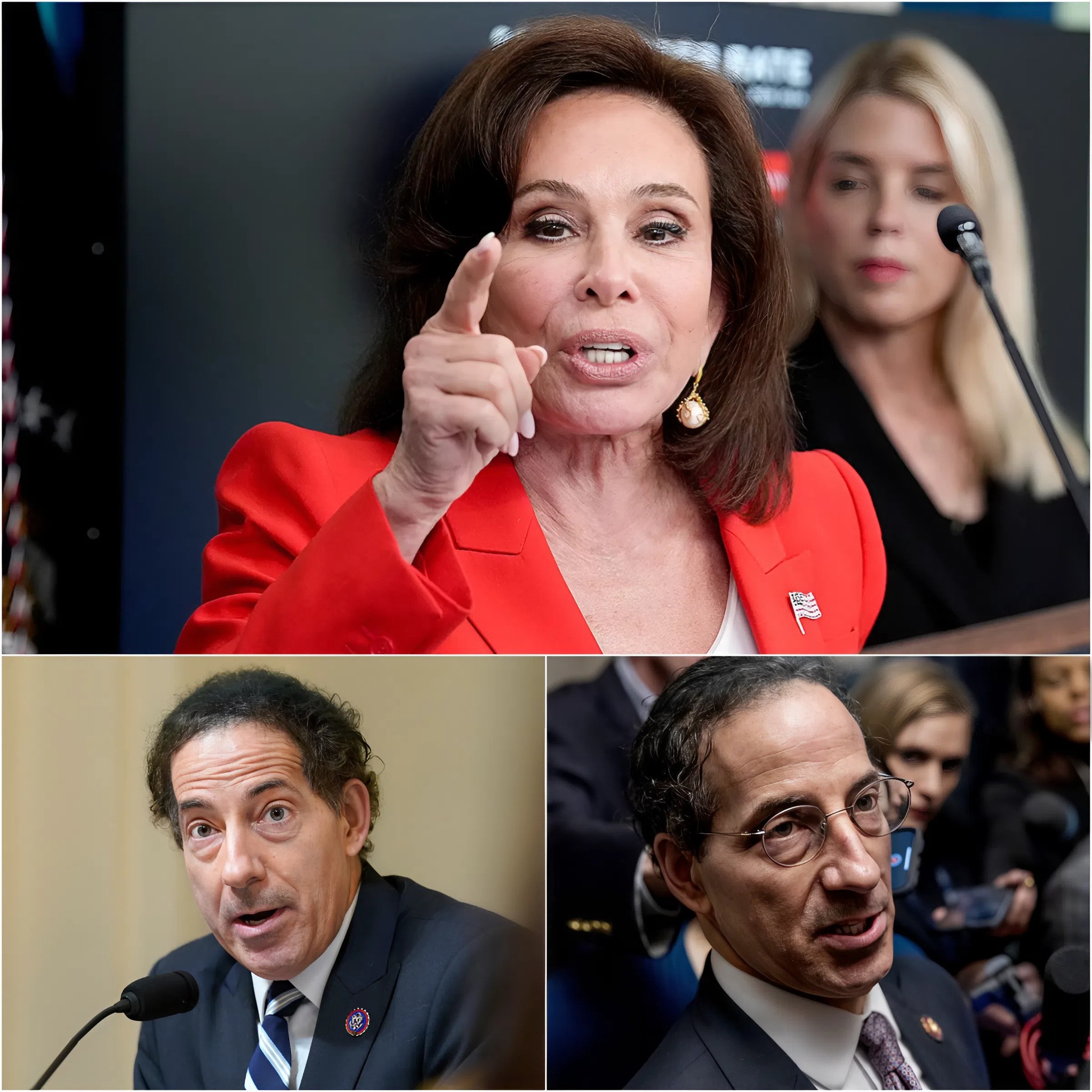
Headlines like “UNMISSABLE! Jeanine Pirro Demands Raskin Explain $30 Million!” are crafted to spark urgency and suspicion. They frame a dramatic confrontation, suggest hidden wealth, and imply resistance to scrutiny. But before accepting the narrative at face value, it’s important to separate verified facts from allegations, political rhetoric, and viral amplification.
The figures involved are well known. Jeanine Pirro is a former judge and prosecutor who now serves as a prominent television commentator. She is known for forceful, prosecutorial-style commentary, often demanding investigations into political figures she believes warrant scrutiny.
On the other side is Jamie Raskin, a Democratic congressman who has played high-profile roles in congressional investigations and constitutional debates. As a public official, he is required—like all members of Congress—to file annual financial disclosure forms outlining assets, liabilities, income sources, and certain transactions.
The central claim in the viral framing is that Raskin’s net worth “skyrocketed by $30 million in less than two years” and that he allegedly refused forensic audits. Those are serious assertions. But evaluating them requires asking foundational questions:
• What is the documented change in his reported net worth according to official financial disclosures?
• What are the sources of that change (inheritance, real estate appreciation, spousal income, book deals, investment growth)?
• Has any independent body confirmed irregularities?
• Is there evidence that a legally required audit was refused—or is the call for a “forensic audit” a political demand beyond standard requirements?
Members of Congress do not typically undergo “forensic audits” unless there is a formal legal investigation triggered by credible evidence. They do, however, file detailed public financial disclosure reports under the Ethics in Government Act. These reports are accessible to journalists, watchdog groups, and the public.
It is not uncommon for reported net worth to fluctuate significantly depending on asset valuation methods. Real estate markets can surge. Stock portfolios can rise rapidly during bull markets. Family inheritances can substantially alter asset profiles in a single year. In some cases, spouses’ assets are included in disclosures, which can lead to headline-grabbing totals that don’t reflect a sudden salary windfall.
The $30 million figure, if cited in commentary, would need to be traceable to official filings and contextualized. For example, was it based on maximum estimated asset ranges? Congressional disclosures often report assets in broad ranges (e.g., $5 million–$25 million), which can distort calculations if someone assumes the highest possible value for each listed item. That method can inflate perceived totals.
The second part of the narrative centers on alleged “refusal of forensic audits.” It is important to clarify: public officials are not obligated to submit to ad hoc audits demanded by political opponents or media personalities. Investigations are typically initiated by ethics committees, the Department of Justice, or other authorized bodies based on evidence—not television commentary.
Jeanine Pirro’s statement, as described in the viral framing, uses a classic prosecutorial theme: “If there’s nothing, the investigation will prove it.” That argument appeals to transparency and accountability. Supporters may see it as a principled call for scrutiny. Critics may see it as rhetorical pressure without substantiated grounds.
Calls for a grand jury investigation are particularly significant. A grand jury is convened in the context of potential criminal conduct. That requires credible evidence of law violations—not simply rapid wealth growth or political disagreement. Without documented irregularities, such calls remain political advocacy rather than legal process.
Political dynamics also matter. Jamie Raskin has been involved in investigations and proceedings targeting prominent Republican figures. In polarized environments, demands for scrutiny often move in cycles—each side arguing that if one official was investigated, another should be as well. That tit-for-tat atmosphere can blur the line between legitimate oversight and political counterpunching.
Transparency is essential in democratic governance. Public officials should be prepared to explain significant financial changes when asked. Clear documentation, consistent reporting, and ethical compliance build trust. At the same time, accusations should be grounded in verified discrepancies—not inference from headline numbers alone.
Media ecosystems amplify conflict. A segment questioning unexplained wealth can be clipped into viral sound bites. Social media captions may emphasize phrases like “money doesn’t just appear out of nowhere.” Context—such as inheritance disclosures or market growth—may not travel as quickly as the accusation itself.
Another layer is how net worth is calculated. Unlike salary, which is straightforward, net worth depends on assets minus liabilities at a specific moment. If a spouse sells a business, receives a settlement, or inherits property, that can dramatically change reported totals. Market conditions also play a powerful role. Between certain years, stock indices have experienced substantial gains, potentially boosting portfolios significantly without any wrongdoing.
It is also important to note that watchdog organizations and investigative journalists regularly review congressional financial disclosures. If discrepancies appear, they often become subjects of reporting. To date, there has been no widely confirmed finding of criminal financial misconduct by Jamie Raskin related to a $30 million unexplained surge. That does not preclude scrutiny, but it underscores the distinction between allegation and adjudicated fact.
Public trust is strengthened not by viral declarations but by transparent documentation and formal review processes. If there are genuine concerns, the appropriate path involves ethics committees, legal review, and evidence-based reporting. Political commentary can initiate discussion, but it does not replace due process.
The broader issue raised by this narrative is accountability. Americans across the political spectrum often feel that powerful figures avoid scrutiny. Calls for transparency resonate because they tap into that sentiment. However, accountability must operate through consistent standards applied equally—without assuming guilt from incomplete information.
In the end, bold headlines generate attention. Investigations, if warranted, generate conclusions. The gap between the two is where misinformation or exaggeration can thrive.
Before drawing firm conclusions, readers should examine official financial disclosures, consult multiple reputable sources, and distinguish between documented evidence and rhetorical challenge. Transparency is essential—but so is fairness.
In political life, scrutiny is inevitable. The key question is whether it is driven by substantiated facts or by the momentum of partisan drama.