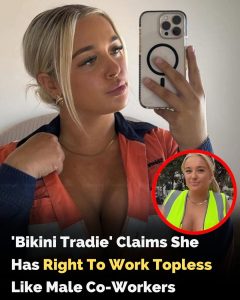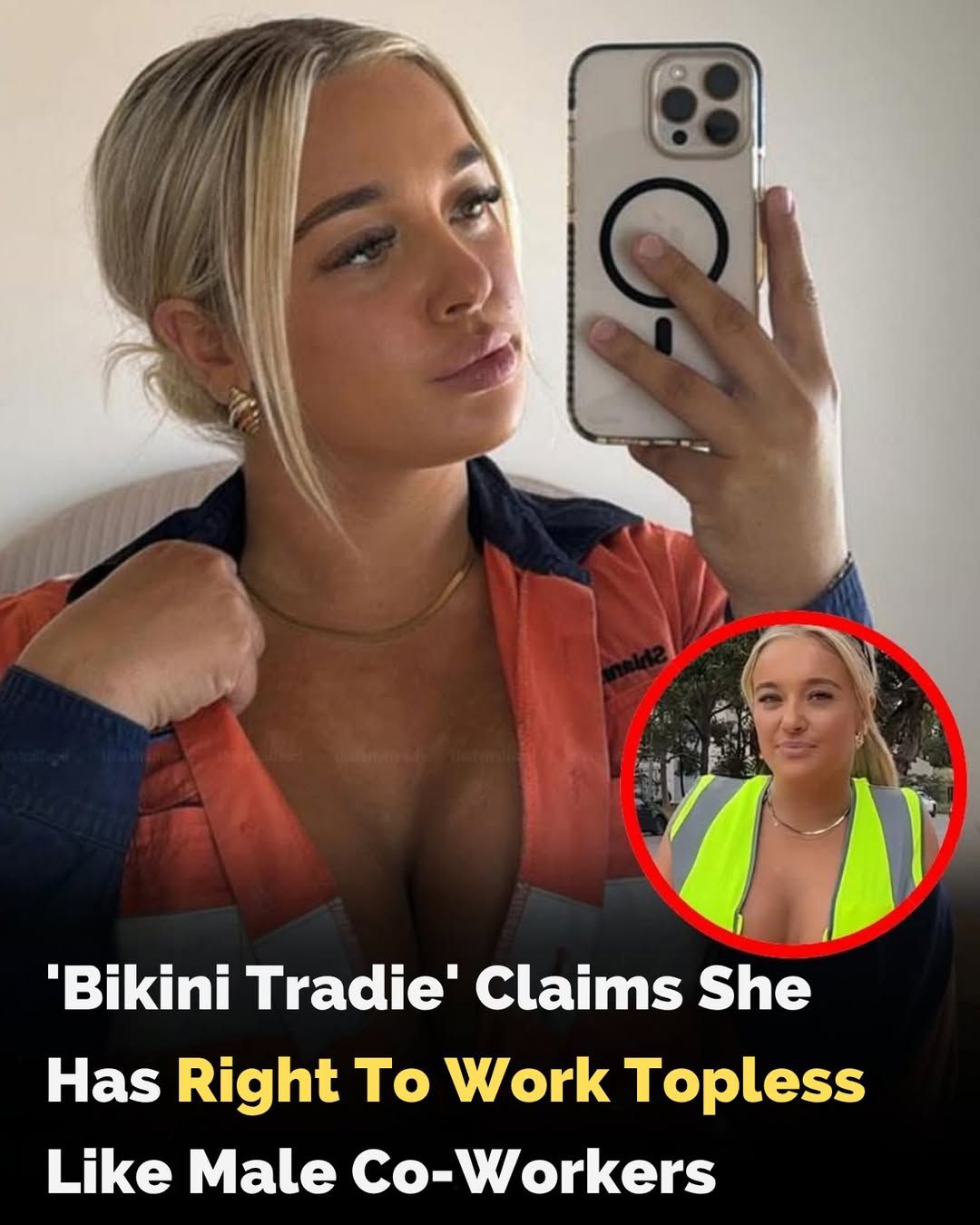
Tradie Sparks Debate After Calling Out What She Says Is a Workplace “Double Standard”
A construction worker’s social media post has ignited a wide-ranging debate about fairness, expectations, and evolving workplace culture. The tradie — a term commonly used in Australia and the UK for skilled tradespeople — went viral after sharing a candid video describing what she believes is a persistent “double standard” on job sites.
In the clip, she explained that while she’s expected to perform the same physically demanding tasks as her male coworkers — lifting heavy materials, operating machinery, working long hours outdoors — she’s also subjected to a different set of informal expectations. According to her, these include heightened scrutiny over appearance, assumptions about capability, and comments that her male colleagues rarely face.
Her argument wasn’t that she wants lighter duties. Quite the opposite. She emphasized that she trained for the job, meets the requirements, and wants to be judged solely on her performance. What she objects to, she said, is the inconsistent way workplace culture responds to mistakes, confidence, or physical limits depending on who makes them.
The video quickly circulated across platforms, drawing thousands of comments. Some viewers applauded her for articulating an issue they say has long existed in male-dominated industries. Others pushed back, arguing that standards are uniform and that the physical nature of trade work inevitably creates tension around strength and endurance.
The debate reflects a broader conversation about gender integration in trades like construction, plumbing, electrical work, and heavy equipment operation. In many countries, women still represent a relatively small percentage of the workforce in these fields. As more women enter the trades, cultural growing pains sometimes follow.
Supporters of the tradie’s perspective say the “double standard” often shows up in subtle ways. For example, when a male apprentice struggles with a task, it may be seen as part of the learning curve. When a woman struggles, critics say it can be framed as proof that women don’t belong in the trade at all. Likewise, assertiveness in a male worker might be interpreted as leadership, while the same tone from a female worker could be labeled as abrasive.
Another layer involves physical expectations. Trade work can require significant strength and stamina. However, safety regulations typically set standardized lifting limits and promote team lifting for heavy loads regardless of gender. Advocates argue that framing the conversation as purely about strength overlooks modern equipment, safety standards, and the wide range of body types among both men and women.
Critics responding to the viral video contend that construction sites are performance-driven environments where productivity matters. They argue that anyone — male or female — who cannot meet job requirements will face scrutiny. From this perspective, perceived double standards may actually be practical concerns about efficiency and safety.
Yet others suggest the issue isn’t capability but culture. Workplace banter, jokes, or casual remarks that might be shrugged off in homogeneous groups can feel exclusionary in more diverse teams. Even small comments about physicality or assumptions about competence can accumulate over time.
The tradie also pointed to what she described as a social double standard. According to her, male workers often post sweaty, dirt-covered photos after a long day and are praised for their toughness. When women in trades share similar content, she claims they sometimes receive comments questioning their motives — either being accused of seeking attention or criticized for not appearing “professional” enough.
That aspect of the debate highlights how social media complicates workplace identity. Many tradespeople use platforms to promote their skills, share projects, and build personal brands. But online visibility can invite scrutiny that extends beyond job performance.
Industry experts note that increasing female participation in skilled trades is often tied to addressing labor shortages. Governments and trade organizations in several countries have launched initiatives encouraging women to pursue apprenticeships. These efforts aim to diversify the workforce and strengthen economic resilience.
At the same time, integration requires intentional culture-building. Mentorship programs, clear anti-harassment policies, and standardized performance evaluations can help reduce perceptions of bias. Some companies have introduced mixed-gender crews as the norm rather than the exception, which research suggests can reduce the “outsider” dynamic.
Importantly, the conversation sparked by the viral video is not limited to gender. It touches on how workplaces define fairness. Is fairness treating everyone identically? Or is it ensuring equal opportunity while recognizing different experiences?
For some viewers, the tradie’s post resonated because it validated their own experiences — not only in construction, but in fields like mechanics, welding, mining, and other physically intensive professions. They argue that speaking up about culture does not mean rejecting accountability or standards.
For others, the concern is that highlighting double standards risks reinforcing division or undermining teamwork. They emphasize that trust and cooperation are essential on job sites where safety is paramount.
Interestingly, many commenters found common ground in acknowledging that trades are evolving. Equipment, safety practices, and team dynamics have changed significantly over the past few decades. As industries modernize, expectations about communication and inclusion are evolving too.
Ultimately, the viral moment reflects something larger than a single workplace complaint. It reveals how conversations about fairness are playing out in practical, boots-on-the-ground settings — not just corporate offices or boardrooms.
The tradie’s callout did not offer a simple solution. It offered a perspective. And in doing so, it prompted thousands of people to weigh in on what equal standards truly mean.
Whether one agrees with her assessment or not, the debate underscores an important truth: workplace culture is not static. It’s shaped by the people who show up each day, do the work, and speak up when something feels off.
As more diverse workers enter traditionally uniform fields, these conversations are likely to continue. The challenge will be finding ways to maintain high standards of safety and performance while ensuring that those standards are applied consistently — and perceived as fair.
In the end, the viral tradie didn’t just spark debate about one job site. She ignited a broader discussion about how fairness, accountability, and respect intersect in today’s working world.