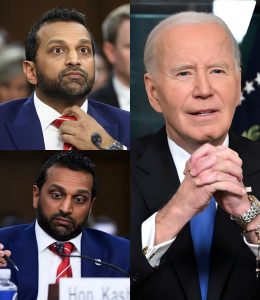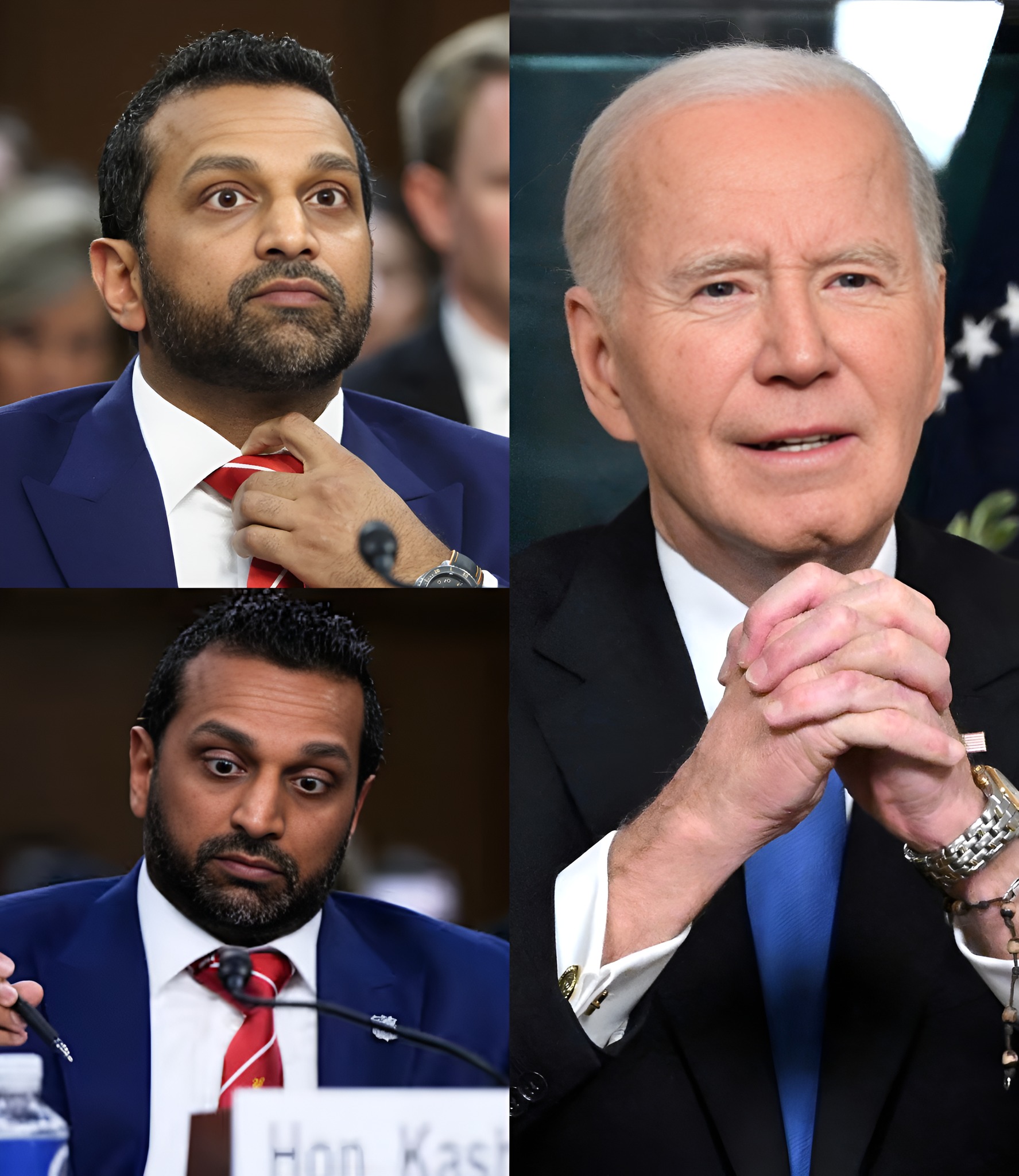
Headlines claiming that “T.R.U.M.P VOIDS 3,000 BIDEN ORDERS” and crediting Kash Patel with a sweeping “legal takedown” are dramatic — but they require careful examination. In modern U.S. governance, no president can simply wave away thousands of prior executive actions overnight without legal process, review, and often litigation. Understanding what is realistic — and what is political hype — matters.
First, it’s important to clarify the constitutional mechanics. A sitting president, such as Donald Trump, does have authority to rescind or modify executive orders issued by a predecessor like Joe Biden. Executive orders are directives to federal agencies about how to implement laws. They are not statutes passed by Congress. Because of that, they can be reversed by a subsequent administration.
However, the number “3,000” immediately raises questions. Most presidents issue dozens — sometimes a few hundred — executive orders during their term. Even when counting memoranda, proclamations, regulatory guidance documents, and agency-level directives, reaching into the thousands would require broad definitions. It would likely include not just formal executive orders but regulatory actions and administrative policies spread across federal departments.
If a new administration sought to reverse large swaths of prior policy, it would typically proceed in phases:
- Immediate rescission of select executive orders.
A president can sign new executive orders on day one that revoke specific prior ones. - Regulatory rollback through rulemaking.
Federal agencies must follow the Administrative Procedure Act. That means public notice, comment periods, economic analysis, and potential court challenges. - Litigation strategy.
Policies may be challenged in federal court, and the Department of Justice would argue either to defend or withdraw support for prior rules.
This is where figures like Kash Patel could become relevant in public discussion. Patel, who previously served in national security roles during the Trump administration, has been closely associated with legal and investigative strategy in conservative political circles. Supporters often frame him as a figure willing to aggressively challenge what they describe as entrenched bureaucracy. Critics view him as highly partisan.
But voiding “3,000 orders” would not be a single courtroom event. It would be a multi-year administrative and judicial process. Courts frequently block or slow regulatory reversals, especially if agencies fail to provide sufficient legal reasoning. The U.S. Supreme Court has emphasized that agencies must justify reversals just as thoroughly as they justified the original policy.
Historically, policy swings between administrations are common. When Trump took office in 2017, he moved to undo numerous Obama-era climate and immigration directives. When Biden assumed office in 2021, he reversed several Trump-era policies, including environmental and public health measures. This cycle reflects elections altering executive priorities — not an unprecedented legal purge.
The phrase “legal takedown” suggests courtroom drama, but in reality, the administrative state operates through procedure. Even if a president wanted to reverse thousands of actions, many would require individual review. Some may have already been codified into federal regulations. Others may have been implemented in ways that affect contracts, grants, or international agreements. Those cannot simply disappear without consequences.
There’s also a distinction between executive orders and laws passed by Congress. A president cannot “void” legislation. Only Congress can repeal statutes, or courts can strike them down as unconstitutional. So any claim implying the erasure of congressional acts would be constitutionally inaccurate.
Another factor is political messaging. Campaign rhetoric often uses large numbers to convey momentum and decisiveness. “Thousands of orders voided” sounds sweeping and transformative. But governance is less cinematic. Each regulatory rollback invites scrutiny from watchdog groups, state attorneys general, advocacy organizations, and affected industries.
For example, environmental rollbacks often trigger lawsuits from states. Immigration policy shifts may lead to injunctions from federal judges. Labor regulations can be challenged by unions or employer groups. The judiciary becomes the arena where executive ambitions meet statutory and constitutional boundaries.
If such a sweeping reversal effort were underway, several key questions would matter:
- Which categories of policy are targeted? (Immigration? Climate? Health care? Education?)
- Are agencies following required procedures under the Administrative Procedure Act?
- Have courts issued injunctions blocking portions of the rollback?
- How are affected stakeholders responding?
Without specifics, broad claims remain political slogans rather than documented legal actions.
The broader story here is about the power of the executive branch. Over decades, presidents of both parties have increasingly relied on executive action when Congress is gridlocked. That makes policy more vulnerable to reversal with each electoral shift. Critics argue this creates instability. Supporters say it reflects democratic accountability — voters choose a new direction.
As for Kash Patel, his prominence in conservative circles stems from prior roles in national security oversight and investigations during Trump’s first term. If he were involved in shaping legal strategies, it would likely be behind the scenes — advising, coordinating litigation approaches, or influencing personnel decisions within agencies. It would not resemble a single courtroom spectacle nullifying thousands of directives at once.
It’s also worth noting the political environment in which such headlines circulate. Media ecosystems amplify bold narratives. Social media favors dramatic framing over procedural nuance. Words like “voids,” “obliterates,” and “takedown” capture attention. The actual legal process — notices in the Federal Register, comment deadlines, judicial review — rarely goes viral.
In the end, whether a future administration reverses dozens or hundreds of prior executive actions, the constitutional guardrails remain the same. Executive orders are powerful, but they are not permanent. They exist within a system of checks and balances: Congress writes statutes, agencies implement them, courts interpret them, and voters ultimately decide leadership.
So if you encounter the claim that 3,000 Biden orders were voided in a sweeping legal maneuver, the prudent response is to look for documentation: official executive orders, Federal Register notices, court rulings, and credible reporting. Governance is complex, incremental, and often contested. It rarely fits into a single explosive headline.
If you’d like, I can also:
- Turn this into a dramatic fictional political thriller version
- Break down how executive orders actually work step by step
- Or analyze the political implications of large-scale regulatory reversals