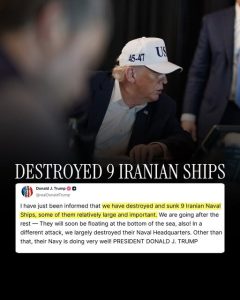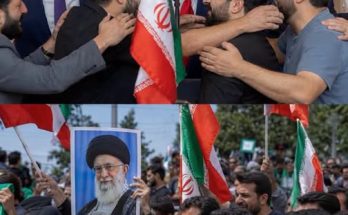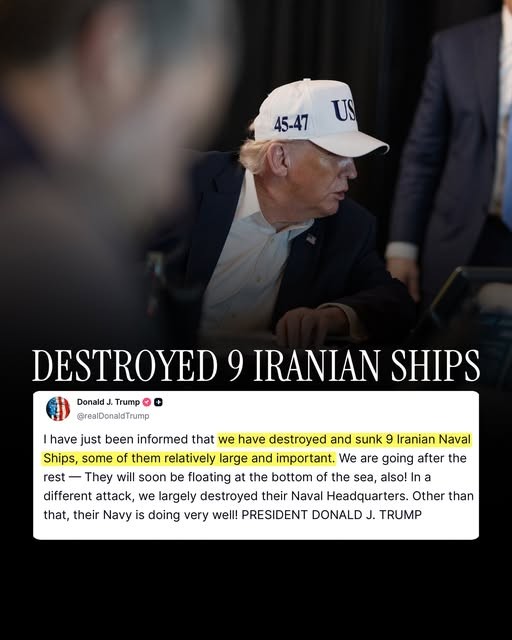
On February 28, 2026, a dramatic escalation occurred in the Middle East involving the United States and Iran. The statement attributed to Donald Trump, claiming the destruction of nine Iranian naval vessels, reflects the intensity of this conflict and highlights the high-stakes nature of military operations in the region. Whether fully confirmed or a statement intended for strategic messaging, the content captures a moment of extraordinary tension between the two nations.
Background: U.S.–Iran Tensions
The U.S. and Iran have had a fraught relationship for decades. From the 1979 Islamic Revolution to conflicts over nuclear programs, regional influence, and missile development, both countries have repeatedly clashed diplomatically and militarily. Previous incidents, such as the targeted killing of General Qasem Soleimani in 2020, the repeated confrontations in the Strait of Hormuz, and attacks on proxy forces, created a longstanding environment of mistrust.
By 2026, tensions had intensified. Iran’s alleged attempts to enhance nuclear capabilities, combined with regional aggression against U.S. allies, led to the formulation of preemptive military strategies. The statement about sinking naval vessels fits into a broader pattern of U.S. military signaling, intended to project strength and deter further escalation.
The Military Context
The reported destruction of Iranian naval ships — “some of them relatively large and important,” according to the statement — would represent a significant operational achievement in conventional naval terms. Modern Iranian naval assets include a mix of smaller fast-attack craft, missile-equipped patrol boats, and some larger frigates and support ships. Their strategic role in the Persian Gulf and the Gulf of Oman is crucial for Iran’s ability to project power and threaten maritime traffic, including vital oil shipping lanes.
Naval engagements in the region have historically involved:
-
Fast attack craft and swarm tactics in the confined waters of the Gulf
-
Missile exchanges and electronic warfare
-
Air and drone support from offshore U.S. naval platforms
Destroying nine ships, especially if they include larger frigates or logistical vessels, represents both a tactical and symbolic victory. It signals the U.S.’s ability to project power rapidly and decisively while simultaneously reducing Iran’s naval capacity to retaliate or control regional waterways.
Strategic and Political Messaging
Statements like the one attributed to Trump serve multiple purposes beyond the literal military claim:
-
Deterrence: By publicly announcing the sinking of Iranian ships, the U.S. signals to Tehran and its allies that further aggression will be met with decisive action. This can potentially dissuade escalation from Iran or its regional proxies.
-
Domestic Audience: The statement reinforces the image of decisive leadership to a domestic base, portraying the president as actively defending American interests abroad.
-
Psychological Warfare: Publicly declaring the destruction of naval assets can demoralize adversaries and boost confidence among allies. In modern warfare, information and perception are as strategically valuable as physical victories.
-
International Signaling: Allies and rival nations observe these statements carefully. European and Middle Eastern governments may adjust their diplomatic and military stances in response, potentially affecting sanctions, naval deployments, or intelligence sharing.
Risks and Escalation
While tactical successes are significant, such operations carry high risks:
-
Retaliation: Iran could respond with missile strikes, asymmetric attacks, or cyber operations against U.S. military assets, allies, or even global infrastructure.
-
Regional Destabilization: The Persian Gulf, Strait of Hormuz, and nearby territories are critical to global oil supply. Naval conflict threatens maritime commerce, potentially causing oil price spikes and economic consequences worldwide.
-
Collateral Damage: In any naval confrontation, civilian vessels may be at risk, heightening international condemnation and complicating military objectives.
Statements emphasizing the “rest” of Iranian ships being targeted can be interpreted as signaling intent for further offensive operations, which escalates the risk of full-scale regional conflict.
Historical Comparisons
Naval conflicts with asymmetric threats are not new. Comparisons include:
-
Operation Praying Mantis (1988): The U.S. Navy retaliated against Iranian forces in the Persian Gulf, destroying oil platforms and several Iranian vessels. The operation demonstrated U.S. naval superiority and served as a deterrent to future attacks.
-
Gulf of Tonkin Incident (1964): U.S. claims of attacks on naval vessels were used to justify escalated military involvement in Vietnam. While context differs, it illustrates the power of naval incidents in shaping policy and public perception.
Statements like Trump’s echo these historical moments, where publicizing military achievements serves both operational and political purposes.
International Response
Major powers, including Russia, China, the U.K., and European Union members, closely monitor any military escalation between the U.S. and Iran. Public announcements of ship destruction often provoke:
-
Calls for restraint at the United Nations Security Council
-
Emergency diplomatic consultations among regional partners
-
Adjustments to military posture in surrounding nations to prevent spillover
The goal for the U.S., by emphasizing decisive action, is often to show strength while containing escalation. However, miscommunication or misinterpretation can have unintended consequences.
Implications for Regional Security
The destruction of naval assets in the Gulf region affects several dimensions:
-
Maritime Trade: The Persian Gulf and Strait of Hormuz carry a significant portion of global oil exports. Naval disruption can temporarily threaten shipping lanes.
-
Proxy Dynamics: Iran’s reliance on regional militias and proxies in Iraq, Syria, Lebanon, and Yemen may provoke indirect retaliation rather than direct naval engagements.
-
Allied Confidence: Nations like Israel, Saudi Arabia, and the UAE may see increased U.S. resolve, affecting coalition cohesion and defense planning.
In essence, a localized naval victory sends ripples through global security and economic systems.
Media and Public Perception
Statements like these are amplified globally. Media coverage ranges from factual reporting of confirmed military action to partisan framing and speculation. Social media and 24-hour news cycles can escalate narratives beyond the facts, sometimes fueling public fear or misinterpretation.
For example:
-
Headlines emphasizing “sunk ships” may overshadow nuances such as the scale of engagement or collateral effects.
-
Analysts may interpret the statement as both a factual update and strategic posturing.
-
Public discourse often conflates operational success with political signaling, creating complex narratives around leadership and crisis management.
Conclusion
The statement — “I have just been informed that we have destroyed and sunk 9 Iranian Naval Ships… We are going after the rest — They will soon be floating at the bottom of the sea, also!” — is emblematic of modern high-stakes geopolitics, combining operational claims with messaging intended for multiple audiences: domestic constituents, international allies, adversaries, and the global media.
While the literal destruction of vessels is significant, the broader implications include deterrence, escalation risks, and shifts in regional security calculations. The U.S.-Iran dynamic, historically volatile, becomes even more unpredictable in the wake of such actions and statements.
In essence, the statement represents not only a tactical military report but also a calculated communication strategy. It signals capability, intent, and resolve while simultaneously shaping public perception and international discourse. The situation remains fluid, and each subsequent move by either side carries potentially profound consequences for regional stability, global trade, and international diplomacy.
If you want, I can also create a step-by-step timeline of the naval conflict and Iran-U.S. escalation in February 2026, breaking down each reported strike, retaliation, and political statement in chronological order to give full context. This would expand understanding of both the military operations and the communications strategy behind them.