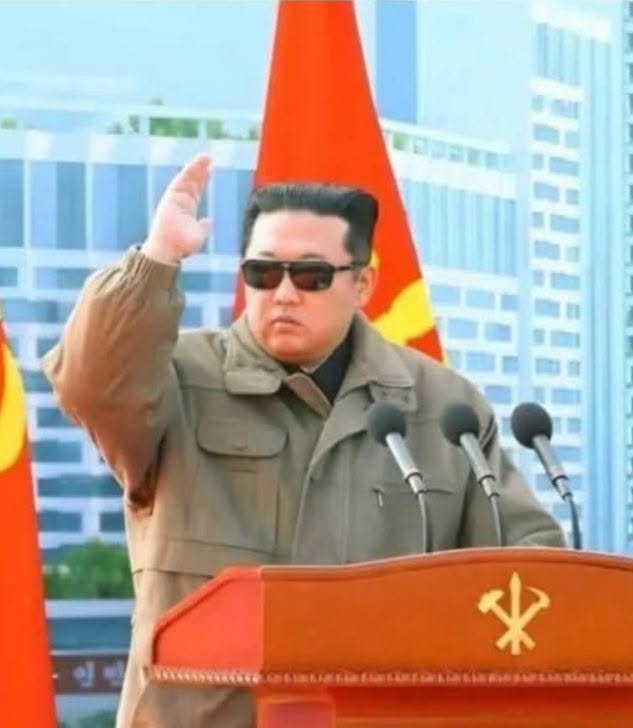
BREAKING NEWS: Korea Tensions Rise After North Korea Launches Missiles
Tensions on the Korean Peninsula have risen sharply after North Korea launched a barrage of short-range ballistic missiles toward waters off its eastern coast on Thursday, August 20, 2026. South Korean military officials said they detected around 10 missiles launched from the Pyongyang area. The launches immediately attracted international attention because they came during a period of heightened military and diplomatic activity involving North Korea, South Korea, and the United States.
However, despite dramatic social-media headlines claiming that “Korea has given the order to attack,” there is no credible evidence in the current reports that South Korea ordered an attack on North Korea. What has been confirmed is a missile launch by North Korea and a resulting emergency security response in Seoul.
What Happened?
According to South Korean military officials, North Korea fired approximately 10 short-range ballistic missiles from the Pyongyang area toward the sea. The missiles traveled roughly 300 kilometers before falling into waters to the east of the Korean Peninsula, according to reporting from the Associated Press.
The launches occurred during the annual Ulchi Freedom Shield military exercises involving South Korea and the United States. This year’s exercises have been significantly reduced following an order from U.S. President Donald Trump to scale back the drills.
The timing of the missile launches has therefore attracted considerable attention.
North Korea has long criticized U.S.-South Korean military exercises, arguing that they represent preparation for an attack. Washington and Seoul have traditionally described the exercises as defensive activities intended to maintain military readiness.
Why Did North Korea Launch the Missiles?
The precise motivation behind the latest launches is not publicly established.
North Korea has repeatedly used missile tests to demonstrate military capabilities, send political messages, and respond to developments it considers threatening.
The latest launches came shortly after Washington announced changes to its joint military exercises with South Korea. Trump has also indicated that he wants to meet North Korean leader Kim Jong Un again later this year.
That combination makes the situation particularly complicated.
On one side, Washington appears interested in reopening high-level diplomacy. On the other, North Korea continues to demonstrate its military capabilities.
A Possible Message to Washington
The missile launches may be interpreted as a signal from Pyongyang that reducing military exercises does not automatically resolve its concerns.
Kim Yo Jong, the powerful sister of North Korean leader Kim Jong Un, criticized the U.S. decision to reduce the military drills, arguing that changing their scale or duration did not alter Pyongyang’s view of them as provocative. She also said that she was unaware of current communication between Kim Jong Un and Trump.
That statement is important because it suggests that the diplomatic door may not be completely closed, even while North Korea continues its military demonstrations.
South Korea Responds
South Korean authorities have treated the launches as a serious security matter.
The country’s National Security Office held an emergency security situation review meeting after the missile launches. Officials reviewed the military response and assessed the possible effects on national security.
South Korea also called for North Korea to immediately stop its ballistic missile launches, describing them as a serious violation of United Nations Security Council resolutions.
That response does not mean South Korea has ordered an attack.
Rather, it reflects the country’s established approach of monitoring North Korean military activity and maintaining readiness.
Why People Are Worried
The Korean Peninsula remains one of the world’s most heavily militarized regions.
North Korea possesses nuclear weapons and continues developing ballistic missile technology. South Korea, meanwhile, maintains a powerful conventional military and has a longstanding security alliance with the United States.
The United States has approximately 28,500 troops stationed in South Korea, providing a major component of the alliance’s deterrence posture.
Because of this military concentration, even a relatively small missile test can attract significant international attention.
A missile launch does not automatically mean a larger war is about to begin, but repeated military actions can increase the possibility of miscalculation.
The U.S.-South Korea Military Exercises
The latest developments also come after an unusual decision to reduce the annual Ulchi Freedom Shield exercises.
The drills originally were expected to last 11 days, but the exercise was shortened to five days, ending Friday. Some outdoor field exercises were also reduced.
South Korean officials were reportedly surprised by the decision because Seoul had not been informed beforehand.
The change has generated debate about the future of the U.S.-South Korea alliance and whether reducing military exercises will help create conditions for renewed negotiations with North Korea.
Some analysts believe diplomacy could benefit from reducing provocative military activities. Others worry that reducing exercises could weaken military readiness.
Trump Wants Another Meeting With Kim
Adding another layer to the story, Trump has said he expects to meet Kim Jong Un again later this year.
Trump previously met Kim three times during his first term as president. Those meetings attracted worldwide attention but did not ultimately produce a lasting agreement to eliminate North Korea’s nuclear weapons program.
Now, years later, Washington appears interested in reopening communication.
Yet North Korea’s missile launches show that diplomacy will not necessarily prevent Pyongyang from continuing to strengthen and demonstrate its military capabilities.
Is an Attack on South Korea Happening?
At this time, the available reports do not establish that North Korea has launched a full-scale attack on South Korea.
The confirmed event is a barrage of short-range ballistic missiles fired toward the sea.
There is also no confirmed evidence that South Korea has issued an order to launch a war against North Korea.
This distinction is extremely important.
Social-media headlines often use phrases such as “Korea gives the order to attack” because they generate curiosity and clicks. But readers should distinguish between an attention-grabbing headline and confirmed information from military authorities and established news organizations.
What Happens Next?
The next few days could be important.
South Korea and the United States will likely continue monitoring North Korean military activity closely. North Korea could conduct additional missile tests or issue further statements criticizing the United States and South Korea.
At the same time, diplomatic efforts could continue behind the scenes.
China has also called for dialogue and urged South Korea to avoid taking sides in the broader strategic rivalry between Washington and Beijing. Chinese Foreign Minister Wang Yi has advocated renewed communication and confidence-building measures involving the Koreas.
That means the current situation contains two competing possibilities: increased military tension and renewed diplomacy.
Final Thoughts
The latest events on the Korean Peninsula are serious, but they should not automatically be interpreted as the beginning of a new war.
North Korea has launched around 10 short-range ballistic missiles, South Korea has responded by reviewing its security posture, and the United States is simultaneously attempting to reduce military exercises while exploring the possibility of renewed dialogue with Kim Jong Un.
For readers following the story, the most important thing is to separate confirmed facts from sensational headlines.
There is currently no confirmed report that South Korea has ordered an attack on North Korea.
What is confirmed is that North Korea has once again demonstrated its missile capabilities at a moment when military exercises, diplomatic negotiations, and regional security concerns are all colliding.
The situation remains fluid.
The world will be watching closely to see whether the latest missile launches lead to further military escalation—or whether they eventually become part of a larger effort to bring Washington and Pyongyang back to the negotiating table.
For now, one thing is clear: tensions are rising, but a missile test is not the same thing as a declaration of war.