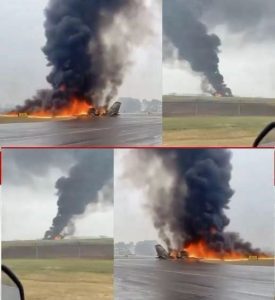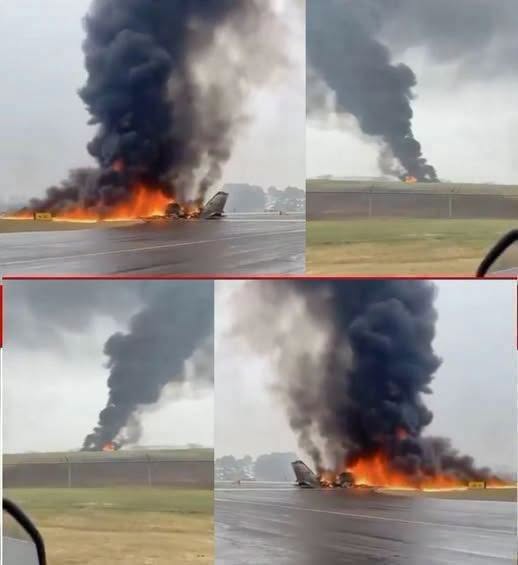
Iran Under Attack? Viral Reports of a Plane Crash Spark Shock and Confusion
A dramatic headline claiming that Iran has been attacked and that a passenger plane carrying more than 244 people has crashed is spreading rapidly online. The wording is alarming, and understandably, many people who encounter such a post may immediately wonder whether a major tragedy has just occurred.
But in moments of breaking news, headlines can travel much faster than verified information.
At the time of writing, there is no reliable confirmation that a passenger aircraft carrying more than 244 people has just crashed in Iran. The specific number “244” appears to be connected to a different tragedy: Air India Flight 171, which crashed shortly after takeoff from Ahmedabad, India, on June 12, 2025. Reports at the time said there were 244 people aboard according to aviation authorities, while the airline separately reported 242 passengers and crew.
That distinction is extremely important.
When a major international conflict is underway, old photographs, videos, headlines, and details from previous disasters can easily be reused in new social-media posts. A genuine event from one country can become incorrectly associated with another country, creating a story that looks convincing but is actually a mixture of unrelated information.
Iran has been at the center of intense regional conflict and military activity in 2026. Recent reporting has described continuing tensions involving Iran, the United States, Israel, and countries across the Middle East. Diplomatic efforts have also been underway as regional governments seek ways to reduce escalation.
That environment makes sensational social-media claims especially difficult to evaluate.
One of the most important things readers can do when encountering a headline such as “IRAN ATTACKED RIGHT NOW” is pause before sharing it. The words “right now,” “breaking,” and “just crashed” are often used to create urgency. Urgency can encourage people to share information before checking whether the underlying event has actually been confirmed.
A responsible approach is to look for several independent sources. Major international news organizations, government agencies, aviation authorities, and the airline involved are generally much more useful for confirming an aircraft accident than an anonymous social-media post.
This is particularly important when a story involves hundreds of passengers.
A passenger-plane crash would normally generate information from multiple sources: the airline, aviation authorities, emergency services, airports, local officials, and major news organizations. Details such as the aircraft type, flight number, departure airport, destination, location of the crash, number of passengers, and condition of survivors would gradually become available.
If those details are missing and the only evidence is a dramatic headline or recycled video, readers should be cautious.
Iran has experienced aviation tragedies in the past, including Ukraine International Airlines Flight 752 in January 2020. That Boeing 737 was shot down shortly after departing Tehran during a period of heightened military tension. All 176 people aboard were killed. Iranian authorities later acknowledged that the aircraft had been mistakenly struck by air-defense missiles.
That tragedy remains one of the clearest examples of how dangerous aviation can become during periods of military escalation. Civilian aircraft may be particularly vulnerable when air-defense systems are operating at high alert and military forces are attempting to identify potential threats.
However, the 2020 tragedy should not be confused with a new event simply because a social-media post uses similar language.
Another historical tragedy sometimes mentioned in discussions about aviation and Iran is Iran Air Flight 655, which was shot down over the Persian Gulf in July 1988. The Airbus A300 was carrying 290 people, all of whom died.
These historical events demonstrate why accurate identification matters. Different accidents occurred in different years, involved different aircraft, and had very different circumstances.
The “244 people” detail is particularly revealing. In June 2025, Air India Flight 171 crashed in Ahmedabad shortly after taking off for London Gatwick. The aircraft was carrying hundreds of people, and the crash caused a devastating loss of life. Contemporary reports described smoke rising over the crash site and extensive emergency operations.
Because that tragedy involved a number close to the number used in the viral headline, it is possible that information from the 2025 crash has been repurposed in misleading posts about Iran.
This is why people should avoid assuming that an image, video, or headline represents the event described in the caption.
For social-media users, there is another important lesson: sharing unverified breaking news can unintentionally cause harm. Families may see frightening claims before receiving official information. Communities can become unnecessarily alarmed. False reports can spread internationally within minutes.
A better approach is simple: check first, share second.
If an aircraft really has crashed, readers should look for confirmation from recognized aviation authorities and multiple reputable news organizations. If an attack has occurred, look for statements from credible government or military sources as well as independent reporting. If the information remains uncertain, the responsible choice is to say that it is unconfirmed.
The situation surrounding Iran remains serious, and genuine developments can happen quickly. But serious situations require more accuracy, not less.
A dramatic headline may attract clicks, but accurate reporting protects readers from unnecessary fear and misinformation.
For now, the claim that “a plane with more than 244 people has just crashed in Iran” should not be presented as confirmed fact based on the evidence currently available. The number appears to correspond to the 2025 Air India tragedy in India, while current reporting on Iran describes a broader and continuing regional conflict rather than confirmation of this specific passenger-airliner crash.
The safest message for readers is therefore simple: do not panic, do not assume the headline is true, and verify the information through reliable sources before sharing it.
In an age when breaking news can reach millions of people within seconds, accuracy is more important than speed.
And when the story involves hundreds of human lives, getting the facts right matters more than ever.