“Just In”: The Viral Joe Biden Plane-Crash Claim Raises Questions About How Fast False News Can Spread
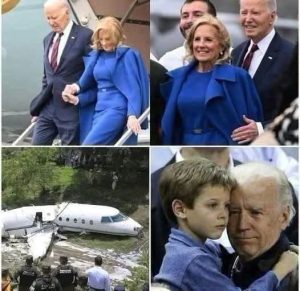
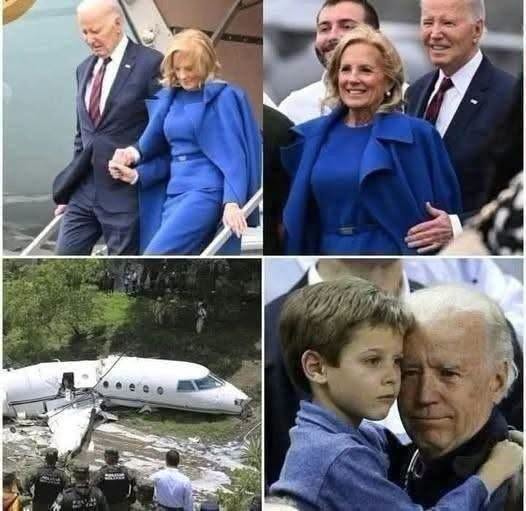
A shocking headline began circulating online claiming that former U.S. President Joe Biden, his wife Jill Biden, and one of their grandchildren had died in a plane crash near the Canadian border.
The wording was designed to sound urgent.
“Just In.”
“Fox News.”
“Few minutes ago.”
Those phrases immediately create the impression that something extraordinary has happened and that readers need to know about it before everyone else.
But there is a major problem with the story: there is no credible confirmation that Joe Biden, Jill Biden, or a Biden grandchild died in such a plane crash.
A search of current reporting does not produce a credible Fox News report, government announcement, aviation authority statement, or major-news report confirming the alleged deaths. The claim appears to be circulating through social media and websites presenting the story as breaking news without providing reliable evidence.
That distinction is extremely important.
A headline can look professional.
A post can contain photographs.
A website can use dramatic language and even place a familiar news organization’s name in the headline.
None of those things automatically make the information true.
The Power of a “Breaking News” Headline
False reports involving famous people are not new.
Celebrities, politicians, athletes, and other public figures have repeatedly become the subjects of fake death announcements. Social media makes these rumors especially powerful because a sensational claim can be copied thousands of times before anyone stops to verify it.
The Biden plane-crash claim is a good example.
The headline immediately creates an emotional reaction. Readers may feel shock, fear, or disbelief. Some may immediately share the story with friends or family.
But the fact that a story appeared “a few minutes ago” does not mean the event happened a few minutes ago.
It only means that someone posted the claim.
Those are two completely different things.
A post can be brand new and completely false.
Where Is the Evidence?
If a former U.S. president and members of his immediate family were killed in an aircraft accident, the event would be extraordinarily significant.
There would normally be extensive coverage from multiple major news organizations.
Authorities would be expected to release information.
Aviation officials would likely become involved.
The White House or Biden family representatives would be expected to issue statements.
Instead, the viral claim appears to rely heavily on the phrase “Fox News” without providing a verifiable Fox News report confirming the event. The site carrying the claim itself acknowledges that there is no credible evidence confirming the alleged deaths.
This is an important lesson for anyone consuming breaking news online:
Attribution is not the same thing as verification.
Writing “Fox News reports” does not prove that Fox News actually reported something.
Anyone can put the name of a major news organization into a headline.
The reader has to check the original source.
A History of False Biden Rumors
This is not the first time false or misleading claims involving Joe Biden have circulated online.
The Associated Press previously documented false social-media reports claiming Biden had suffered a medical emergency aboard Air Force One. Those posts spread widely despite providing no evidence, and AP reported that Biden had exited the aircraft normally and interacted with reporters after the flight.
Other false stories about Biden have also circulated over the years.
PolitiFact, for example, investigated a fabricated claim that CNN had reported Biden’s family confirming his death. The supposed evidence came from a misleading social-media video rather than an authentic CNN report.
These examples demonstrate how familiar names can be used to give credibility to stories that have little or no factual foundation.
The Confusion With Earlier Biden Family Tragedies
There is another reason readers should be especially careful with sensational Biden-family stories: Joe Biden’s life has genuinely included devastating family tragedies.
In December 1972, Biden’s first wife, Neilia, and their infant daughter Naomi were killed in a car accident shortly after Biden had been elected to the U.S. Senate. His sons Beau and Hunter survived but were seriously injured.
That tragedy has been publicly discussed many times throughout Biden’s political career.
Biden later married Jill Jacobs in 1977, and they had a daughter, Ashley. His son Beau died from brain cancer in 2015.
Because the Biden family has experienced real loss, fabricated stories involving family deaths can be particularly disturbing.
They exploit an audience’s knowledge of genuine events and use emotional language to make a new, unverified claim seem believable.
Why People Share Stories Before Checking Them
Human beings naturally respond to dramatic information.
A headline claiming that a former president has died is difficult to ignore.
People may share it because they are shocked.
Others may share it because they want to warn friends.
Some may share it because they strongly support or oppose the politician.
And others may simply assume that a story mentioning a major news organization must already have been verified.
But sharing information before checking it can unintentionally transform a rumor into something that appears legitimate.
One person shares it.
Another person sees the share and assumes it must be true.
That person shares it again.
Soon, dozens or hundreds of posts appear to confirm the story simply because they repeat one another.
But repetition is not independent confirmation.
One false story copied one thousand times is still one unverified story.
What Readers Should Do Instead
When a shocking news alert appears, the best response is to slow down.
First, identify the original source.
If a headline claims that Fox News reported something, go directly to Fox News and search for the report.
Second, check multiple reputable news organizations.
If something as significant as the death of a former president has genuinely occurred, it should not depend on a single obscure website.
Third, look for official confirmation.
Government agencies, family representatives, law-enforcement authorities, and aviation officials may provide important information in the event of a serious aircraft accident.
Fourth, examine the date.
Old photographs and old stories are frequently recycled and presented as new events.
Finally, ask whether the headline is designed primarily to make you react emotionally.
Phrases such as “BREAKING,” “JUST IN,” “YOU WON’T BELIEVE THIS,” and “SEE MORE” can encourage people to click before they think.
The Importance of Getting It Right
The death of a public figure is not ordinary entertainment.
It affects families, friends, supporters, opponents, journalists, and millions of ordinary people who may know the person through public life.
That is why accuracy matters.
A false death report can cause unnecessary fear and distress. It can also undermine trust in legitimate journalism.
When people repeatedly encounter fabricated breaking-news stories, they may eventually become skeptical of everything they see—even genuine emergencies.
That is harmful for everyone.
The Bottom Line
The viral claim that Joe Biden, Jill Biden, and a grandson died in a plane crash near the Canadian border should not be treated as confirmed news.
At the time of checking, credible evidence supporting the claim was not found. The available reporting instead indicates that the story is an unverified viral claim falsely presented in the style of a major breaking-news announcement.
The most responsible thing readers can do is resist the temptation to share it as fact.
Wait for confirmation.
Check the original source.
Look for independent reporting.
And remember one of the most important rules of the digital age:
A shocking headline is not proof.
In today’s fast-moving information environment, being first is less important than being right.
Sometimes the most responsible response to a dramatic “breaking news” story is not to click, share, or speculate.
It is simply to pause and ask:
Where is the evidence?