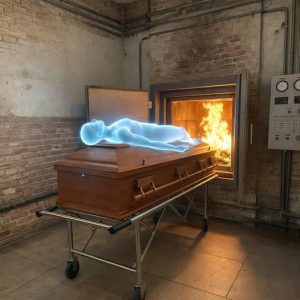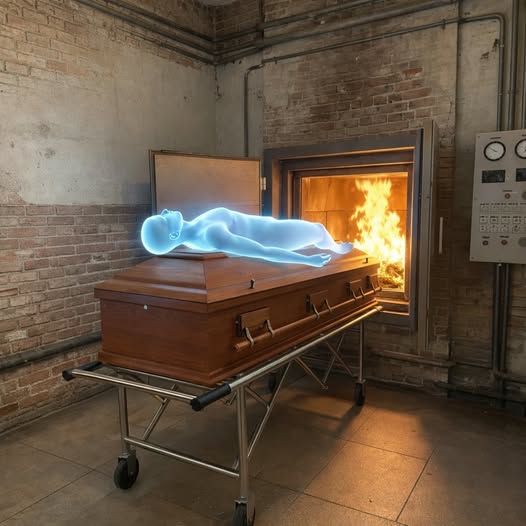
THE SIN OF CREMATION According to the Bible Says That… See More
Few topics stir as much quiet debate among Christians as the question of cremation. For centuries, burial has been the traditional practice of many believers, leading some to ask: Is cremation a sin according to the Bible? The answer is not as simple as some headlines suggest, and understanding it requires looking carefully at Scripture, history, and Christian theology.
First and foremost, the Bible does not contain a direct command that says, “You shall not cremate.” There is no explicit verse in either the Old Testament or the New Testament that forbids cremation as a funeral practice. However, burial is overwhelmingly the pattern seen throughout biblical history.
In the Old Testament, burial was the standard practice among the people of Israel. Abraham buried Sarah in the cave of Machpelah (Genesis 23). Jacob was buried in Canaan according to his wishes (Genesis 50:13). King David and many of the kings of Israel were buried in family tombs. Burial was seen as an act of honor and respect for the deceased.
One of the most significant examples is the burial of Jesus Christ. After His crucifixion, His body was placed in a tomb by Joseph of Arimathea (Matthew 27:57–60). Christians often point to this as a model, noting that Jesus Himself was buried, not cremated. For many believers, following Christ includes honoring the body in death as He was honored.
Some Christians who oppose cremation refer to passages where burning is associated with judgment or punishment. For example, in certain Old Testament contexts, burning a body could symbolize disgrace (Joshua 7:25, involving Achan). Because of this association, some argue that cremation carries negative spiritual symbolism.
However, context matters. In biblical times, burning was often linked to judgment because it was a public and severe penalty. That does not automatically mean modern cremation — done privately, respectfully, and for practical reasons — carries the same meaning.
In fact, there is at least one biblical example that complicates the argument. In 1 Samuel 31:11–13, after King Saul and his sons were killed in battle, the men of Jabesh Gilead retrieved their bodies and burned them before burying their bones. This act was not condemned in Scripture. Many scholars believe it was done to protect the bodies from further desecration. This shows that cremation in itself was not necessarily viewed as sinful in every circumstance.
In the New Testament, the emphasis shifts even further away from burial methods and toward resurrection hope. Christianity teaches that at the end of time, God will resurrect the dead. Some who oppose cremation argue that the body should remain intact for resurrection. However, this raises a theological question: If God can create humanity from dust (Genesis 2:7), can He not also resurrect someone whose body has returned to ashes?
The Apostle Paul addresses the resurrection in 1 Corinthians 15. He explains that the body that is buried is like a seed, and it is raised transformed and glorified. Paul does not specify that burial is required; rather, he emphasizes the power of God in raising the dead. Whether a body decomposes naturally in a grave, is lost at sea, or is reduced to ashes, God’s ability to resurrect is not limited.
Over time, church traditions have shaped opinions. Historically, early Christians preferred burial, partly to distinguish themselves from pagan cultures that commonly practiced cremation. Burial became a symbol of faith in bodily resurrection. As Christianity spread through Europe, burial became deeply embedded in Christian custom.
The Roman Catholic Church once discouraged cremation, especially in times when it was chosen as a statement against belief in resurrection. However, in 1963, the Church formally allowed cremation, provided it is not chosen to deny Christian doctrine. Today, cremation is permitted in Catholicism, though burial remains preferred.
Many Protestant denominations do not consider cremation sinful. They teach that what matters most is the condition of the soul, not the state of the physical body after death. The body returns to dust regardless of the method. The soul, according to Christian belief, goes to be with God (2 Corinthians 5:8).
So where does the idea of cremation being a “sin” come from?
Often, it stems from tradition, symbolism, or misunderstanding rather than direct biblical command. Some believers feel strongly that burial better reflects biblical precedent. Others see cremation as a practical choice influenced by modern realities such as cost, space limitations, or personal preference.
It is important to approach this issue with humility and grace. The Bible places far more emphasis on how we live than on how our bodies are handled after death. Scripture repeatedly teaches that salvation is by grace through faith in Jesus Christ (Ephesians 2:8–9), not by funeral arrangements.
Additionally, Christian teaching emphasizes honoring the body because it is described as a “temple of the Holy Spirit” (1 Corinthians 6:19). Whether one chooses burial or cremation, the key question is whether the process is handled with dignity and respect.
For families grieving a loss, the focus should be on remembrance, hope, and faith — not fear of having committed a sin through a particular burial method. God’s power and promise of resurrection are not hindered by fire, decay, or time.
Ultimately, the debate about cremation reflects deeper themes: tradition versus practicality, symbolism versus literal interpretation, and cultural change within Christianity. But when Scripture is examined carefully, it does not clearly label cremation as a sin.
Instead, the Bible consistently points believers toward hope — the hope that death is not the end. Whether buried in a tomb or laid to rest through cremation, Christians hold to the promise that God will raise the faithful to eternal life.
So, does the Bible say cremation is a sin?
No direct verse declares it so. What it does say is that God is sovereign over life and death, that the body returns to dust, and that resurrection is a work of divine power — not human preservation.
In the end, the greater concern is not how the body is laid to rest, but whether the heart rested in faith.