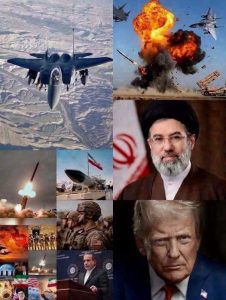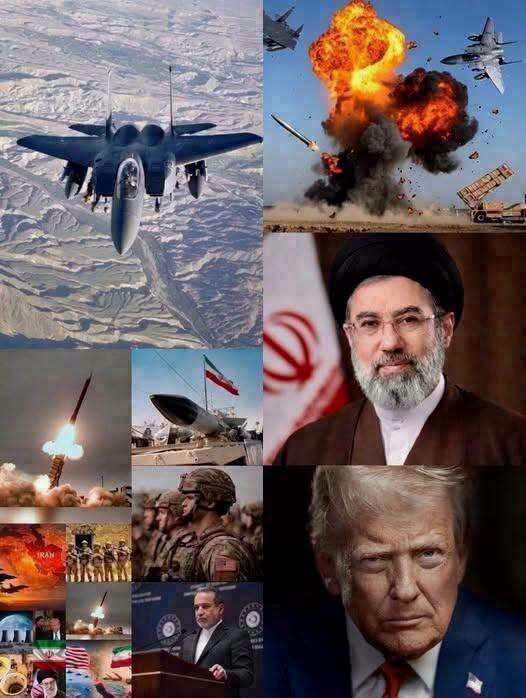
🚨 URGENT: “Iran Will Strike America Tonight” — What Is Actually Known?
A frightening headline is spreading rapidly across social media claiming that Iran will strike the United States tonight and that the attack will begin in a specific American state.
But before sharing such a claim, there is an important distinction between a warning, a threat, speculation, and a confirmed military operation.
As of the latest available reporting on September 25, tensions between Iran and the United States remain extremely high. The two countries have been involved in a prolonged conflict, and Iranian officials have issued warnings about retaliation if the United States launches additional attacks. At the same time, diplomatic contacts have continued, creating an uncertain and rapidly changing situation.
That means people should be cautious about treating a social-media headline claiming that an attack on an American state is scheduled for tonight as confirmed fact.
A dangerous moment
The current situation is serious.
Reuters reported that Iranian military officials have warned of retaliation against possible new U.S. military operations. The conflict has already involved attacks on military and energy-related targets across the region, while shipping through critical waterways has been heavily disrupted.
On September 24, a senior adviser to Iran’s supreme leader warned that further U.S. attacks could lead Iran and its allies to expand operations toward the Red Sea, the Bab el-Mandeb Strait, and potentially the Indian Ocean.
Those statements are significant because they demonstrate that Iranian officials are publicly discussing possible retaliation.
However, that is different from evidence that Iran has ordered a missile or drone attack against a particular American state.
Why the “tonight” claim is important
Words such as “TONIGHT,” “URGENT,” “BREAKING,” and “STARTING WITH THIS STATE” can create a powerful sense of immediate danger.
Social-media posts often use these phrases because they encourage people to react quickly, click, comment, and share before checking whether the information has been verified.
During an international military crisis, that can become particularly dangerous.
A person seeing a post claiming that a particular state is about to be attacked may immediately contact relatives, cancel plans, leave an area, or spread the message to thousands of other people.
If the original information is wrong, the resulting panic can travel much faster than the truth.
What has actually happened?
There is no question that the United States and Iran have exchanged attacks during the current conflict.
Reuters reported earlier this month that U.S. forces and Iran exchanged major attacks, including U.S. strikes and Iranian attacks on American positions in the region.
Reuters also reported that Iran targeted a U.S. base in Jordan while Iranian-backed Houthi forces carried out attacks against Saudi targets.
These events show that the conflict has already expanded beyond a simple confrontation between two governments.
But most of the reported military activity has been concentrated in the Middle East and surrounding strategic areas—not in a confirmed attack on a U.S. state.
That distinction matters.
Could the situation become more dangerous?
The possibility of further escalation is clearly being taken seriously by governments and military officials.
Iranian officials have warned that additional American attacks could trigger retaliation. Meanwhile, President Donald Trump has publicly threatened further action against Iran and said the United States could take extremely severe measures if an agreement is not reached.
At the same time, diplomatic discussions have continued.
That combination—military threats alongside negotiations—is one reason the situation is difficult to predict.
On September 22, Reuters reported that Iran had expressed willingness to reopen the Strait of Hormuz within a week if the United States reduced military pressure and lifted its blockade. Iranian representatives at the United Nations were also described as having authority to pursue diplomatic negotiations.
And according to CBS News, U.S. and Iranian officials have continued discussions even as both sides have exchanged threats.
What about an attack inside America?
This is where caution becomes especially important.
A social-media headline may say:
“Iran will strike America tonight.”
But that statement alone does not establish:
- which location is supposedly targeted,
- whether a military order has actually been issued,
- whether U.S. intelligence has confirmed such a plan,
- whether the information came from an official source,
- or whether the claim is simply speculation.
There is currently a major difference between documented Iranian threats against U.S. interests and a verified announcement that an attack will begin inside a particular American state tonight.
Those should never be treated as the same thing.
Americans should watch official alerts
If a genuine imminent threat develops inside the United States, Americans should rely on official emergency notifications and information from federal, state, and local authorities.
Emergency agencies have established systems for communicating serious threats.
Social media can provide useful information quickly, but it can also spread rumors quickly.
That is why people should check multiple credible sources before accepting extraordinary claims.
Families are understandably concerned
For Americans with family members serving overseas, the current conflict can be particularly frightening.
Military families may be watching reports about attacks on American bases, ships, aircraft, and personnel throughout the Middle East.
For civilians, rising tensions can also create concerns about fuel prices, air travel, financial markets, cybersecurity, and the possibility of further regional instability.
Those concerns are understandable.
But fear should not automatically turn an unverified social-media headline into a confirmed event.
The bigger picture
The current U.S.-Iran confrontation is not simply a story about one night.
It is part of a much larger conflict involving military operations, regional allies, energy infrastructure, shipping routes, sanctions, nuclear negotiations, and diplomatic efforts.
The Strait of Hormuz remains particularly important because it is a major global energy chokepoint. Disruption there can affect oil markets and economies far beyond the Middle East.
Recent reporting has also shown how quickly developments in Yemen, Saudi Arabia, Israel, Iran, and U.S. military positions can become interconnected.
The bottom line
The headline claiming “Iran will strike America tonight” should not be presented as confirmed unless credible authorities verify it.
There is genuine and serious tension between Iran and the United States.
There have been military attacks.
There have been threats of retaliation.
There are fears of further escalation.
And diplomatic efforts remain underway.
But those facts do not automatically confirm that Iran is preparing to attack a particular U.S. state tonight.
As this situation develops, the most responsible approach is to remain informed, check official sources, and avoid spreading unverified claims.
In a rapidly changing international crisis, accuracy matters just as much as speed.
🚨 This remains a developing situation. Claims about a specific U.S. state being targeted should be treated as unverified unless confirmed by credible authorities.