BREAKING: Plane With More Than 244 Onboard “Just Crashed” — What We Know About the Viral Claim
A frightening headline has been circulating online claiming that a passenger plane carrying more than 244 people has “just crashed.”
The wording is alarming. It immediately raises questions: Where did the aircraft crash? Which airline was involved? Were there survivors? What happened to the passengers and crew?
But before sharing such a headline as breaking news, there is an important detail that readers should know.
The currently circulating headline appears to be connected to an older aviation tragedy rather than a newly confirmed crash happening right now.
The incident most closely associated with the claim is the devastating crash of Air India Flight AI171 on June 12, 2025, shortly after the aircraft departed Ahmedabad, India, for London Gatwick.
The tragedy that shocked the world
Air India Flight AI171 was operated by a Boeing 787-8 Dreamliner. The aircraft was scheduled to travel from Ahmedabad to London Gatwick.
Shortly after takeoff, the aircraft crashed in Ahmedabad.
The accident became one of the most devastating aviation disasters in recent years and immediately triggered a large-scale emergency response involving firefighters, police, medical teams, investigators and local authorities.
The disaster also attracted international attention because of the aircraft type, the international destination and the large number of people affected.
Reports initially circulated different numbers regarding how many people were aboard. Viral posts frequently used the figure 244, while official investigative reporting later provided different figures. One widely cited official account recorded 242 people aboard the aircraft, consisting of passengers and crew.
That difference is important.
When reporting an aviation disaster, numbers should come from official records rather than from a headline copied from another website.
Why the headline is causing confusion
The phrase “RIGHT NOW” makes the story sound like an event unfolding at this exact moment.
That is one reason sensational headlines can be so powerful on social media.
A person scrolling through Facebook may see the headline, become frightened and immediately share it with friends and family.
Another person may see the same post several hours later—or even days later—and believe that the crash has just happened.
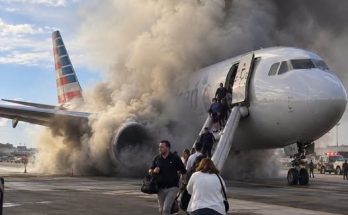
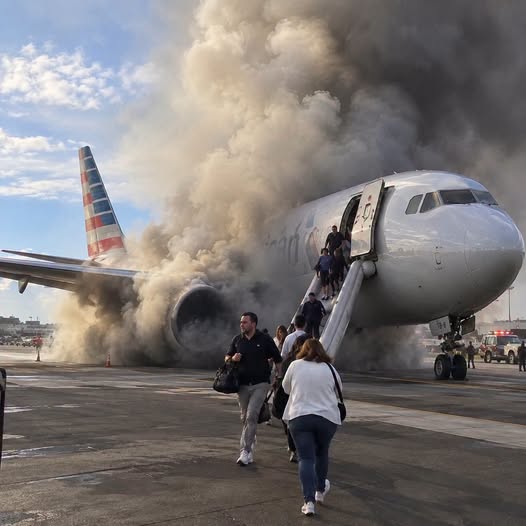
The problem becomes even greater when an old photograph is used without a clearly visible date.
A dramatic image of an aircraft surrounded by smoke can make an old event appear new.
That does not necessarily mean the photograph itself is fake. It means the context surrounding the photograph matters.
What happened to Flight AI171?
The Air India aircraft crashed shortly after departure from Ahmedabad in June 2025.
Emergency crews rushed to the scene as smoke and flames could be seen around the crash site.
Investigators subsequently began examining the wreckage, flight data, cockpit recordings and other evidence to determine what happened during the aircraft’s final moments.
The investigation was extensive and involved aviation authorities and technical experts.
Investigators have emphasized the importance of examining evidence carefully rather than reaching conclusions based solely on early reports.
That principle is especially important after an aviation disaster because an aircraft accident can involve numerous technical, operational and human factors.
Why investigations take time
When a major aircraft accident happens, the public often wants an immediate answer.
People want to know:
What failed?
Why did the aircraft crash?
Could it have been prevented?
Was there a mechanical problem?
Did weather play a role?
What did the pilots see?
But aviation investigations cannot always answer those questions immediately.
Investigators may need to examine the aircraft’s components, maintenance records, operational history, communications, flight data and cockpit recordings.
They may also interview witnesses and reconstruct the aircraft’s movements second by second.
A preliminary report can provide important information, but it is not necessarily the final explanation.
That is why responsible reporting should distinguish between confirmed facts, preliminary findings and speculation.
The danger of sharing unverified breaking news
Social media has transformed the way people receive information.
News can travel around the world within minutes.
That can be extremely valuable during genuine emergencies, but it also creates a serious problem: inaccurate information can spread just as quickly.
A dramatic headline may be copied by dozens of pages.
After enough copies appear, readers may assume that the story has been independently confirmed.
But ten websites repeating the same claim do not necessarily represent ten independent sources.
Sometimes they are all repeating one original post.
This is why readers should look for information from airlines, airports, aviation authorities, emergency services and established news organizations.
A reminder for travelers and families
For anyone who has a family member flying today, seeing a headline about a major aircraft crash can be frightening.
The safest response is not to panic based on an anonymous social-media post.
Instead, check the airline’s official communication, the airport involved and reputable news organizations.
If a particular flight is involved, verify the flight number and route.
A genuine major commercial aviation accident normally generates information from multiple official and independent sources.
Remembering the victims
Regardless of the confusion surrounding the current viral headline, the Air India tragedy itself was very real.
The people who lost their lives were not simply numbers in a news report.
They were passengers traveling to destinations around the world, airline employees doing their jobs, and people on the ground who were unexpectedly caught in the disaster.
Families received devastating news.
Friends lost loved ones.
Communities were left grieving.
That is why stories about aviation accidents deserve sensitivity and accuracy.
Using an old tragedy as though it were a new breaking event can create unnecessary fear while also disrespecting the people who were actually affected.
What readers should know
At this time, the viral claim that a plane carrying more than 244 people has “just crashed” should not be treated as confirmed new breaking news.
The headline appears to be associated with coverage of the Air India Flight AI171 crash of June 12, 2025, not evidence of a newly confirmed October 3, 2026 crash involving more than 244 people.
The distinction between an old tragedy and a new emergency is extremely important.
Before sharing a shocking aviation headline, check the date, airline, flight number, location and source.
A few seconds of verification can prevent thousands of people from being unnecessarily frightened.
Most importantly, remember that behind every aviation disaster are real people and real families.
Their stories deserve more than sensational headlines.
They deserve accurate reporting, compassion and respect.
If you see this headline circulating online, check the date and original source before sharing it. The “right now” wording should not be assumed to mean that a new crash has been confirmed.