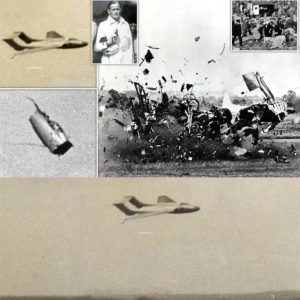
Eyewitness to the High-Speed Horror Show: Remembering the Farnborough Air Show Tragedy
Seventy years ago, a teenage aviation enthusiast made his way to the Farnborough Air Show with the excitement shared by thousands of spectators. He had gone to see the aircraft, the pilots and the extraordinary demonstrations that made Britain one of the world’s leading aviation nations.
Instead, he witnessed one of the darkest moments in British air-show history.
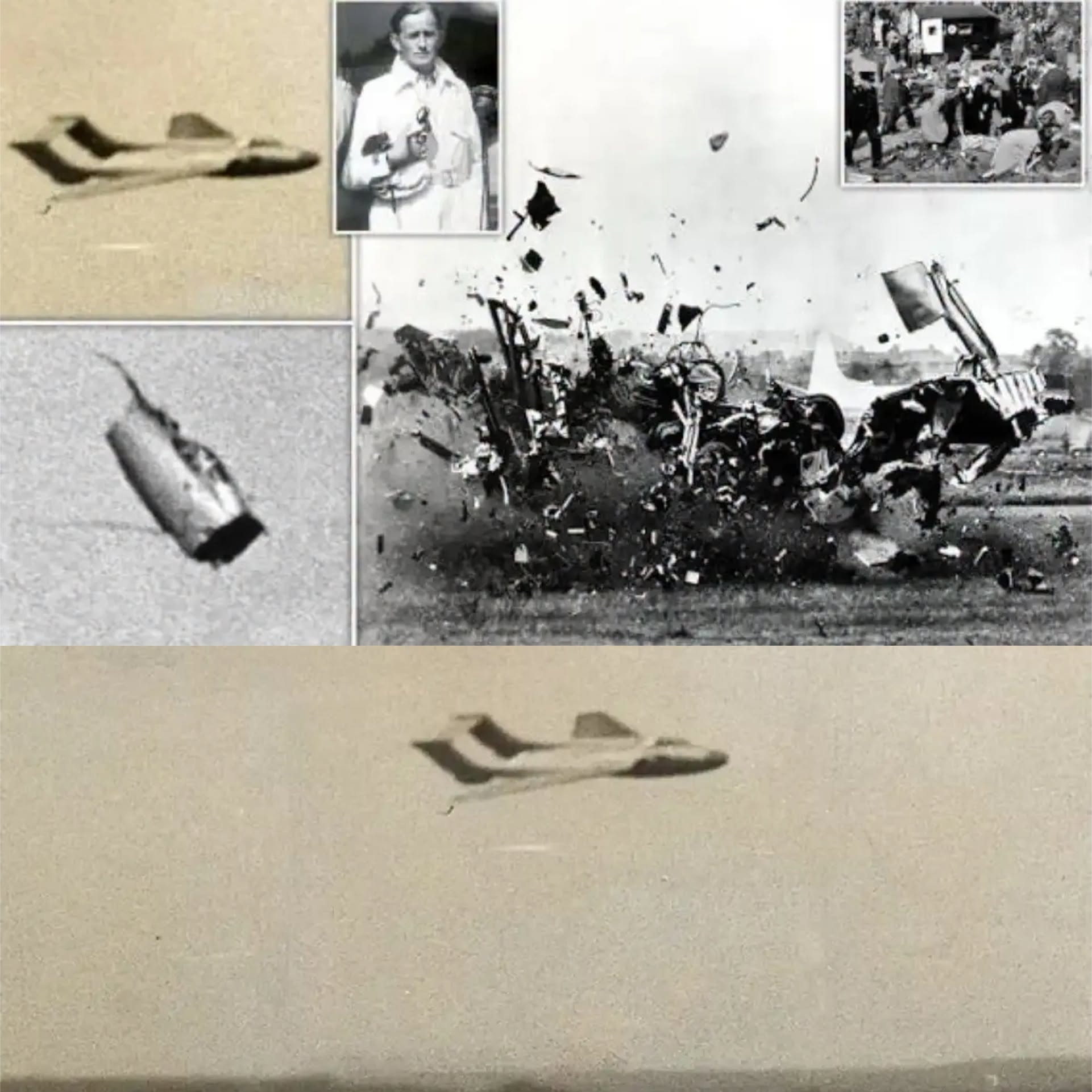
What began as a day of fascination with aviation suddenly became a terrifying spectacle of speed, fire and destruction. In a matter of seconds, an aircraft fell from the sky, a crowd was plunged into chaos, and 31 people lost their lives.
For the young aviation fan who stood among the spectators that day, the memories never disappeared.
Even seven decades later, the sights and sounds remained remarkably vivid.
A Day of Aviation Excitement
The Farnborough Air Show was already an important event in Britain’s aviation calendar. It attracted engineers, military personnel, aircraft enthusiasts and members of the public who wanted to see the latest developments in aviation.
For a teenager fascinated by flying, it was an extraordinary opportunity.
Aircraft that most people could only read about in newspapers or aviation magazines appeared overhead. Jet fighters demonstrated their speed and agility, while pilots performed maneuvers that seemed almost impossible.
Britain’s aviation industry was proud of its technological achievements.
The post-war years had produced a new generation of aircraft capable of traveling at speeds that earlier generations could hardly have imagined.
Among the pilots who attracted enormous attention was Britain’s celebrated test pilot Neville Duke.
Duke was already famous for his extraordinary skill and experience. To aviation enthusiasts, watching such a pilot fly was a rare opportunity.
The young spectator had come expecting excitement.
He had no idea that the day would become a memory associated with tragedy.
The Demonstration
Air-show flying is designed to impress.
Pilots fly close to the limits of their aircraft while maintaining carefully calculated safety margins. Every maneuver is normally planned, rehearsed and monitored.
To spectators, however, those calculations are invisible.
They simply see an aircraft streaking across the sky.
The sound arrives moments after the aircraft has passed. The machine appears impossibly fast, almost too fast for the human eye to follow.
That was the atmosphere at Farnborough.
The crowd watched aircraft demonstrating the extraordinary capabilities of the new jet age.
But the excitement of high-speed aviation also carried dangers that were not always fully understood by the public.
The aircraft were powerful.
The pilots were pushing technology forward.
And the margin for error could be extremely small.
The Moment Everything Changed
For the young spectator, the transformation from excitement to horror happened incredibly quickly.
One moment, the crowd was watching an aircraft demonstration.
The next, something had gone terribly wrong.
The aircraft’s trajectory changed.
The noise became more frightening.
Instead of remaining safely in the sky, the aircraft was coming down.
Spectators had little time to understand what was happening.
There was no warning announcement capable of preparing them for what followed.
The aircraft crashed with devastating force.
What had been an air show became a disaster scene.
People screamed and attempted to move away.
Others stood frozen, unable to comprehend what they had just witnessed.
For a teenager who had arrived simply hoping to see his aviation hero perform, the experience was almost impossible to process.
The Scale of the Tragedy
The crash claimed 31 lives.
Among those killed were people who had come to Farnborough for what should have been an enjoyable day.
They were spectators, aviation professionals and others caught in the disaster.
Behind the number 31 were dozens of individual stories.
There were families.
Friends.
Parents.
Children.
People who had left home that morning expecting to return with memories of aircraft demonstrations and a day spent watching aviation history.
Instead, their families received devastating news.
The scale of the loss transformed the incident from an aviation accident into a national tragedy.
What an Eyewitness Remembers
For eyewitnesses, major disasters are often remembered through small details.
The color of the sky.
The sound of engines.
The reaction of people nearby.
The sudden movement of the crowd.
The smell of smoke.
The silence that can follow an enormous impact.
These details can remain in a person’s memory long after other events from the same period have faded.
The teenage aviation enthusiast who witnessed the Farnborough tragedy carried those memories for decades.
He had gone there because he loved aircraft.
Ironically, his passion for aviation meant he understood enough to appreciate how extraordinary the demonstrations were—and how terrible it was when something went wrong.
The experience could never simply become another day at an air show.
It became a permanent part of his life story.
Britain and the Jet Age
To understand why the Farnborough tragedy was so shocking, it is important to understand the era.
Britain was entering the jet age.
The Second World War had demonstrated the importance of air power, but the aircraft of the post-war period were rapidly becoming faster and more advanced.
Jet engines were transforming aviation.
Test pilots were exploring performance envelopes that had never previously been reached.
Aircraft designers were experimenting with swept wings, powerful engines and new aerodynamic concepts.
The public was fascinated.
Every new aircraft seemed to promise a faster and more technologically advanced future.
Air shows such as Farnborough became showcases for that future.
But aviation technology was advancing faster than many existing safety systems and procedures.
Every new generation of aircraft brought new lessons.
The Human Cost of Progress
The Farnborough tragedy demonstrated a painful truth about technological progress.
Behind every record-breaking aircraft were pilots willing to accept enormous risks.
Test pilots were not simply performers.
They were explorers.
They flew aircraft that had never been flown before, often discovering how machines behaved at the edge of their capabilities.
Their work helped make modern aviation possible.
But that work came with danger.
When an accident happened, the consequences could be catastrophic.
The Farnborough disaster reminded the aviation world that demonstrations had to be treated with the same seriousness as any other flight operation.
An air show may appear to be entertainment to spectators, but for the pilot, it remains aviation.
Physics does not change because thousands of people are watching.
The Memories of a Lifetime
For the eyewitness, seven decades have not erased the tragedy.
Instead, the passage of time has given the memories historical importance.
The teenager who once stood in the crowd is now an elderly witness to a vanished era of aviation.
Many of the aircraft that fascinated him that day have long since disappeared from service.
The pilots have become historical figures.
The technology that seemed futuristic has been replaced by generations of even more advanced aircraft.
But the human experience remains unchanged.
People still gather at air shows to watch pilots demonstrate extraordinary machines.
Families still attend hoping to enjoy a memorable day.
And spectators still look upward with the same mixture of excitement and wonder.
Remembering the 31
The most important part of remembering an aviation disaster is not the aircraft itself.
It is the people.
Thirty-one lives were lost.
Each person had a story that continued far beyond the airfield.
The families left behind had to live with an absence that could never be repaired.
For eyewitnesses, remembering the tragedy can therefore be painful, but it can also serve an important purpose.
It prevents the victims from becoming merely a statistic.
The number 31 represents 31 human lives, each with relationships, ambitions and memories.
Their deaths became part of British aviation history.
A Memory That Still Speaks
Seventy years after that terrible day, the eyewitness account remains powerful because it connects history with personal experience.
Books can tell us when an accident happened.
Records can tell us how many people died.
Photographs can show us the aircraft.
But an eyewitness can describe what it felt like to be there.
For the teenage aviation enthusiast, the Farnborough Air Show was supposed to be an unforgettable day because of the excitement of seeing Britain’s aviation heroes.
Instead, it became unforgettable for another reason.
The high-speed spectacle turned into horror in seconds.
The crowd that had gathered to celebrate aviation suddenly found itself confronted with its dangers.
The tragedy cost 31 lives, but it also left an enduring impression on everyone who witnessed it.
Today, Farnborough remains associated with Britain’s remarkable aviation heritage and its continuing role in the development of aerospace technology.
Yet behind the displays and celebrations lies a history that includes moments of extraordinary loss.
The eyewitness who went there as a teenage boy reminds us of that history.
His memories offer a bridge between generations—a firsthand account of a day when the excitement of the jet age collided with its terrible risks.
And perhaps that is why such memories matter.
They remind us that behind every aircraft is human courage, behind every technological breakthrough are people willing to take risks, and behind every historic accident are lives that should never be forgotten.
Seventy years later, the roar of the engines may be gone, the aircraft may have disappeared from the skies, and the teenage spectator may have grown old.
But the memory remains.
A day that began with dreams of flight ended with tragedy—and became a story remembered across generations.