BREAKING: Tensions in the Middle East intensified after reports that Islamic Revolutionary Guard Corps (IRGC) launched more than 40 missiles in what it described as the 17th wave of attacks targeting U.S. and Israeli positions in the region. The strikes are part of a wider military escalation involving Iran, the United States, and Israel, as the conflict continues to unfold across multiple countries in the Middle East.
According to statements released by Iranian military officials, the missiles were fired as part of a retaliatory campaign known as Operation True Promise, which Tehran says is a response to recent U.S. and Israeli military strikes against Iranian targets. Iranian officials claimed the missiles were aimed at strategic military locations connected to American and Israeli forces across the region.
A New Wave of Missile Attacks
The 17th wave reportedly involved dozens of ballistic missiles launched over several hours. The Islamic Revolutionary Guard Corps stated that the strikes were part of a broader, multi-phase campaign intended to pressure U.S. military installations and allied infrastructure throughout the Gulf region.
Some of the reported targets include military facilities linked to the United States in countries such as Bahrain, Kuwait, Saudi Arabia, and United Arab Emirates, as well as positions associated with Israeli defense forces.
Defense officials say that air-defense systems across the region were immediately activated. Missile defense systems deployed by U.S. and allied forces attempted to intercept incoming projectiles before they could reach their intended targets.
Regional Air Defenses Activated
Air-defense networks in several Gulf countries were reportedly placed on high alert as the missiles were detected by radar systems. Many of the incoming missiles were intercepted mid-air by defensive systems designed to counter ballistic threats.
These systems include Patriot batteries and other advanced missile-interception technologies operated by U.S. forces and regional allies. Military officials say that such systems are capable of tracking incoming missiles and destroying them before impact, although debris from interceptions can still cause damage on the ground.
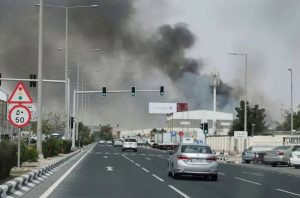
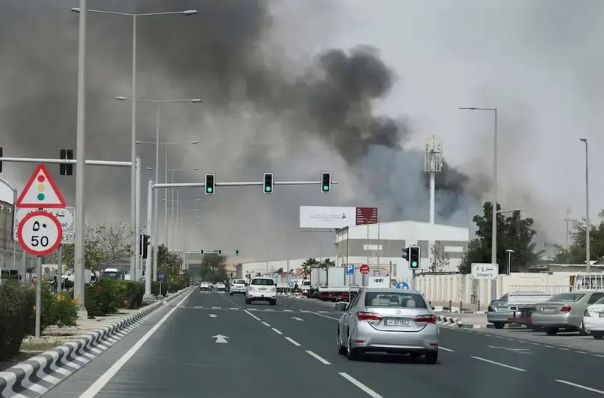
Reports from the region indicated that loud explosions were heard in multiple areas as interception systems engaged incoming threats. Residents described flashes in the sky as defensive missiles were launched to neutralize the projectiles.
Escalating Conflict Across the Middle East
The missile barrage is part of a wider conflict that has intensified in recent weeks. Military analysts say the confrontation now involves multiple fronts, including missile attacks, drone strikes, and large-scale air operations.
U.S. and Israeli forces have conducted thousands of strikes on Iranian military infrastructure, targeting missile launchers, naval vessels, and underground weapons facilities. According to U.S. military officials, these operations have significantly reduced Iran’s ability to launch large numbers of missiles.
Despite these losses, Iran has continued launching missiles and drones as part of its ongoing response.
Strategic Targets and Military Installations
Military analysts believe that many of the missiles were aimed at strategic military targets, including command centers, air bases, and naval facilities connected to the United States and its allies.
One of the most frequently mentioned targets in the region is the United States Navy Fifth Fleet, headquartered in Bahrain, which plays a critical role in protecting shipping routes and maintaining security in the Persian Gulf.
Other reported targets include military infrastructure near Erbil in Iraq and various Israeli defense locations.
Impact on Regional Security
The missile launches have raised serious concerns about the stability of the region. The United Nations Security Council has been discussing emergency measures aimed at preventing further escalation and protecting civilian populations in neighboring countries.
Several Gulf states have temporarily restricted or closed sections of their airspace as a precautionary measure while missile activity continues. Airlines and shipping companies have also begun adjusting routes to avoid potentially dangerous areas.
One of the most sensitive locations in the conflict is the Strait of Hormuz, a narrow waterway through which roughly one-fifth of the world’s oil supply passes. Any disruption in this area could have major economic consequences for global energy markets.
Casualties and Damage
While many of the missiles have reportedly been intercepted, some strikes and falling debris have caused damage in parts of the Gulf region. In previous missile attacks during the conflict, explosions and debris have damaged buildings and infrastructure in several cities.
Military officials continue to assess the full extent of damage from the latest wave. Casualty numbers remain uncertain, and authorities are still gathering information from affected locations.
Military Responses Underway
The United States Department of Defense has stated that American forces remain fully prepared to respond to any further threats against U.S. personnel and allied nations. Military aircraft, naval vessels, and missile-defense systems remain on high alert throughout the region.
Analysts say the conflict could continue evolving rapidly as both sides attempt to weaken each other’s military capabilities.
What Happens Next
Experts warn that the situation remains highly volatile. With multiple waves of missile launches already reported and ongoing airstrikes targeting Iranian military infrastructure, the possibility of further escalation remains a major concern for the international community.
Diplomatic efforts are underway as global leaders attempt to prevent the conflict from spreading further across the region. However, for now, the missile launches underscore the seriousness of the confrontation and the risks it poses to regional stability and global security.
As the situation continues to develop, governments and defense agencies around the world are closely monitoring events, hoping that diplomatic channels can eventually bring the violence to an end.