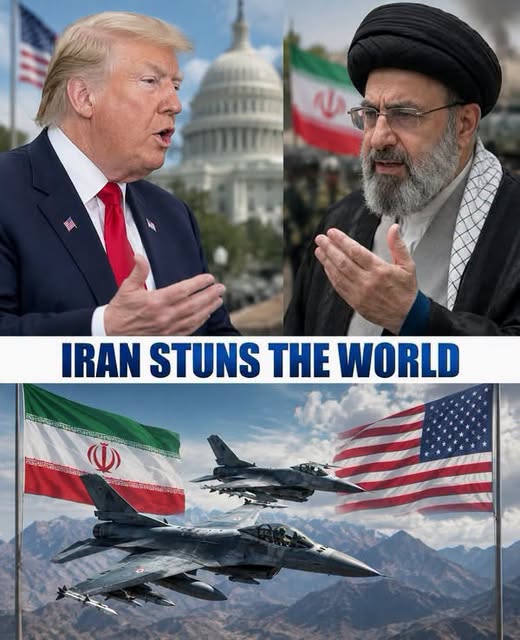
JUST IN: The World Is Stunned as Iran Announces a Major New Plan — Tensions With the United States Reach a Critical Moment
The world is watching the Middle East closely after Iran announced a significant new diplomatic proposal that could change the direction of its ongoing conflict with the United States. The announcement has attracted international attention because it comes at a moment when military tensions remain extremely high and fears of another major escalation continue to grow.
On November 2, 2026, Iranian officials revealed that Tehran was prepared to move forward with a revised diplomatic plan that could potentially reopen the strategically important Strait of Hormuz within just two days, provided the United States agreed to Iran’s conditions.
The announcement immediately raised important questions about the future of the conflict. Is Iran preparing to make a serious move toward peace, or is this another difficult negotiating position in a confrontation that has already affected the entire region?
For millions of people around the world, the answer matters.
Iran Makes a Major Announcement
Iran’s Foreign Ministry spokesperson, Esmaeil Baghaei, confirmed that diplomatic communications between Tehran and Washington were continuing through international mediators.
According to Iranian officials, the country’s original seven-step proposal has been condensed into a shorter plan that could potentially be implemented within two days.
The proposal reportedly focuses on ending the American naval blockade of Iranian ports, reopening the Strait of Hormuz, easing restrictions on Iranian oil exports, and creating conditions for further diplomatic negotiations.
Iran says its demands have been communicated clearly and that Washington must now decide whether it is willing to accept the proposed framework.
The announcement is particularly important because previous negotiations have failed to produce a lasting agreement.
Although Tehran is presenting the revised proposal as an opportunity for diplomacy, there is still no confirmation that the United States has accepted its conditions.
Why the Strait of Hormuz Is So Important
One of the most significant elements of Iran’s announcement concerns the Strait of Hormuz.
This narrow waterway connects the Persian Gulf with the Gulf of Oman and the wider Arabian Sea.
It is one of the world’s most important energy transportation routes.
A substantial portion of internationally traded oil normally passes through this strategic passage, making its security essential to energy markets and international shipping.
When the Strait becomes dangerous or inaccessible, the consequences can extend far beyond the Middle East.
Oil prices may increase, shipping companies may face higher insurance costs, and countries dependent on imported energy can experience economic pressure.
Businesses, transportation companies, manufacturers, and ordinary families can all feel the effects.
Iran’s proposed reopening of the waterway could therefore become one of the most important developments in the ongoing crisis.
However, Tehran’s proposal includes conditions involving the American blockade and arrangements for ships passing through the strait.
That means reopening the waterway would require more than simply making an announcement. Both sides would need to agree on practical security and shipping arrangements.
The United States Faces an Important Decision
President Donald Trump has repeatedly expressed his desire to prevent Iran from obtaining a nuclear weapon.
His administration has also maintained pressure on Tehran through military and economic measures.
At the same time, Trump has indicated that negotiations remain possible.
The administration now faces a complicated decision.
Accepting Iran’s proposal could potentially create an opening for diplomacy and reduce the danger of renewed fighting.
Rejecting it could leave the confrontation unresolved and increase uncertainty about what happens next.
Washington is also concerned about the future of Iran’s nuclear program, regional security, and the activities of Iranian-backed armed groups.
These issues are not necessarily resolved by reopening the Strait of Hormuz.
Consequently, even if an agreement is reached on shipping and the naval blockade, additional negotiations would likely be necessary.
Iran’s Nuclear Position Remains a Major Obstacle
One of the biggest challenges in reaching a lasting agreement concerns Iran’s nuclear program.
The United States wants guarantees that Iran will not develop nuclear weapons.
Iran, meanwhile, maintains that its nuclear activities are connected to its national interests and insists that its rights must be respected.
The latest diplomatic proposal does not appear to resolve every disagreement surrounding the nuclear issue.
Iranian officials have indicated that broader nuclear negotiations would depend on the implementation of their initial conditions.
This disagreement could become a major obstacle.
Even if both governments agree to reduce military tensions, questions about uranium enrichment, international inspections, sanctions, and nuclear restrictions would still need to be addressed.
For that reason, observers are watching the diplomatic developments carefully.
Qatar Plays an Important Role
Qatar has become an important intermediary in the diplomatic efforts.
Iranian representatives recently held discussions with Qatari mediators as part of attempts to exchange messages with Washington.
According to reports published on November 2, Iranian negotiators had departed Doha following the discussions, while a draft proposal was reportedly being circulated.
The departure did not necessarily mean that negotiations had collapsed.
Officials familiar with the discussions indicated that another meeting remained possible.
This development demonstrates how important regional mediators have become in trying to prevent the conflict from escalating again.
Diplomatic channels can provide opportunities for communication even when direct negotiations between opposing governments remain difficult.
Why Other Countries Are Watching Closely
The consequences of the Iran conflict extend well beyond the borders of the United States and Iran.
Countries throughout Europe, Asia, and the Middle East depend on stable international energy supplies and safe maritime transportation.
China, in particular, has significant economic interests in the region.
On November 2, Chinese officials announced plans to send a special envoy to Iran, Oman, and Saudi Arabia to encourage diplomatic solutions and regional stability.
Russia has also expressed concern about the possibility of renewed military action.
Regional governments are increasingly worried that another escalation could create additional instability, damage important infrastructure, and threaten international shipping.
The situation is therefore not simply a disagreement between two governments.
It is a crisis with potential consequences for the global economy.
Could Another Military Escalation Happen?
Despite the diplomatic announcement, the possibility of renewed fighting has not disappeared.
Iran’s Supreme Leader Mojtaba Khamenei recently warned that any new American or Israeli attacks would receive a strong response.
Meanwhile, President Trump has continued to warn that additional military action remains possible if necessary.
American officials have also indicated that they retain the military capabilities required to respond to developments involving Iran.
These statements show that neither side has completely abandoned its position.
The biggest danger is that a misunderstanding, military incident, or failed negotiation could rapidly increase tensions.
That is why diplomatic communication is so important.
Even a temporary agreement could help reduce the immediate risk of another confrontation.
What Happens Next?
The coming days could be particularly important.
Iran wants the United States to end its naval blockade and address its demands.
Washington wants stronger guarantees concerning nuclear security and regional stability.
Qatar and other international partners are attempting to keep communication moving between the two sides.
Whether these efforts produce an agreement remains uncertain.
A successful diplomatic arrangement could reopen important shipping routes, reduce pressure on energy markets, and create opportunities for additional negotiations.
But if the two governments cannot find common ground, the crisis could continue.
For now, the international community is waiting to see whether the latest proposal becomes the beginning of a serious breakthrough or another temporary moment in a long-running confrontation.
The World Waits for the Next Move
Iran’s announcement has created a new moment of uncertainty in an already dangerous international situation.
A two-day proposal to reopen the Strait of Hormuz sounds significant, but its success depends on whether the United States and Iran can agree on the conditions required to make it happen.
Millions of people have no direct role in these negotiations, yet they could feel the consequences through energy prices, shipping costs, economic uncertainty, and international security.
The coming decisions in Washington and Tehran may therefore have consequences far beyond the negotiating table.
Will President Trump accept Iran’s latest proposal and move toward diplomacy, or will the two countries remain locked in a dangerous confrontation?
The world is watching, and the next developments could be extremely important for the future of the Middle East.
This article reflects reported developments as of November 2, 2026. No final peace agreement or confirmed reopening of the Strait of Hormuz has been announced.