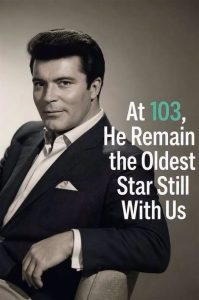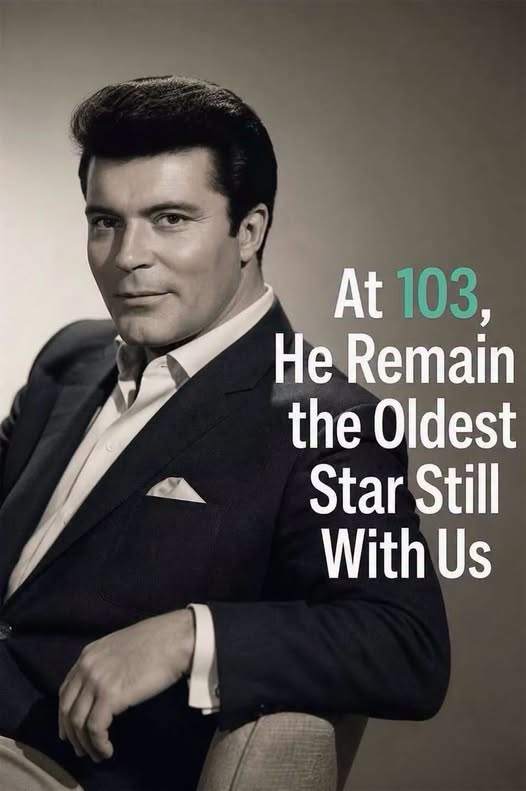
At Nearly 103, He Is the Oldest Living Star — The Remarkable Story of Ray Anthony
At an age when many people have long since stepped away from the spotlight, Ray Anthony remains a remarkable link to one of the most unforgettable periods in American entertainment history. The legendary trumpeter, bandleader, songwriter, and actor has lived through more than a century of extraordinary change, witnessing the rise of big-band music, the golden age of radio, the arrival of television, and the transformation of popular culture.
Born on January 20, 1922, Anthony celebrated his 104th birthday in January 2026. Although the headline describing him as nearly 103 is now outdated, his remarkable longevity and musical legacy continue to attract attention. He is widely described as the last surviving member of the original Glenn Miller Orchestra and one of the oldest living musicians.
His story is not simply about reaching an extraordinary age. It is about a lifetime devoted to music.
A Childhood That Began With a Trumpet
Ray Anthony was born Raymond Antonini in Bentleyville, Pennsylvania. His family later moved to Cleveland, Ohio, where music became an important part of his childhood.
His father was a musician and introduced him to the trumpet when he was only five years old. What began as a childhood interest eventually became a lifelong passion.
Anthony grew up surrounded by music and developed his skills through practice and performance. As a teenager, he was already playing professionally, an achievement that opened the door to opportunities that most young musicians could only dream about.
He admired the great trumpet players of his generation, particularly Harry James. Their influence helped shape his musical style, which would later become recognizable to audiences across the country.
Joining the Glenn Miller Orchestra
One of the defining moments of Anthony’s early career came in 1940, when he joined the famous Glenn Miller Orchestra as a trumpeter.
At just 18 years old, he found himself performing with one of the most celebrated musical groups of the swing era.
The orchestra was known for its distinctive sound, memorable arrangements, and enormous popularity. Its recordings became part of American musical history, with songs such as “In the Mood” and “Moonlight Serenade” remaining recognizable decades later.
Anthony’s time with the orchestra gave him valuable experience and allowed him to perform during an extraordinary period in music.
He also appeared with the group in the 1941 musical film Sun Valley Serenade, giving him an early connection to Hollywood as well as the music industry.
That chapter of his life would remain an important part of his legacy.
Serving During World War II
Like many musicians of his generation, Anthony’s career was affected by World War II.
He served in the United States Navy and continued using his musical abilities during his military service. Music provided entertainment and encouragement for service members during a difficult period in world history.
After the war, Anthony returned to professional music with new ambitions.
Rather than simply joining another orchestra, he decided to build something of his own.
Creating the Ray Anthony Orchestra
Following the war, Anthony formed his own orchestra and gradually established himself as a successful bandleader.
His group developed a polished, energetic sound that appealed to audiences who loved traditional swing while also enjoying newer musical arrangements.
During the late 1940s and early 1950s, big-band music remained an important part of American entertainment. Dance halls, radio stations, record stores, and television programs helped musicians reach millions of listeners.
Anthony became one of the recognizable names of that era.
His orchestra recorded popular music and performed for audiences across the United States. His career demonstrated that he was more than a talented trumpet player: he was also a capable leader who understood how to bring musicians together and create an entertaining musical experience.
The Song That Became a Dance Craze
One of Anthony’s most recognizable recordings was “The Bunny Hop.”
Released during the early 1950s, the lively dance number became a popular favorite and helped establish his orchestra among a wide audience.
The song was memorable because it was easy to enjoy, energetic, and connected to the social dance culture of the time.
For many listeners, music was not simply something played in the background. It was part of celebrations, parties, community gatherings, and family memories.
Anthony’s recordings helped provide the soundtrack for those moments.
He also became associated with recordings connected to television entertainment, including music from Dragnet and Peter Gunn.
A Connection to Hollywood
Anthony’s talents eventually brought him into the world of film and television.
He appeared in productions including Daddy Long Legs and The Five Pennies. His entertainment career also included television appearances and musical performances.
His personal life attracted public attention when he married actress Mamie Van Doren in 1955. The couple had a son, Perry Ray Anthony, before their marriage ended in divorce in 1961.
Although his acting career was not as extensive as his musical work, it demonstrated the variety of opportunities available to a successful entertainer during Hollywood’s golden age.
Anthony had become part of a generation in which musicians could move between recording studios, television programs, movie sets, and live performances.
A Living Connection to Musical History
Perhaps the most extraordinary part of Anthony’s story is the historical period he represents.
He began his professional journey during an era when large orchestras dominated popular music. He witnessed the rise of rock and roll, the growth of television, changes in recording technology, and the arrival of entirely new generations of performers.
Many of the musicians who shared stages and studios with him have passed away. That makes his connection to the Glenn Miller Orchestra especially meaningful.
Being the last surviving member of the original orchestra gives Anthony a unique place in the history of American swing music.
His life connects modern audiences with a time that younger generations may know mainly through old recordings, photographs, and classic films.
More Than a Remarkable Age
Reaching 104 is extraordinary, but Anthony’s importance cannot be measured by age alone.
His legacy comes from the music he recorded, the orchestra he led, and the generations of listeners who enjoyed his performances.
His career also illustrates how the entertainment industry has changed. During his early years, musicians depended heavily on live performances, radio broadcasts, and physical recordings. Today, music reaches audiences through digital platforms and streaming services.
Yet the emotional connection created by a memorable melody remains the same.
A song can bring back memories of a first dance, a family celebration, or a time when life felt very different. That is part of the lasting power of the music Anthony helped create.
A Legacy Worth Celebrating
Ray Anthony’s remarkable journey is a reminder that the history of entertainment is not only found in museums or old recordings. Sometimes, the people who helped create that history are still with us.
From a young trumpet player in Cleveland to a member of the Glenn Miller Orchestra, from a successful bandleader to a familiar face in Hollywood, Anthony built a career that crossed generations.
His music continues to offer a glimpse into the energy and excitement of the big-band era.
At 104, he stands as an extraordinary living connection to a chapter of American music that will never be repeated in quite the same way.
His story reminds us that a true musical legacy does not disappear when the performances end. It lives on through recordings, memories, and the people who continue discovering the music.
Ray Anthony’s life is more than a story of longevity. It is a story of talent, dedication, history, and the enduring power of music.