Tensions in the Middle East have reached a new and dangerous level after a commercial ship attempting to pass through the strategically vital Strait of Hormuz reportedly came under attack following earlier warnings from Iran. The incident has raised alarm among governments, shipping companies, and global energy markets, as the narrow waterway is one of the most critical shipping routes in the world.
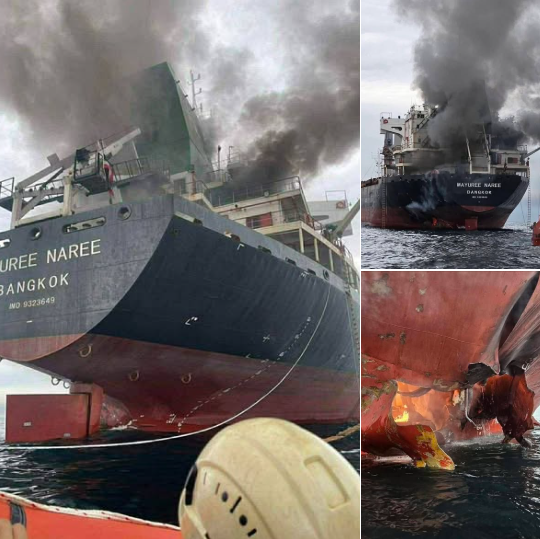
According to maritime security monitors and international reports, several commercial vessels traveling through the region were struck by projectiles during the latest escalation in hostilities. One vessel reportedly caught fire in its engine room after being hit, forcing crew members to abandon parts of the ship while emergency procedures were activated. (New York Post)
The attack comes amid rising tensions involving Iran, the United States, and Israel, as the region experiences a widening conflict that has already included missile strikes, drone attacks, and air operations across several countries.
Earlier Warnings from Iran
Prior to the attack, Iranian officials had issued strong warnings regarding ships attempting to pass through the Strait of Hormuz. Iranian military statements indicated that vessels connected to the United States, Israel, or their allies could be considered “legitimate targets” i f they attempted to transit the waterway without permission. (The Guardian)
Iran’s Islamic Revolutionary Guard Corps (IRGC), the country’s powerful military force responsible for protecting the Islamic Republic, reportedly stated that some ships ignored direct warnings before entering the strait. According to Iranian sources, naval forces then fired on the vessels after they continued their transit. (euronews)
Officials in Tehran have argued that the attacks are part of a broader campaign aimed at preventing oil shipments and pressuring Western nations involved in military operations against Iran.
What Happened During the Attack
Initial reports indicate that multiple commercial vessels sailing under different national flags were struck by projectiles in the region. One of the ships was reportedly a Thai-flagged bulk carrier that caught fire after the attack, forcing the crew to evacuate part of the vessel. (New York Post)
Two additional ships, including vessels registered in Japan and the Marshall Islands, were also hit but suffered less severe damage. Authorities said there were no immediate reports of large-scale casualties, although investigations are ongoing. (New York Post)
Maritime monitoring organizations advised all vessels operating in the region to proceed with extreme caution and report any suspicious activity.
Why the Strait of Hormuz Matters
The Strait of Hormuz is one of the most important maritime chokepoints on Earth. The narrow passage connects the Persian Gulf with the Gulf of Oman, and through it flows roughly one-fifth of the world’s oil supply. (www.ndtv.com)
Oil and gas shipments from major producers such as Saudi Arabia, United Arab Emirates, Kuwait, and Iraq must pass through this narrow corridor before reaching international markets.
Because of its importance, even small disruptions in the strait can have immediate global consequences. When ships are attacked or threatened, shipping companies may halt operations, insurance costs rise sharply, and oil prices often spike in response.
Shipping Traffic Disrupted
Since the latest attacks, many shipping companies have reportedly slowed or halted traffic through the region. Some vessels have reversed course while others remain anchored outside the strait waiting for security conditions to improve.
The possibility of further attacks has also increased insurance premiums for ships entering the Persian Gulf. Marine insurers now consider the region a high-risk war zone due to the ongoing military confrontation.
Several governments have urged their commercial fleets to exercise extreme caution or avoid the strait altogether until the security situation stabilizes.
Military Tensions Escalating
The attacks on shipping come amid a broader military conflict involving Iran and its adversaries. In recent days, the United States and its allies have conducted strikes targeting Iranian military assets, including naval vessels suspected of laying mines in the Gulf. (Reuters)
In response, Iran has launched missiles and drones toward military targets across the region while also threatening international shipping lanes.
Analysts warn that attacks on civilian vessels could further widen the conflict and draw additional countries into the crisis.
Global Economic Concerns
Because the Strait of Hormuz is essential to global energy supply, any sustained disruption could have major economic consequences. Economists say prolonged attacks or a blockade could reduce oil shipments dramatically, pushing fuel prices higher around the world.
Countries in Asia and Europe are particularly vulnerable because they rely heavily on oil transported through the strait. Governments are now closely monitoring the situation and considering emergency energy measures if the crisis continues.
Calls for De-Escalation
International organizations and world leaders have urged all sides to reduce tensions and protect civilian shipping routes. Maritime law generally guarantees freedom of navigation through international waters, and attacks on commercial vessels are considered a serious threat to global trade.
Diplomatic efforts are underway to prevent further escalation, but the situation remains volatile.
An Uncertain Situation
For now, the waters around the Strait of Hormuz remain one of the most dangerous flashpoints in the world. With commercial ships under threat, military forces on high alert, and global energy markets watching closely, the coming days could prove critical in determining whether the crisis expands or begins to calm.
As investigations continue into the latest ship attack, one thing is clear: the safety of one of the world’s most important shipping lanes is now deeply uncertain.